
From July 13 to 16, I had the chance to attend an international conference as a presenter at IIAI AAI 2026 (20th IIAI International Congress on Advanced Applied Informatics), now in its 20th edition, held at AOSSA, Fukui, Japan.
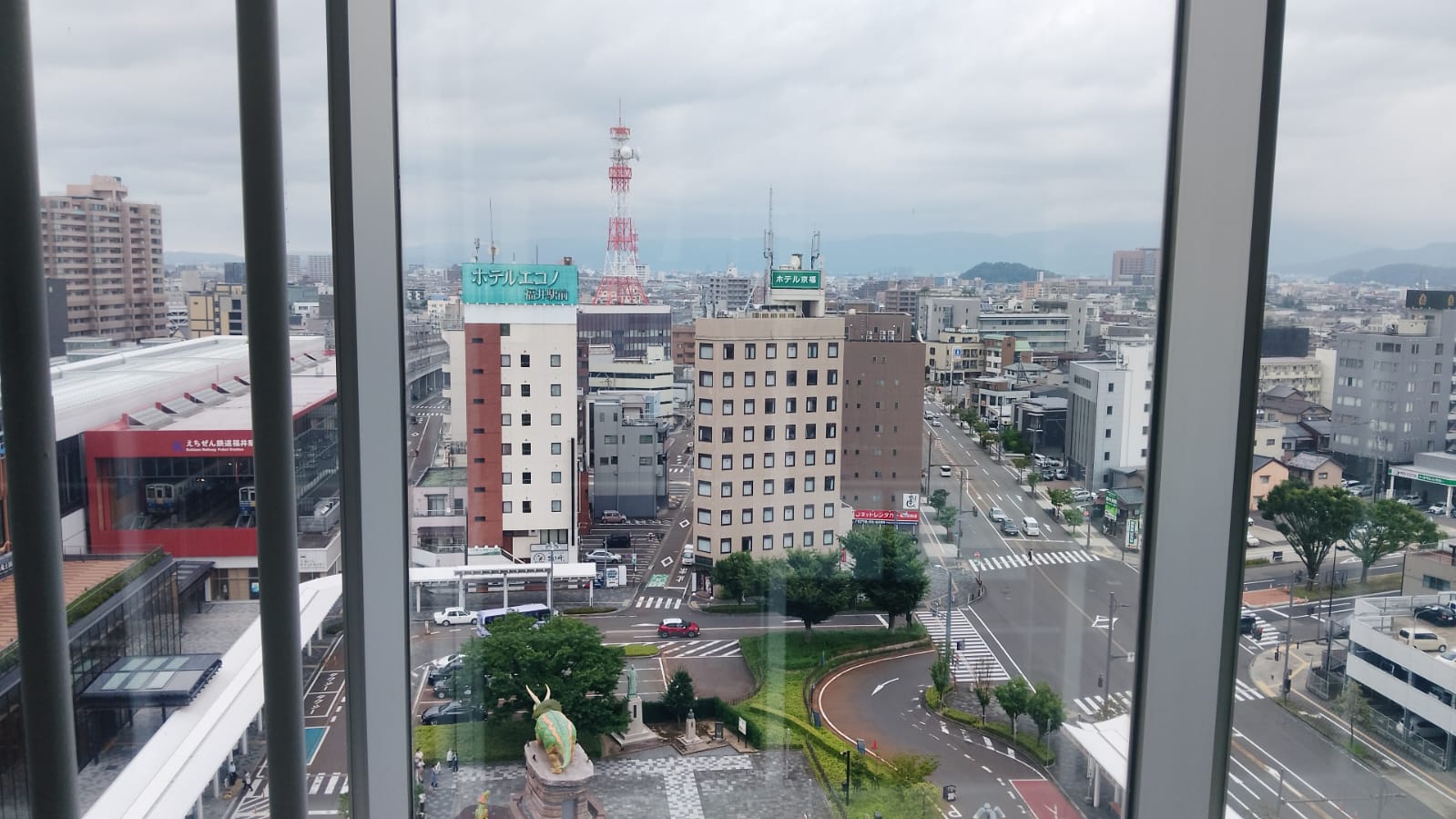
At the opening ceremony, the General Chair of IIAI AAI 2026, Yuichi Ono (University of Tsukuba, Japan), shared that this year’s conference received a total of 518 paper submissions from 19 countries/regions, reviewed by 384 program committee members from 40 countries. Of these, 131 papers were selected as regular papers (25.2% acceptance rate), 33 as short papers, and 17 as posters. My journey to the venue started on July 12, 2026. I took the local Happy Liner train from Kanazawa Station, about a 1 hour 25 minute ride to Fukui Station. I actively attended the conference sessions from July 13 to 16.
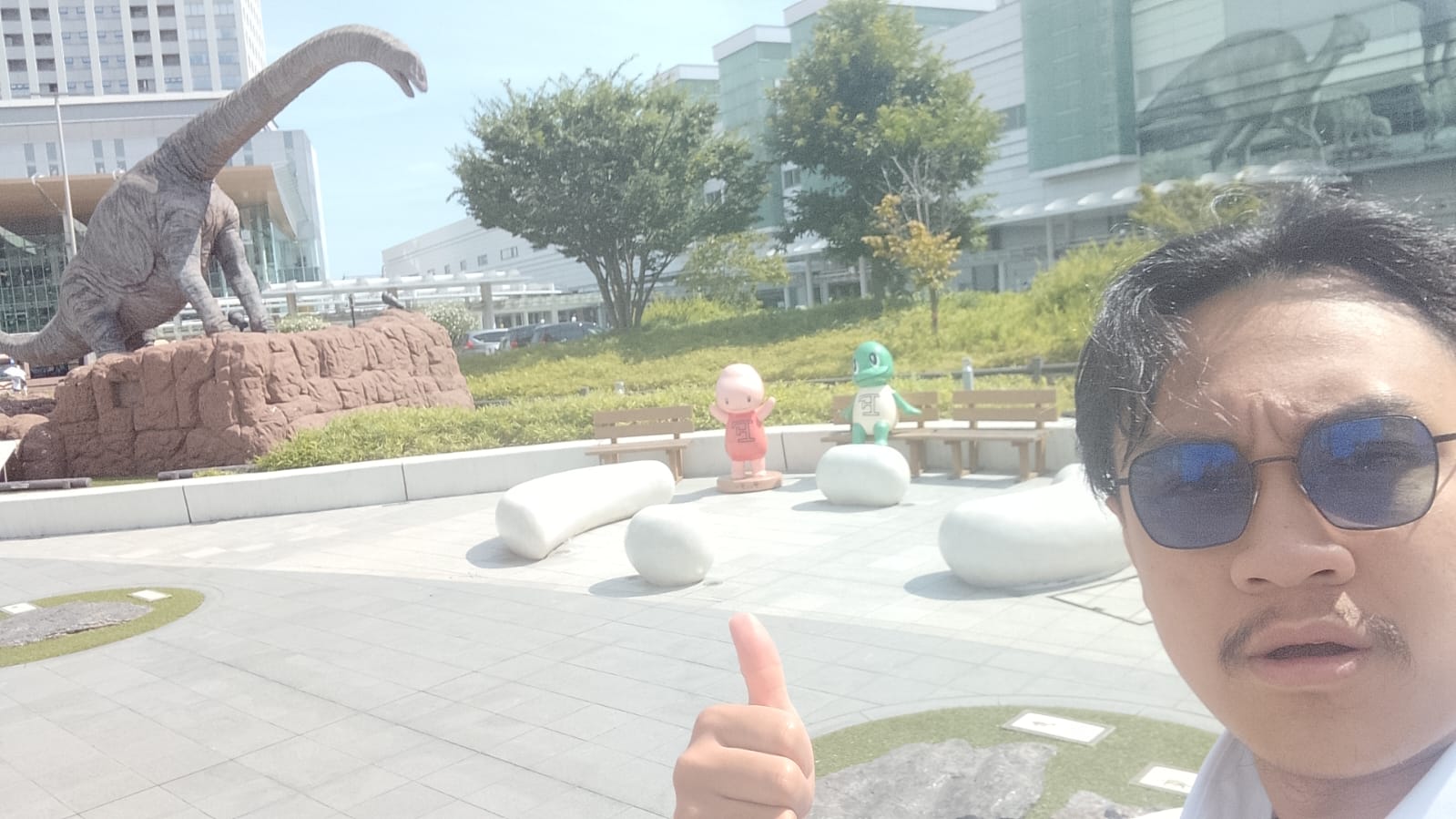
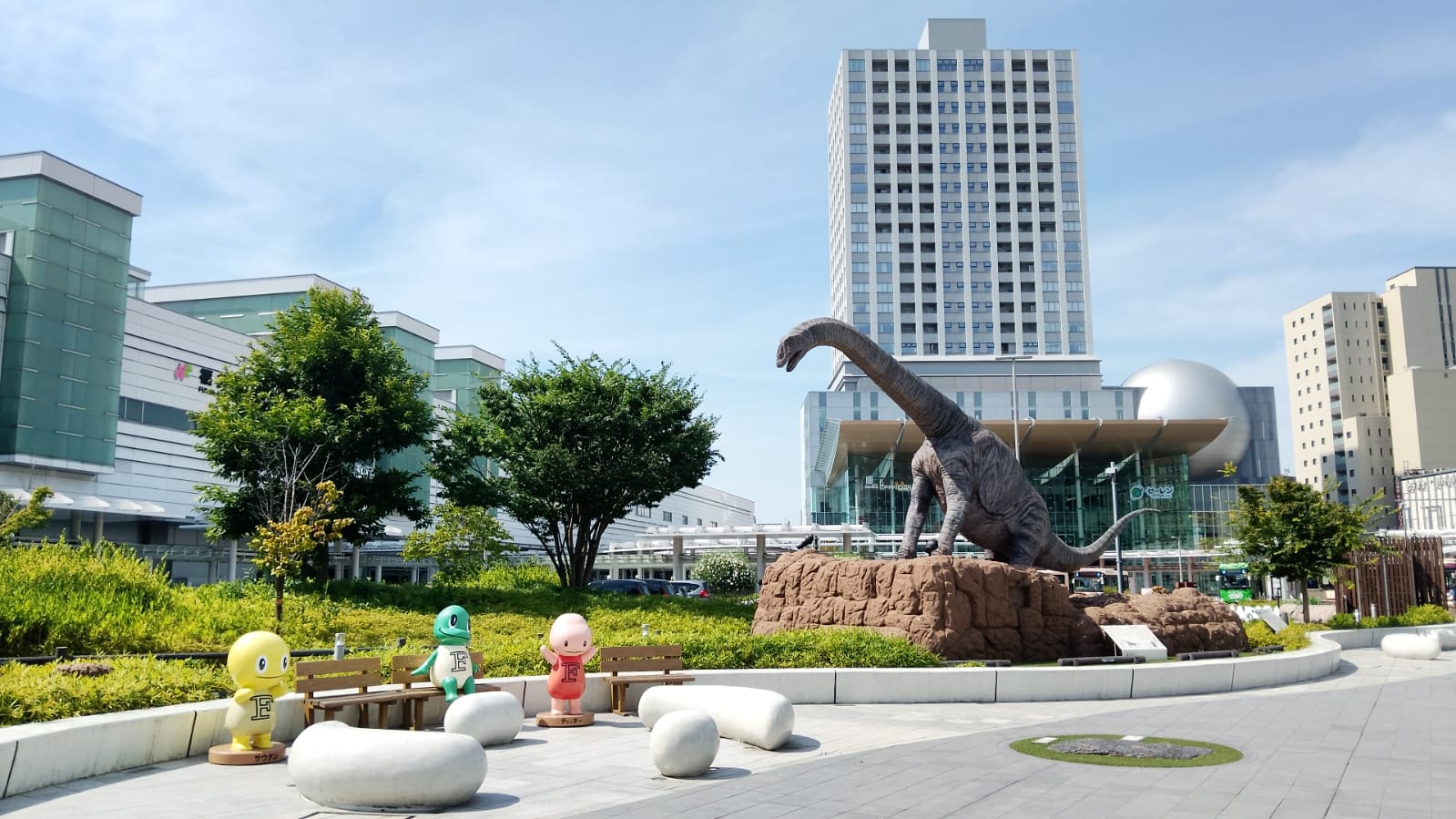
Welcome to Fukui, the Dinosaur Kingdom
Here’s my day-by-day story, from the sessions that caught my attention to the moment I stepped up to present our work.
Day 1: July 13, 2026
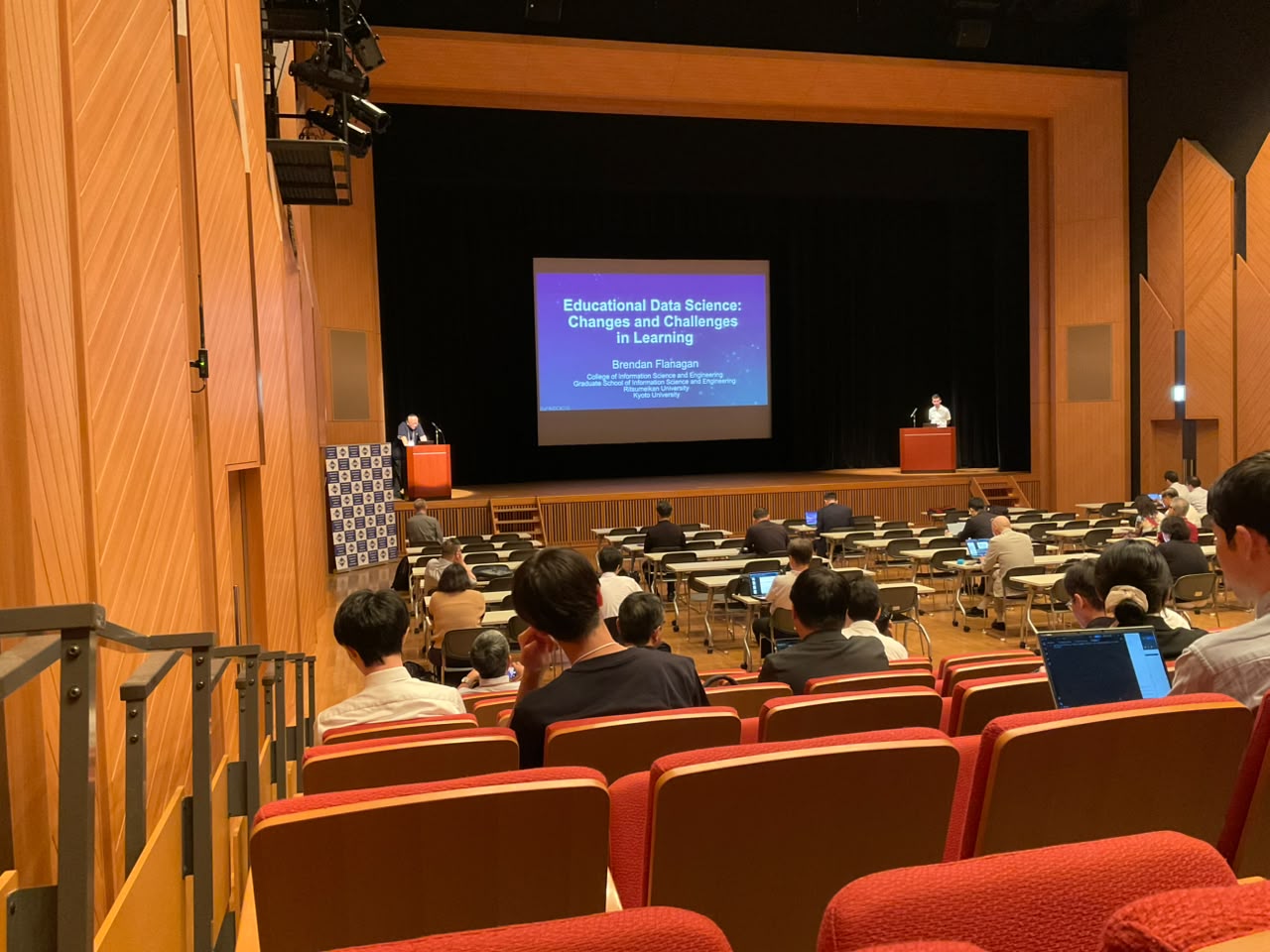
The conference opened with a keynote from Prof. Brendan Flanagan (Ritsumeikan University), “Educational Data Science: Changes and Challenges in Learning,” about how educational data can serve as material for broader AI research. The part I found most interesting: there was an experiment where AI models were trained on synthetic data (to protect student privacy), and while the results looked great on the synthetic data, performance dropped sharply when tested on real data, showing that AI models can easily be fooled when trained on data whose characteristics differ from the real thing.
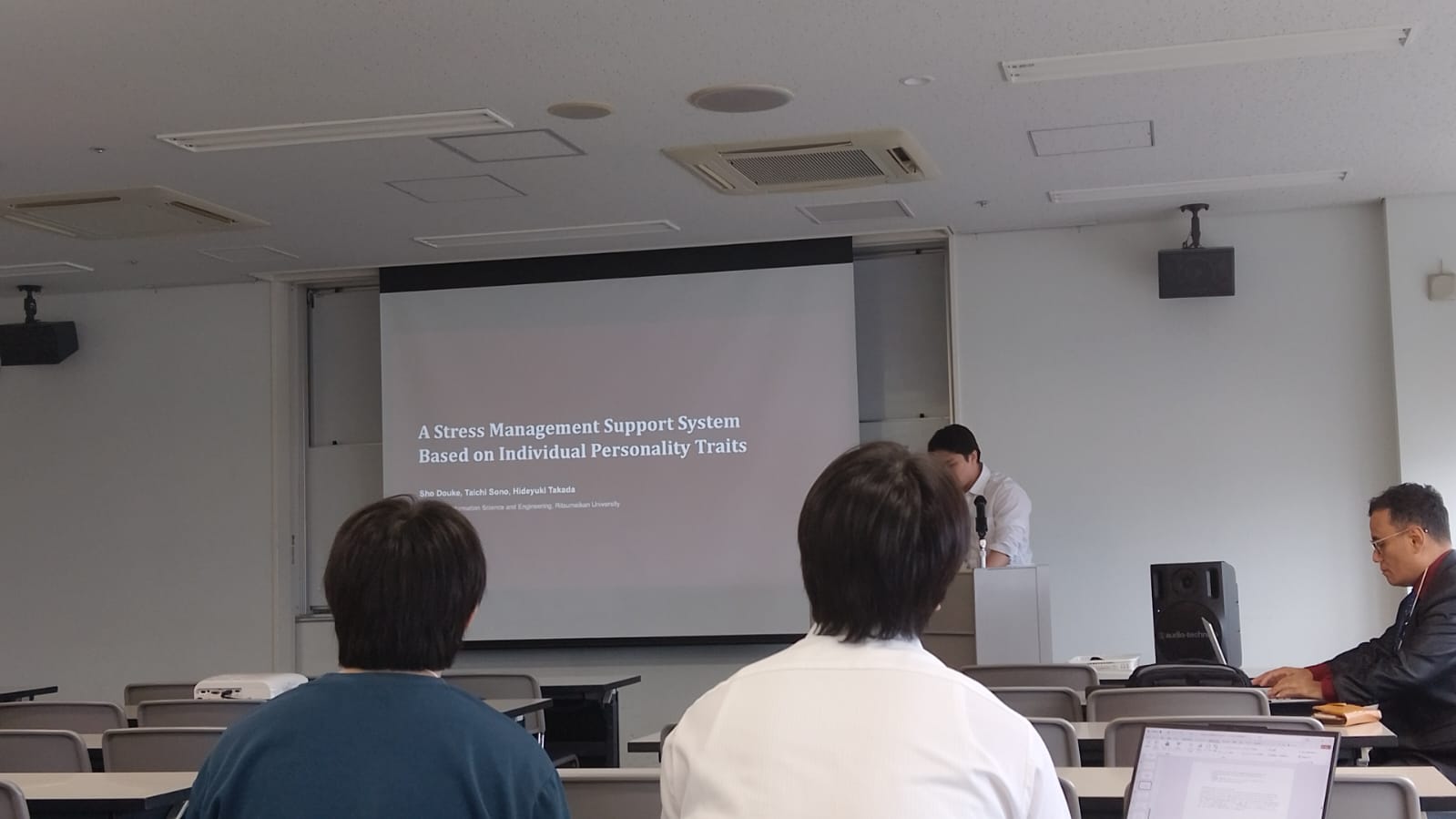
There were also two papers that caught my attention because they relate to assistive technology, a topic I’m interested in. First, “A Stress Management Support System Based on Individual Personality Traits” by Douke, Sono, Takada. The research about an AI application that gives stress-management advice tailored to each person’s personality, rather than generic advice given to everyone. They combined personality data with daily stress levels (measured via wearable), then had the AI generate personalized advice. The results showed people were more likely to actually follow the personalized advice and felt it was a better “fit.”
Second, “Infant Carrying as a Development-Adaptive Caregiving Practice” by Satoh, Herrera Cadillo, Nakano, Sakamoto, Takasaki. The research about an AI application that evaluates infant-carrying posture, which until now has assumed there’s a single fixed “ideal posture.” In reality, the ideal posture changes as the infant develops (horizontal carrying when the baby is small, shifting to vertical once the baby can support its own head). As a result, a caregiver who’s actually carrying the baby correctly could still receive a lower score, not because they’re doing anything wrong, but because the evaluation criteria hasn’t been updated to match the baby’s development.
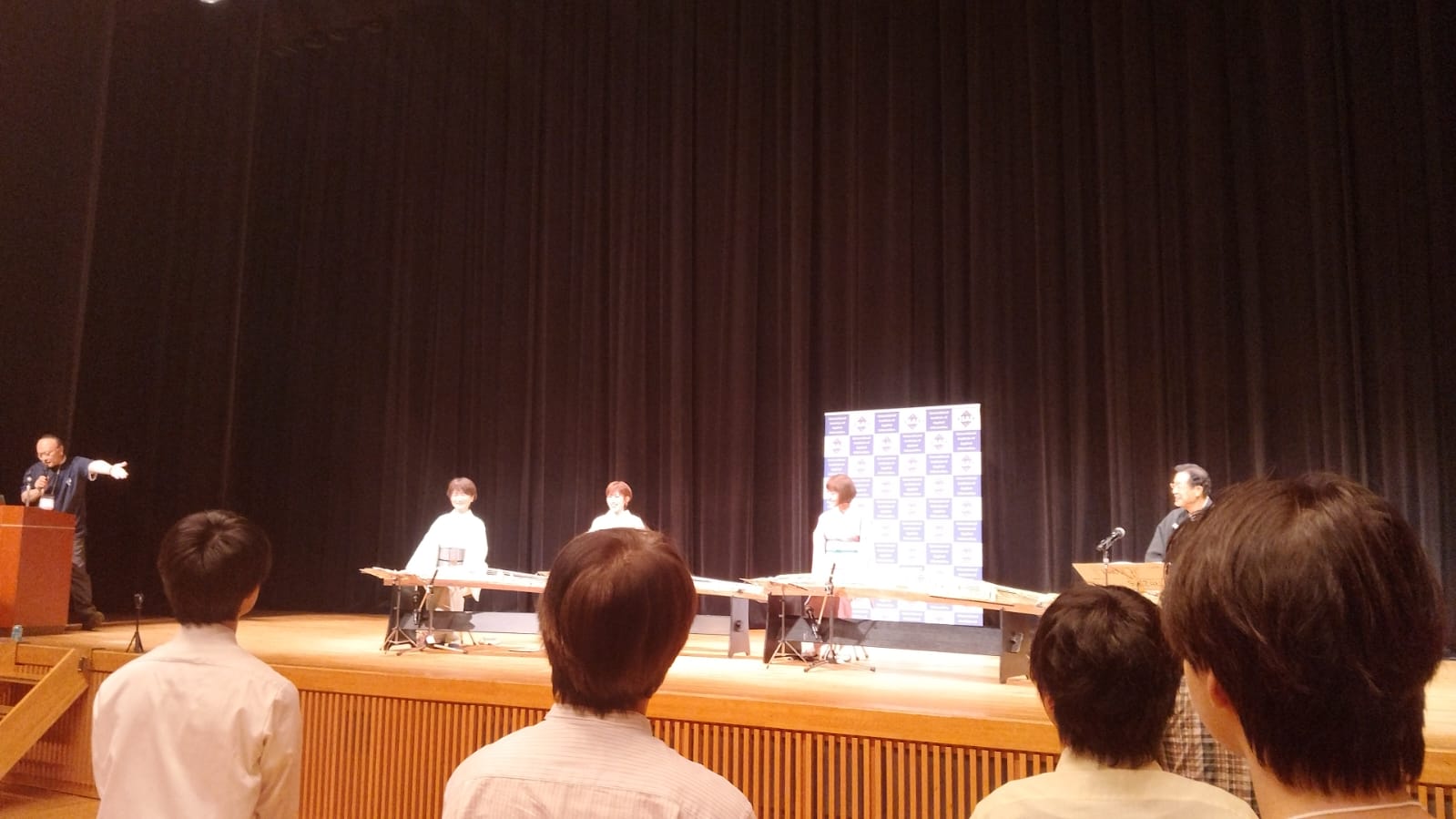
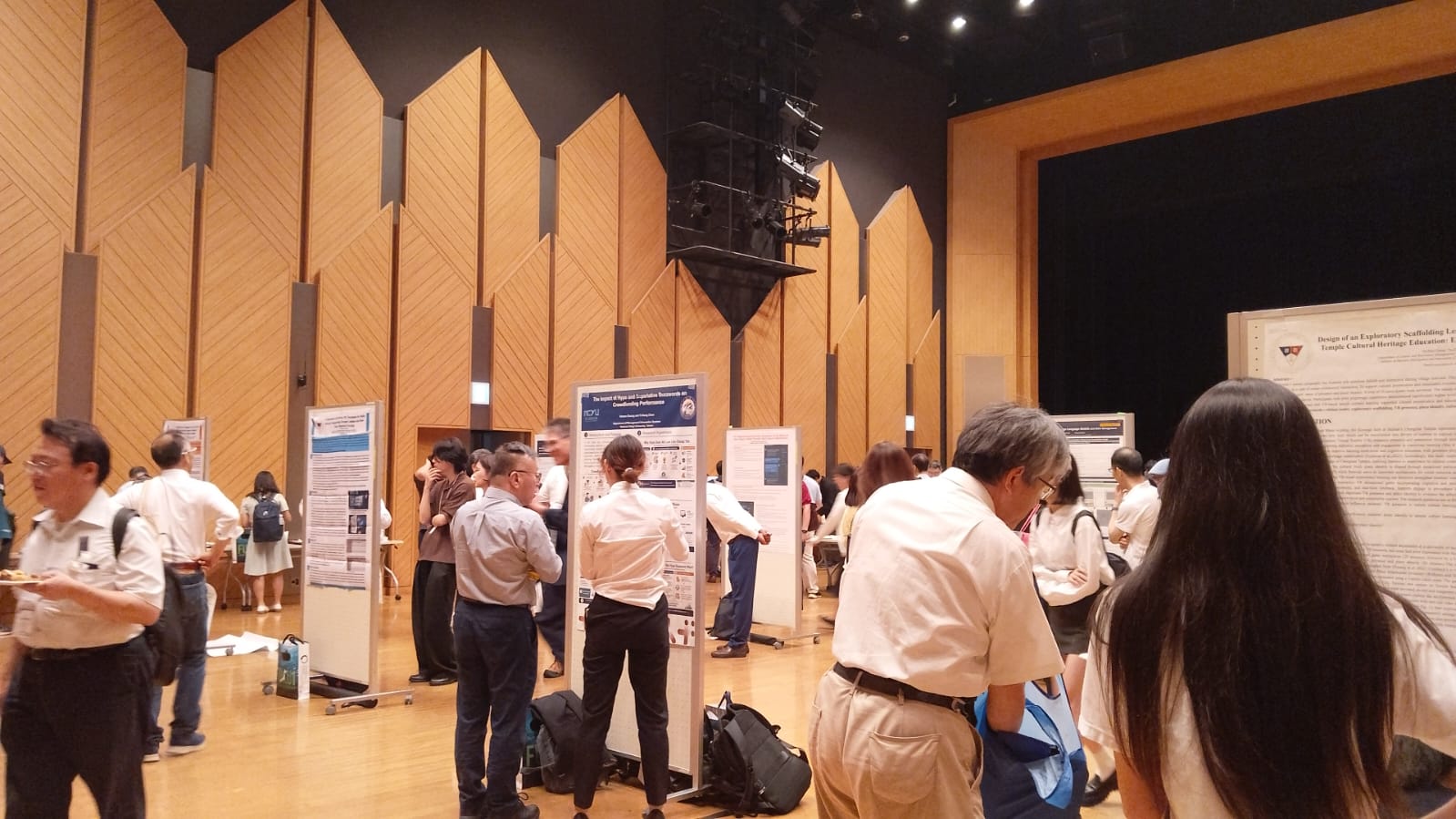
Welcome Reception and Poster Session
This was followed by the Welcome Reception and Poster Session at Hall A. In between poster sessions, there was a traditional Japanese music performance, koto, along with free drinks (wine and the like) and grilled meat skewers whose name I honestly didn’t catch, but they were delicious. The atmosphere was relaxed and social, with researchers exchanging business cards and chatting more deeply about each other’s research.
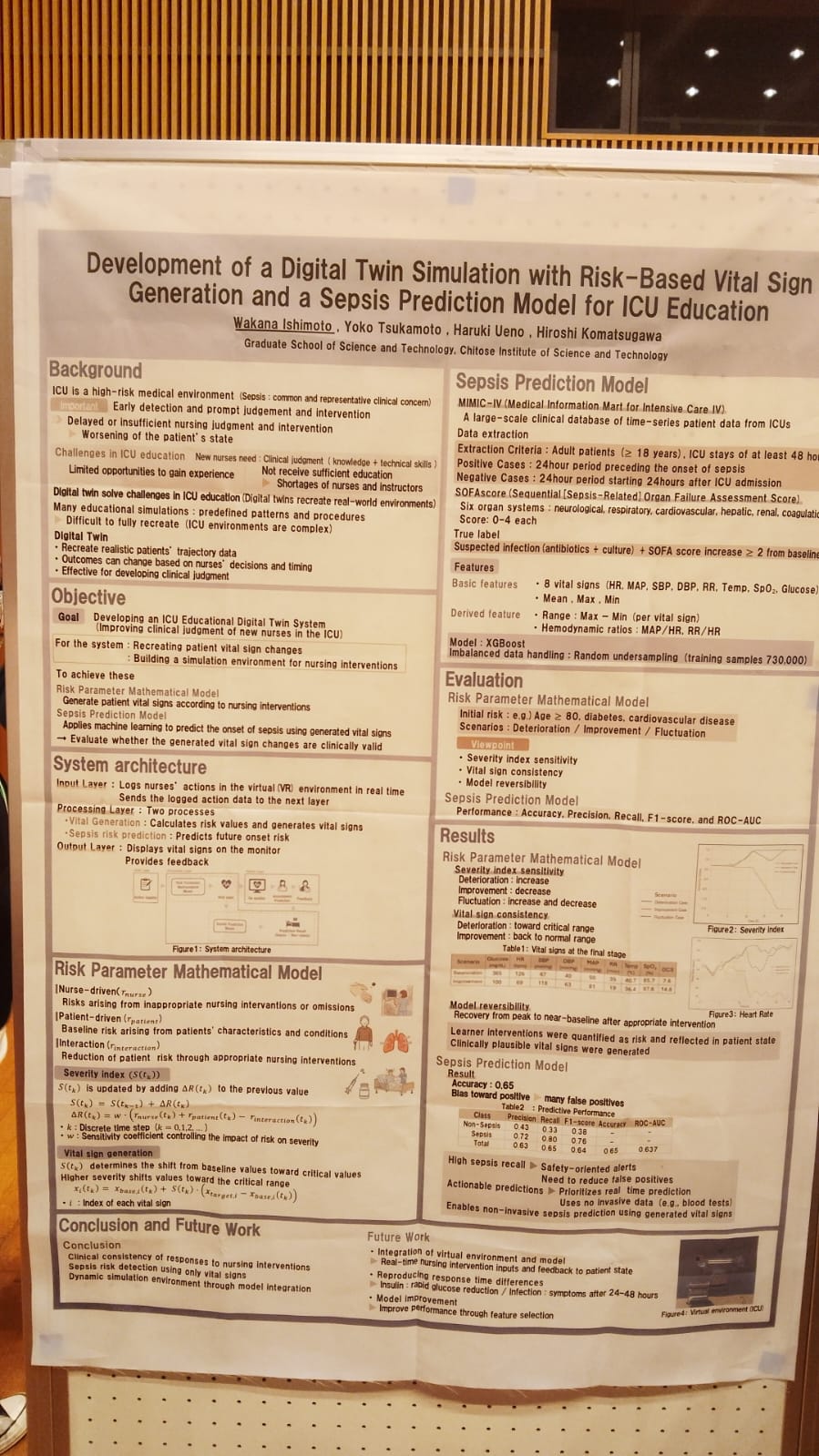
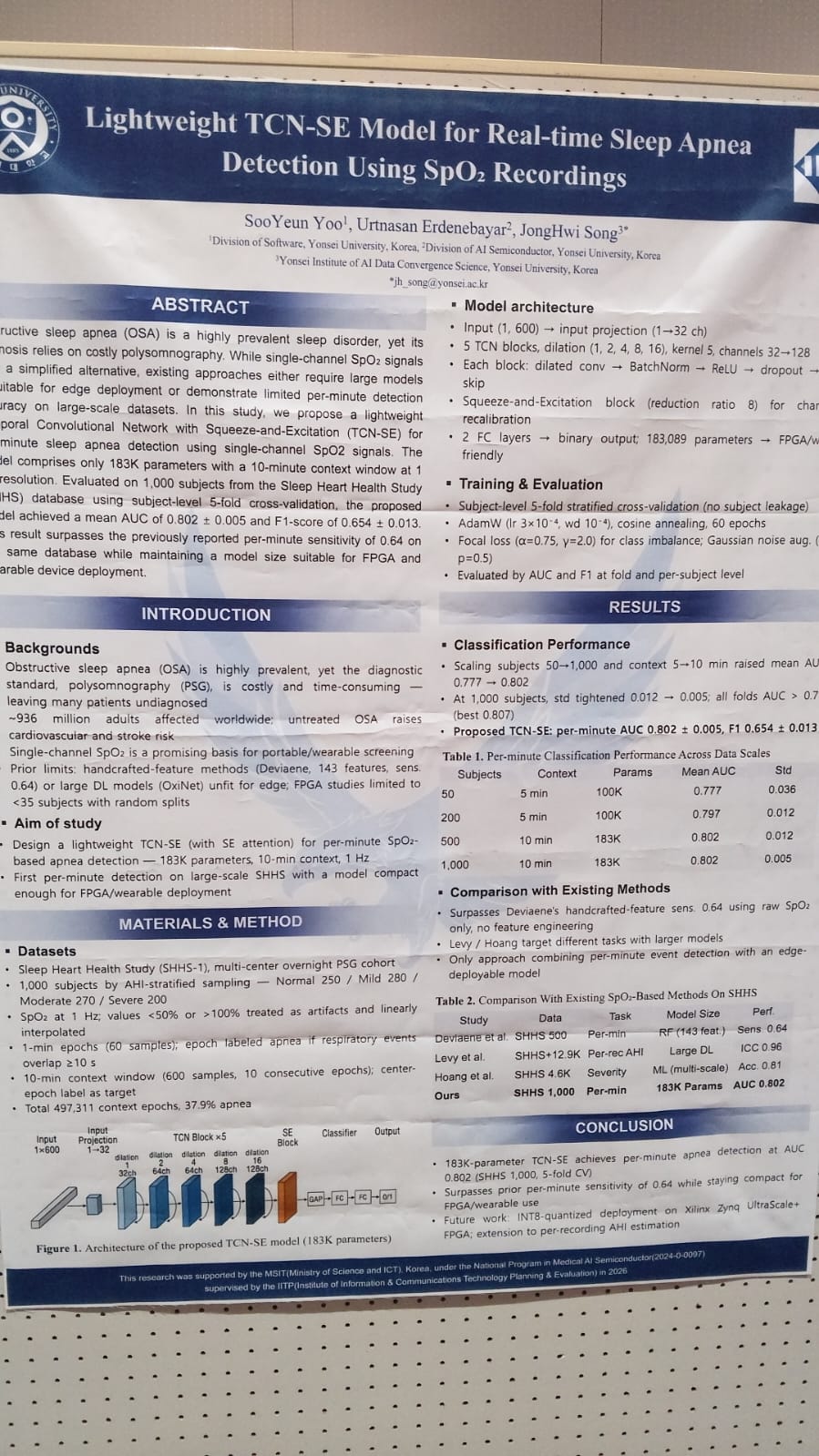
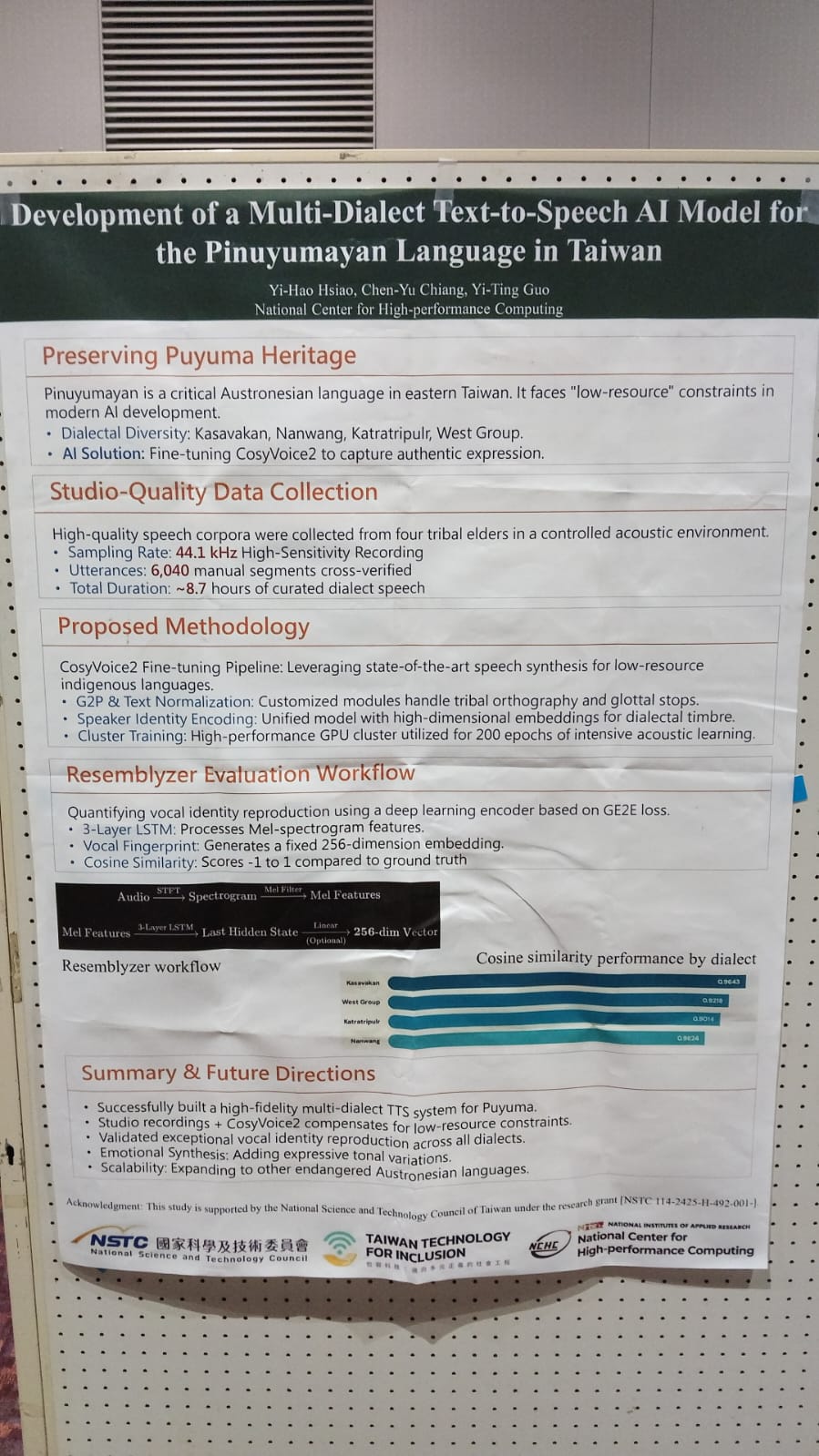
A few posters that stood out to me during the Poster Session
A few posters that caught my attention: “Lightweight TCN-SE Model for Real-time Sleep Apnea Detection Using SpO₂ Recordings” (Yoo, Erdenebayar, Song, Yonsei University), a lightweight sleep apnea detection model (183K parameters) that stays accurate while being designed to run on FPGA or wearable devices. One poster that felt fairly close to my own research was “Development of a Multi-Dialect Text-to-Speech AI Model for the Pinuyumayan Language in Taiwan” (Hsiao, Chiang, Guo, National Center for High-performance Computing), an AI text-to-speech model for Pinuyumayan, an endangered Austronesian language in Taiwan, built from recordings of four tribal elders and fine-tuned on a modern TTS model (CosyVoice2). This research shares the same spirit as my own work on sign language recognition: both are about building AI for languages underserved by mainstream research, and both face the challenge of limited data. The difference is that my challenge is domain gap and cross-signer generalization in ASL, while theirs is preserving the authenticity of voice and dialect from native speakers who are becoming fewer. Both, in the end, are about how AI can help preserve a community’s way of communicating, not just languages that already have abundant data. The last poster I looked at was “Development of a Digital Twin Simulation with Risk-Based Vital Sign Generation and a Sepsis Prediction Model for ICU Education” (Ishimoto, Tsukamoto, Ueno, Komatsugawa, Chitose Institute of Science and Technology), a digital twin simulation for training new nurses to recognize signs of sepsis in the ICU.
Day 2: July 14, 2026
Day two had two presentations that caught my attention. The first, “Image Analysis with a Vision-Language Model Using Affordance and User-Characteristic Prompts” by Koichi Nakamura, Sakuei Onishi, and Hiromitsu Shiina, addressed the problem that standard VLM captions don’t reflect individual characteristics. Their solution borrows the concept of affordance from Gibson: the VLM first analyzes what the image “affords” from an environmental and cultural standpoint, then combines that with the user prompt. The result was that for clear preferences (nature-oriented, urban-oriented), caption scores rose significantly across two different datasets. An example photo of Okayama Station made the difference clear, going from a caption that focused narrowly on a single element to a description of a coherent urban landscape.
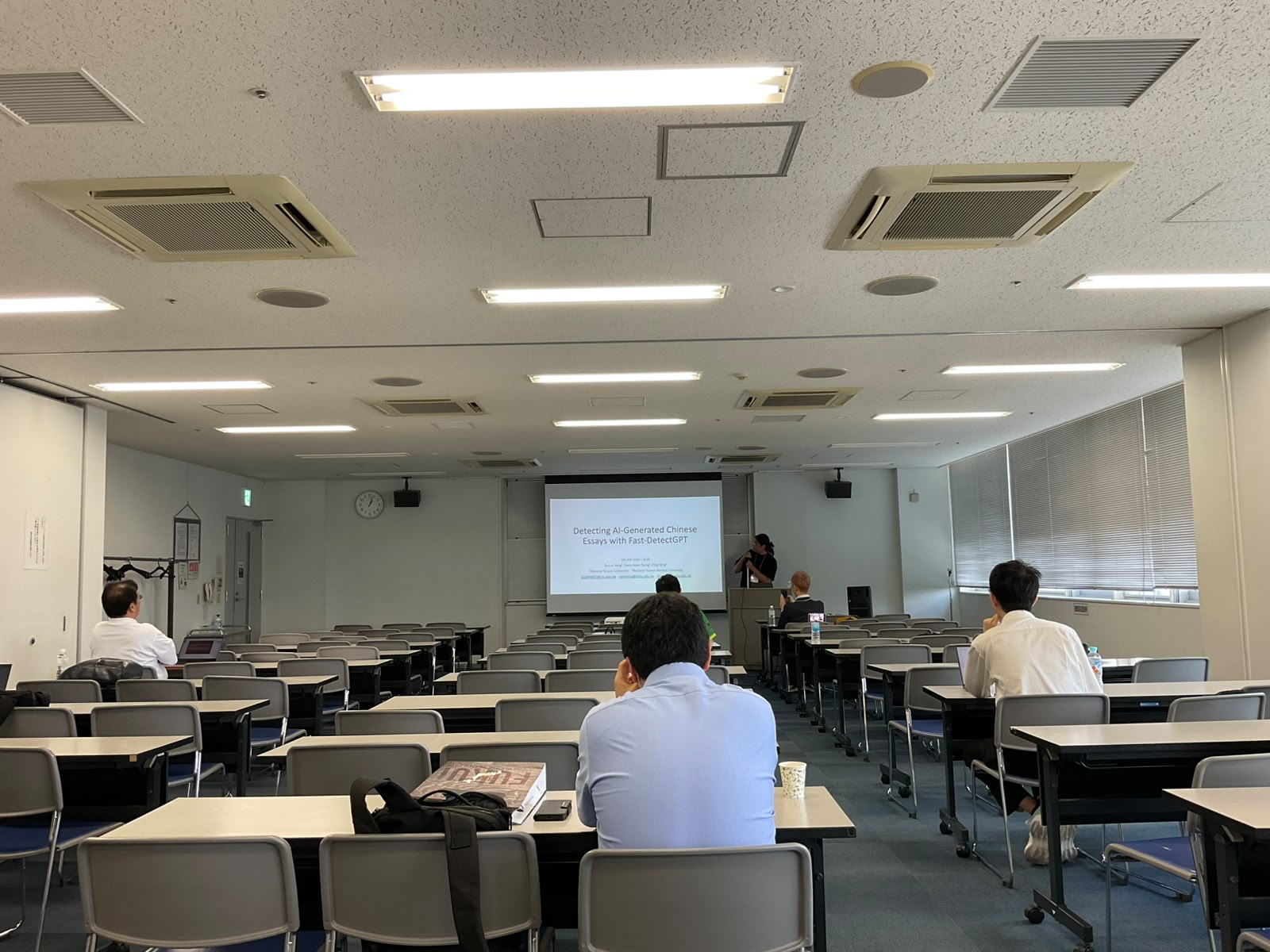
The second presentation, “Detecting AI-Generated Chinese Essays with Fast-DetectGPT” by Te-Lun Yang, Yuen-Hsien Tseng, Ping Yang, was opened by a presenter who is also the development lead of WASS, a plagiarism detection system used across Taiwan that can only detect verbatim plagiarism and has no way of knowing how many AI-generated papers already exist in its database. They compared handwritten exam essays from Taiwanese junior-high students against AI-continued versions of the same essays, then detected them using Fast-DetectGPT, which measures how far a text’s log-probability deviates from the model’s own expectation. The result was a near-perfect AUROC across the three open-source models they tested. This topic felt especially relevant given how, as AI tools become easier to access, more and more students are taking a shortcut: producing an essay or assignment purely with AI and submitting it directly without any editing or self-review. What I appreciated about this paper is that they didn’t stop at the impressive numbers. They were careful to emphasize that this method should serve as a screening signal supporting human review, not as an automatic verdict.
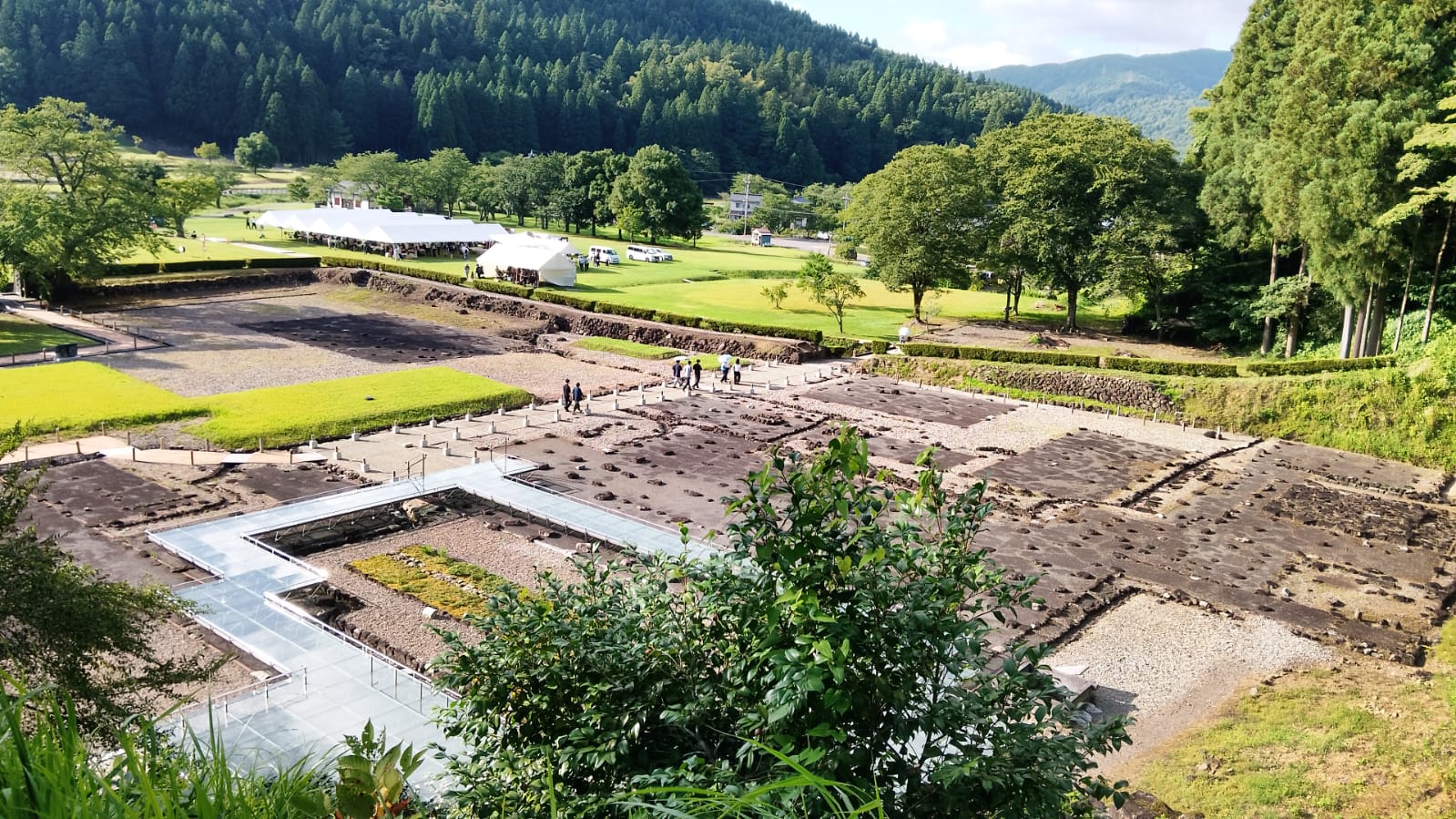
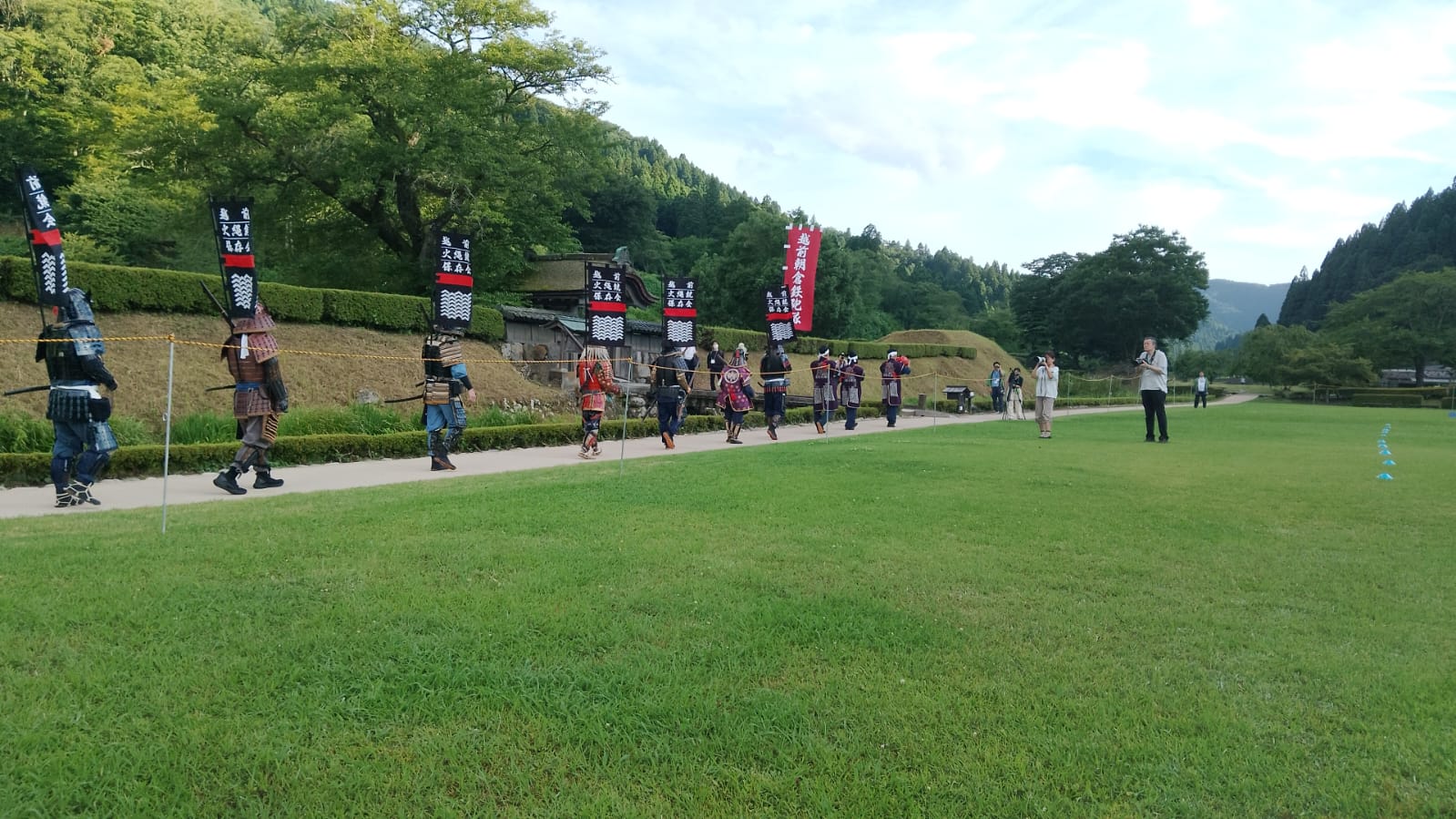
The day closed with a visit to the Ichijo-dani Asakura Clan Ruins, the former stronghold town of the Asakura clan, who ruled the Echizen region for roughly 100 years during the Sengoku era. Walking among the excavated foundations spread across a valley surrounded by forested mountains, one of the moments that caught my attention most was a performance by a teppo troupe (matchlock/arquebus gunners in the style of the Sengoku period) in full armor, marching in formation with banners raised along the site’s path, before carrying out a synchronized blank-fire demonstration, complete with a loud bang and a burst of white smoke that genuinely startled me (hahaha).
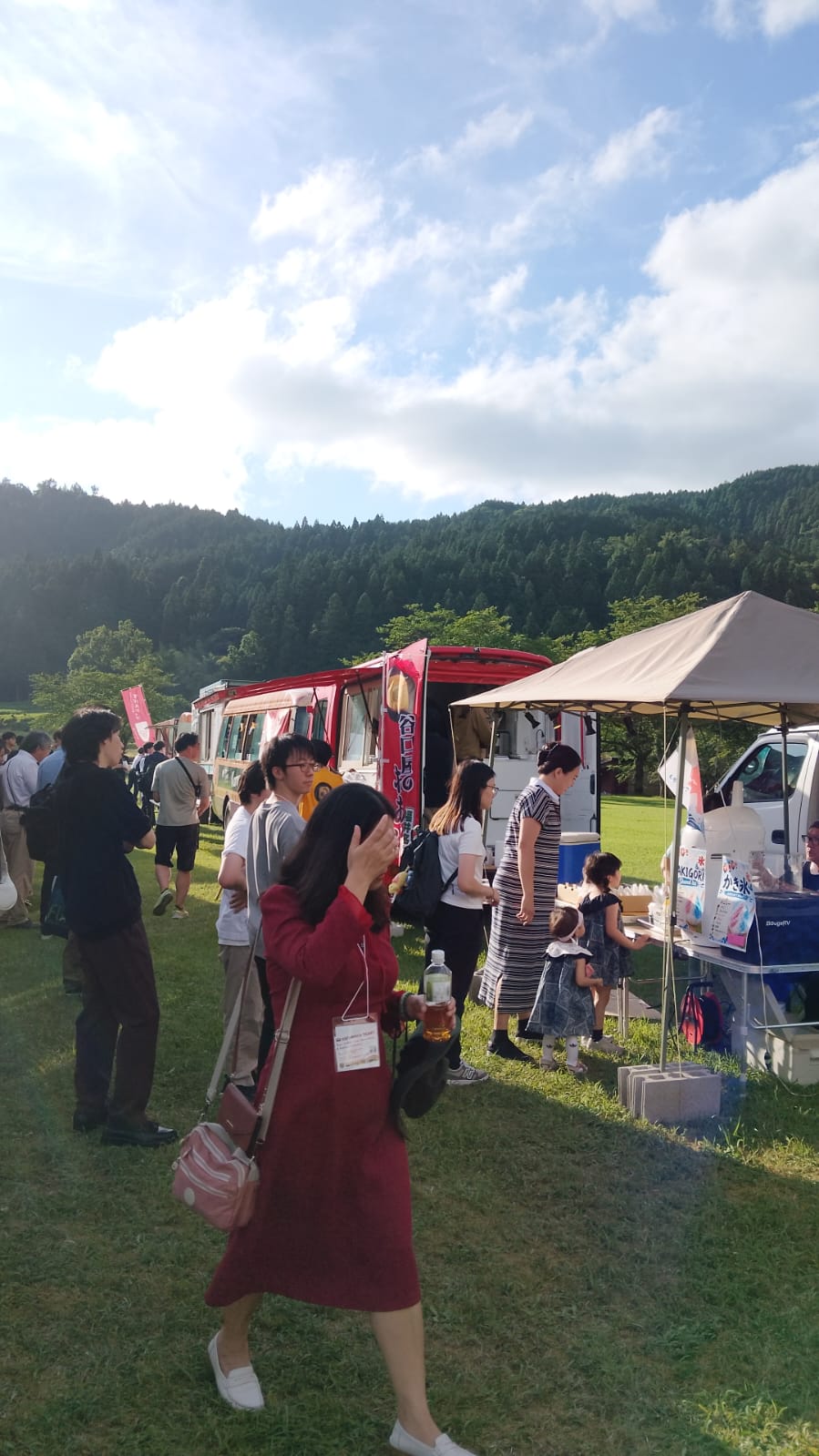
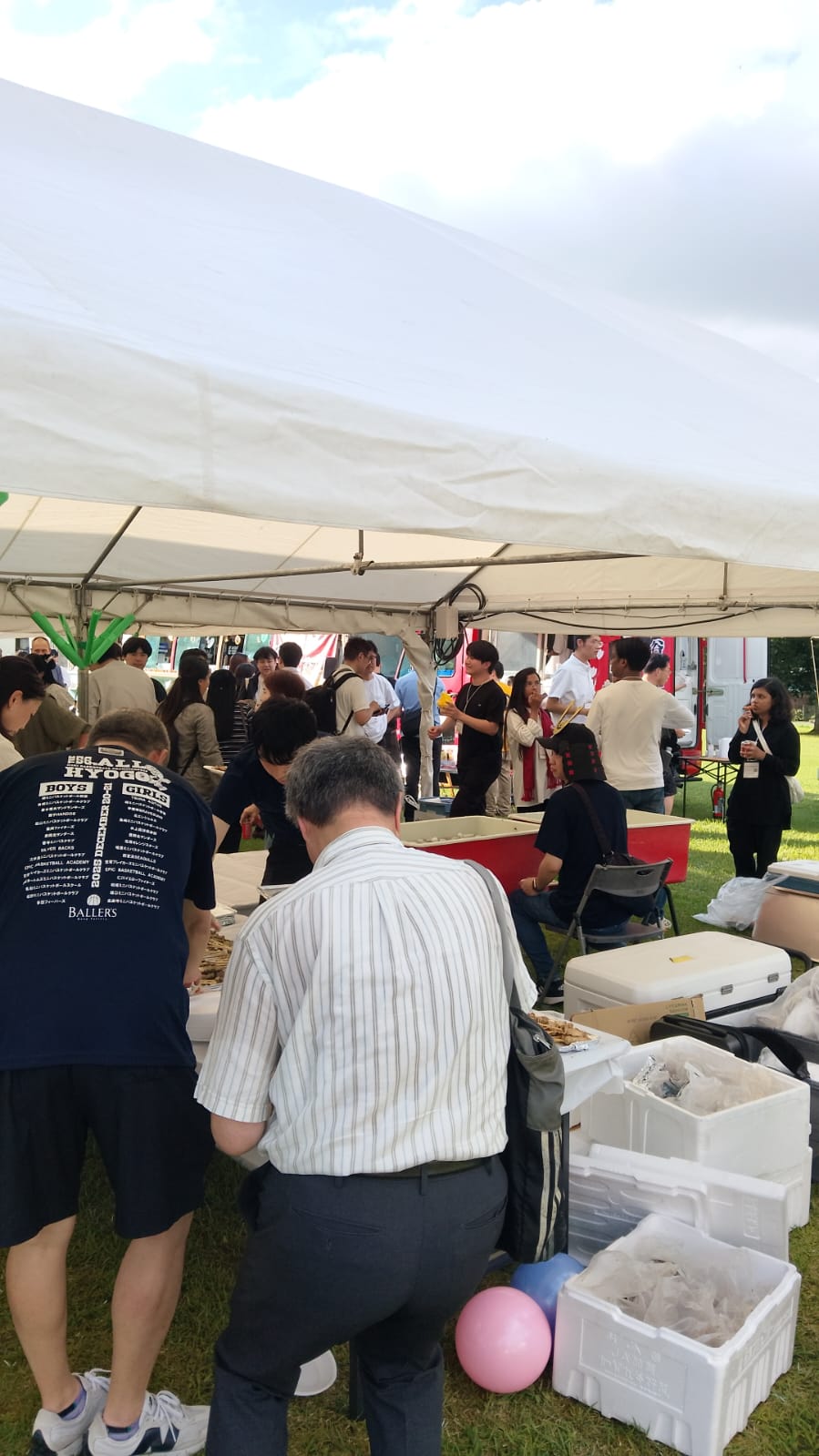
Food trucks and fellow researchers at Ichijo-dani
The organizers also set up several food trucks with free food and drinks scattered across the lawn near the site. It turned out to be the perfect time to mingle with fellow researchers outside the conference rooms, chatting over food and drinks as the sun set behind the mountains.
Day 3: July 15, 2026
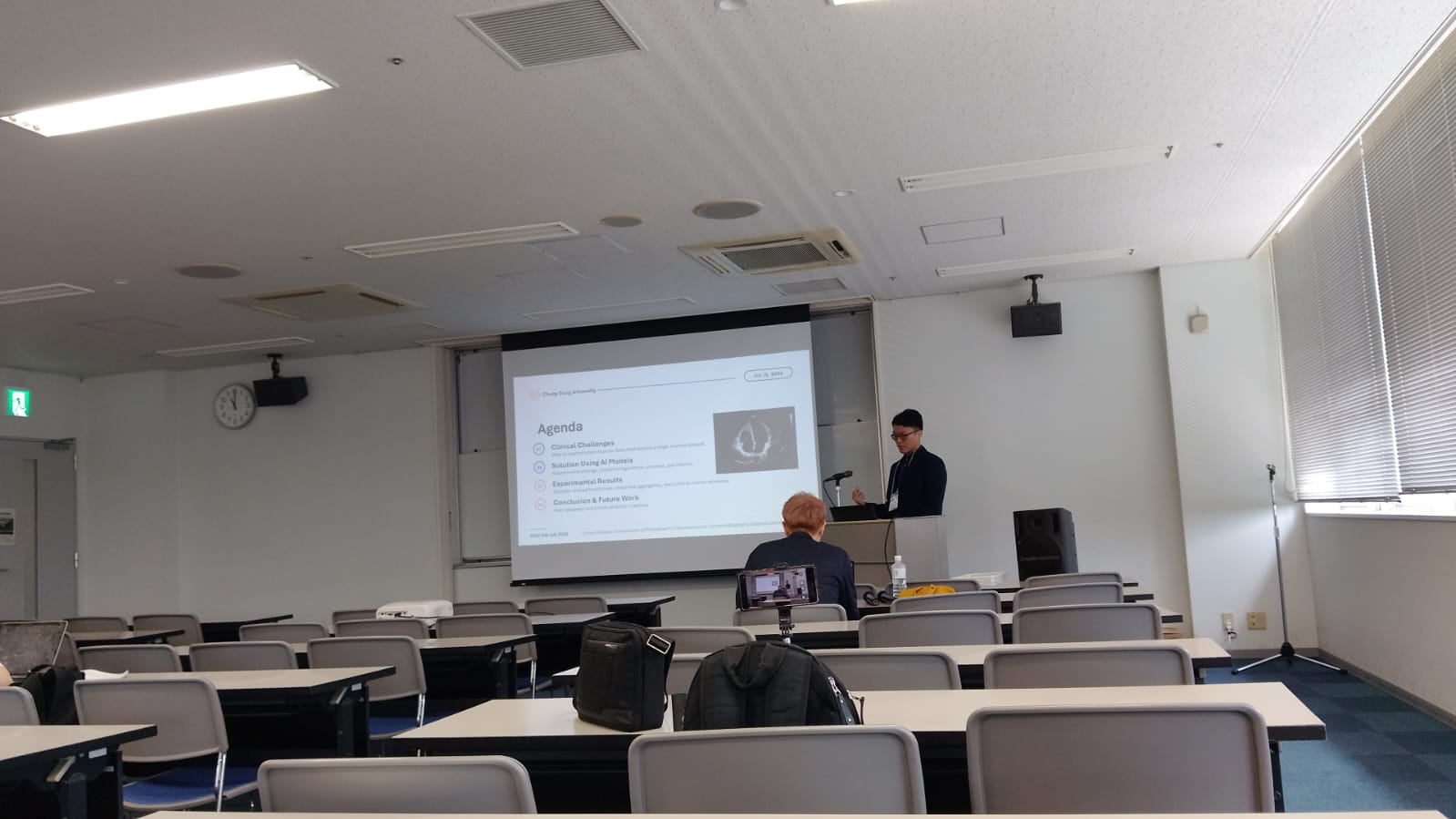
Today was the day of my own presentation, so I felt a bit nervous from the morning (mweheheheh), but I tried to focus on the other sessions first before my turn came. One presentation that caught my attention was “Cross-Dataset Comparison of Pretrained CV Backbones for Echocardiography Segmentation” from Chang Gung University. This research starts from a real clinical problem: even the smallest error in left ventricle segmentation can propagate into errors in volume and LVEF calculations. They compared four backbones with different pretraining strategies (EchoNet as an echo-specific CNN, Google-ViT as a supervised ImageNet ViT, GenMAE as a self-supervised model, and Pixio-5B as a web-scale MAE model), all using the same decoder, then tested them in two settings: trained on EchoNet-Dynamic and evaluated across datasets, and trained specifically on CAMUS A4C. The result was that EchoNet performed best on its own source dataset, but once tested across domains, GenMAE was the most consistently strong performer across all external datasets. The conclusion was clear: pretraining strategy is the most decisive factor under dataset shift, so backbone selection should be based on cross-dataset reliability rather than just the internal test score on a single dataset.
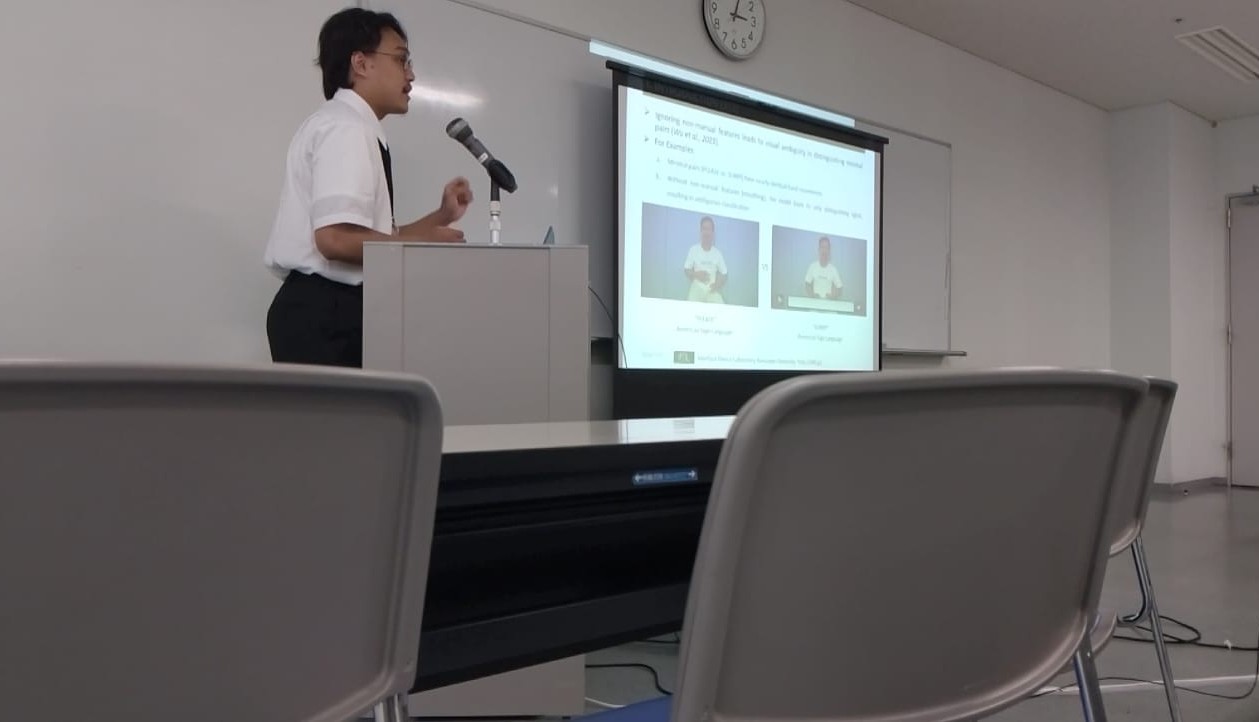
After that, it was my turn to present. Thank God the presentation went smoothly, though the 25 minutes allotted for the talk and Q&A felt like they flew by, so I only ended up getting two questions. The first was about whether there are any future plans to develop this research into a tool. The second actually bundled two questions together: why my hand sign stream involves facial keypoints or landmarks such as the nose, mouth, and eyes, and why I chose American Sign Language as the focus of this research. Thank God I was able to answer all of them smoothly, and they ended up being valuable input I can factor into how I develop this research further.
Day 4: July 16, 2026
The last day of the conference, and since my own presentation was already done the day before, today I could sit back and enjoy other people’s sessions without any nervous jitters. Two presentations stood out to me today.
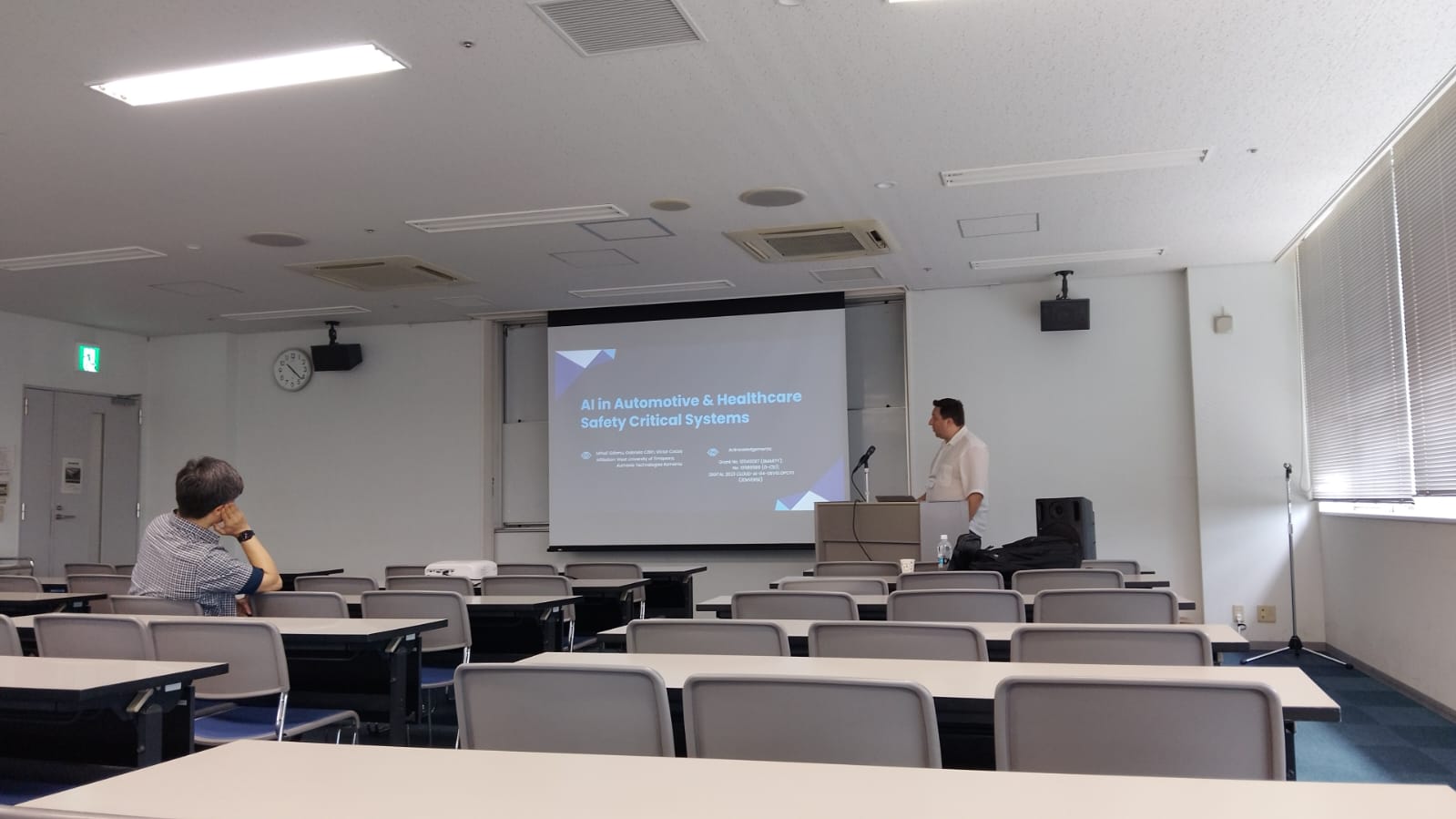
The first presentation,”AI in Safety-Critical Automotive and Medical Systems: A Cross-Domain Synthesis” by Gabriela Calin, Mihail Gaianu, and Victor Vlad Cocos
A systematic review comparing how AI is used in safety-critical systems across automotive and healthcare. Despite operating under completely different regulatory frameworks, both domains face the same underlying technical challenges: noisy data, expensive annotation, and strict assurance requirements, and both rely on the same three pillars (automation, simulation, assurance), just applied differently. What I found most interesting was the concept of “verified ground truth” as a shared bottleneck, a labeling error doesn’t just hurt model accuracy on paper, it can propagate into unsafe clinical advice or a bad driving decision.
The second presentation”An Adaptive Edge-Cloud Architecture for Reliable Pedestrian Action Recognition” by Carly-Jaurelle Boukandou Moukouama, Taichi Sono, and Hideyuki Takada
A pedestrian crossing detection system that stays reliable even as visual conditions shift from clear daylight to low-light night driving, running three lightweight models on the edge device and offloading only “uncertain” frames to the cloud. The part I found most compelling was how they distinguish a genuine drop in confidence from mere noise, using two exponential moving averages running at different speeds plus a hysteresis mechanism to stop the system from flip-flopping between edge and cloud. The result: cloud offloading automatically rose with scene difficulty (12% in good weather, 50%+ in low light), recovering reliable detection in conditions where edge-only failed entirely.
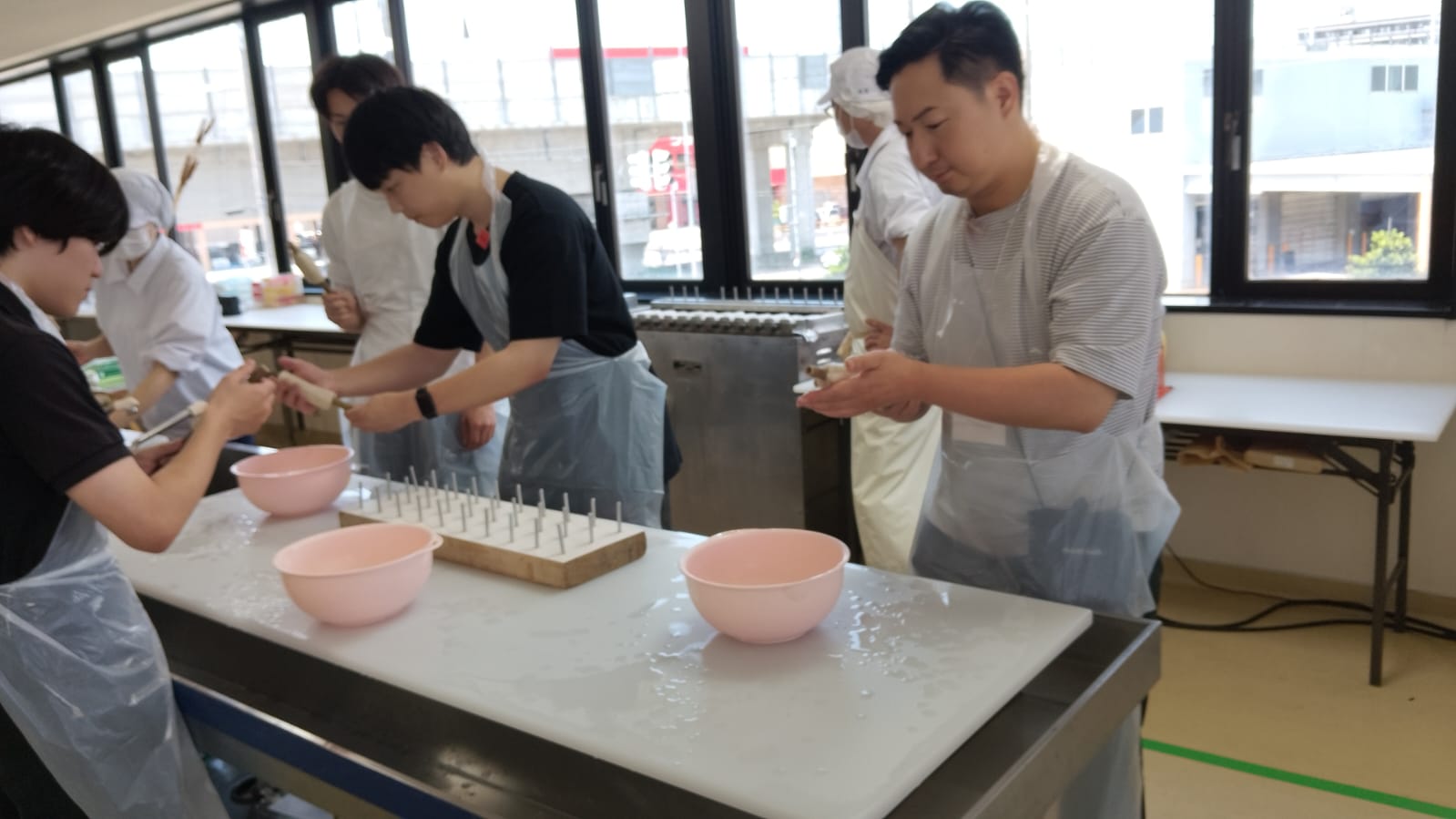
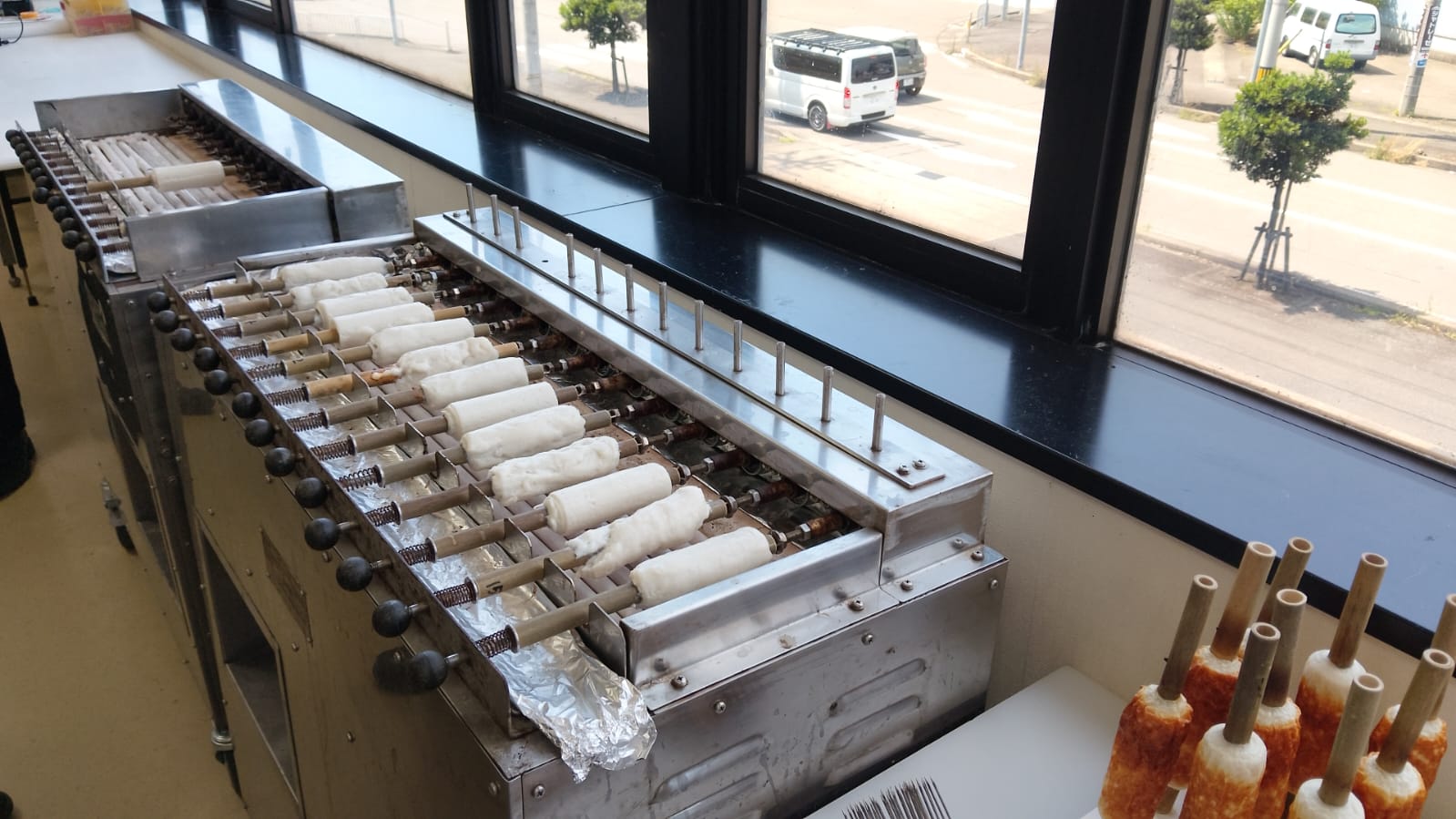
Hand-rolling and grilling our own Gamanoho at Yasuda Kamaboko Workshop
Beyond the presentation sessions, the conference also offered a technical tour and excursion, with 5 tour options: Tour 1 (EIGHT RIBBON & Ichijodani Asakura Ruins), Tour 2 (Kubota Brewery & Ichijodani Asakura Ruins), Tour 3 (Milk Kobo Okuechizen & Echizen Daibutsu), Tour 4 (Echizen Soba Village & Echizen Chiyozuru Museum), and Tour 5 (Yasuda Kamaboko Workshop & Fukui City Museum of History). I picked Tour 5, held on July 16, so after attending a few presentation sessions, I joined this tour.
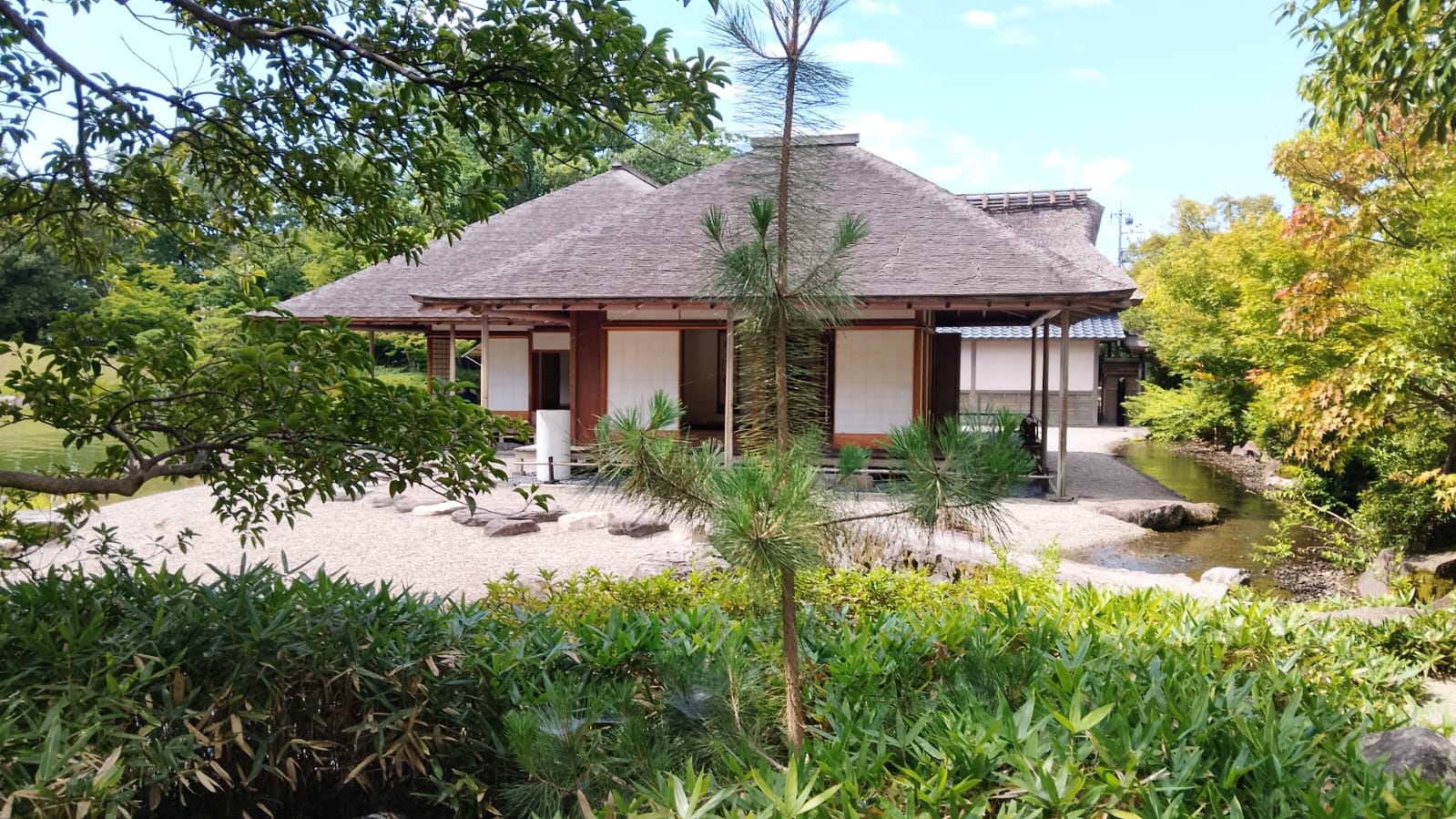
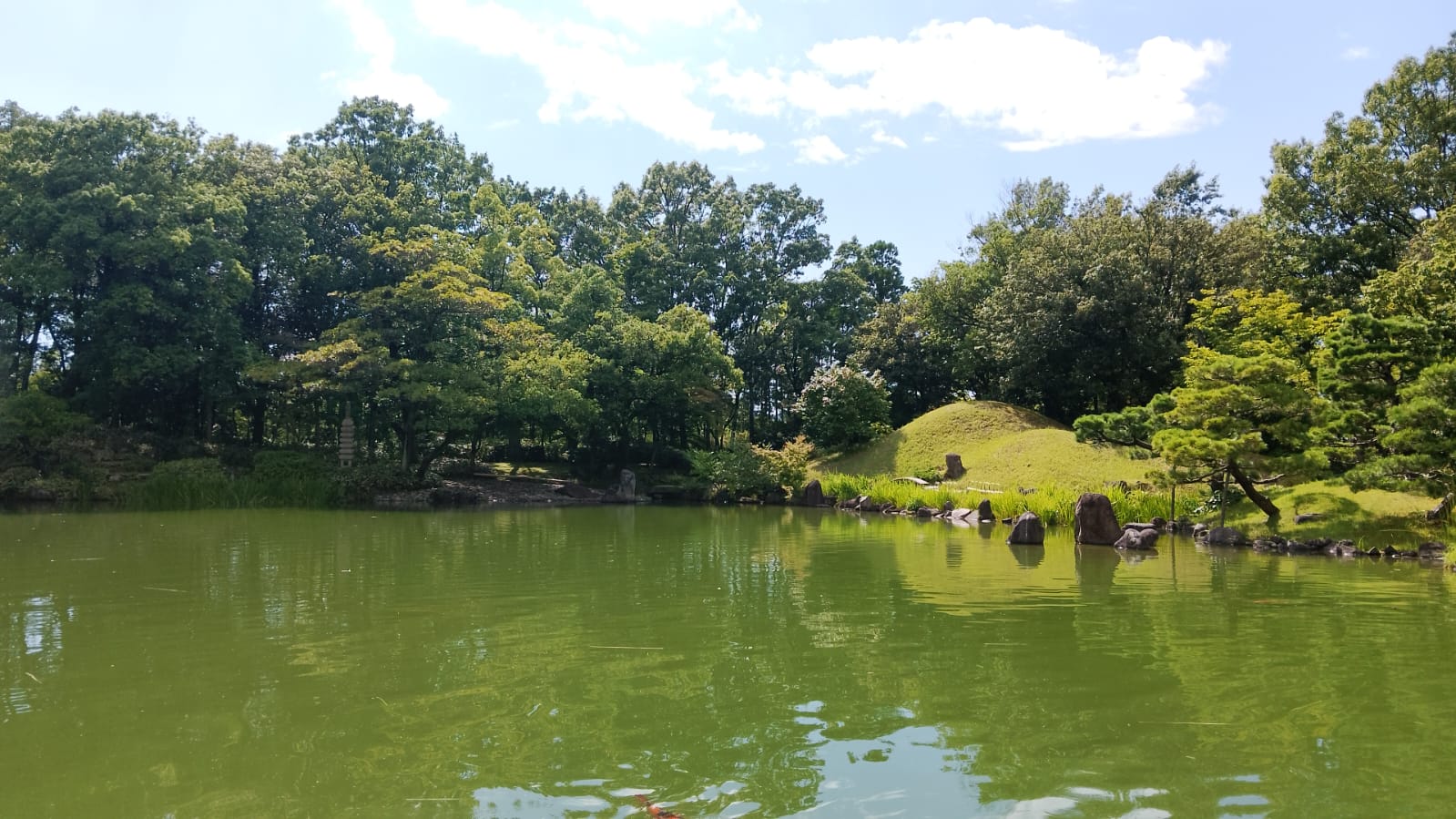
Yokokan Garden, once a retreat for the lords of the Fukui Domain
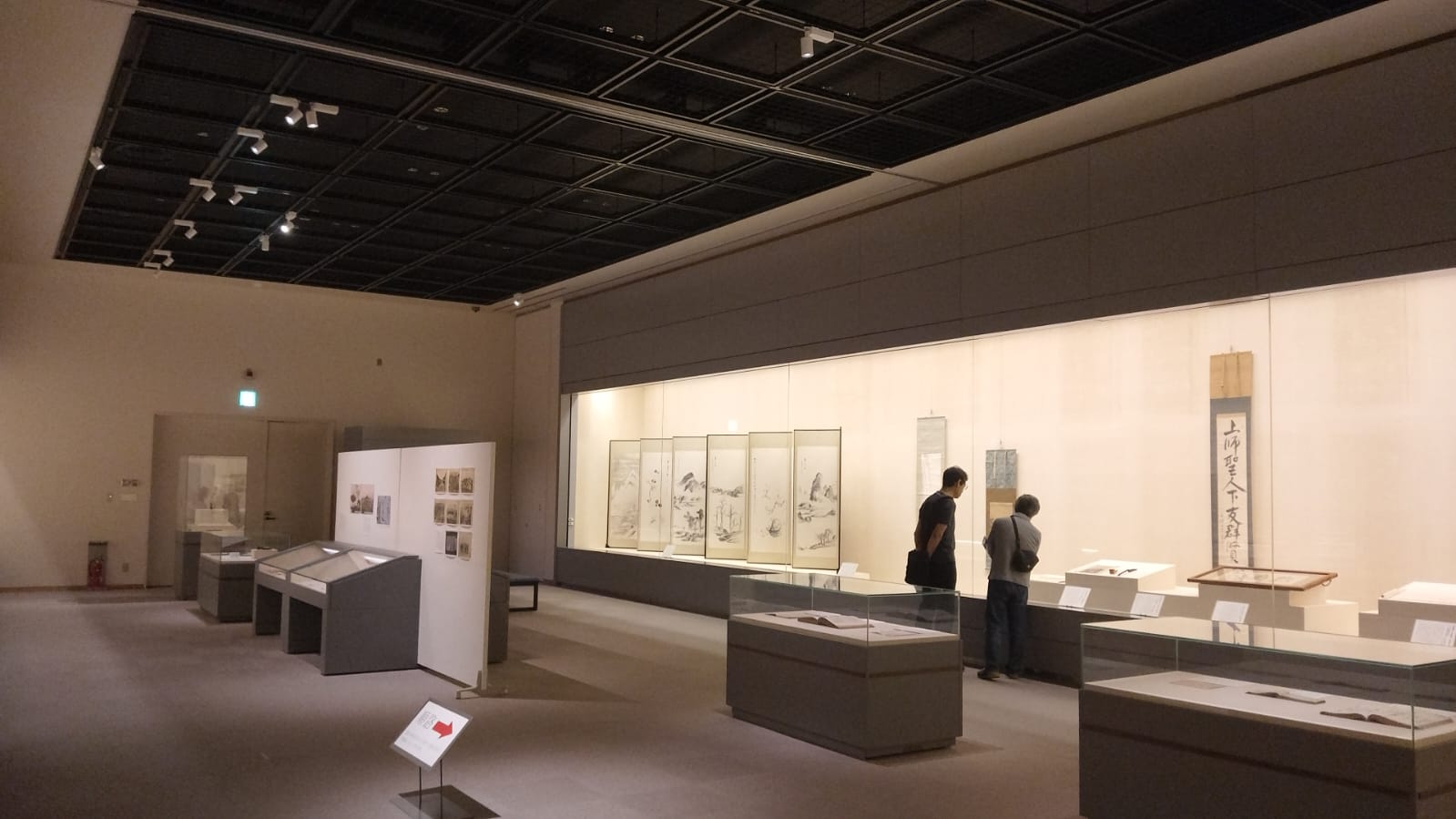
At the Yasuda Kamaboko Workshop, I got to make my own “Gamanoho,” a traditional grilled fish cake wrapped around a bamboo stick, using techniques passed down for generations, then enjoyed it fresh right after making it. The tour continued to Yokokan Garden, a beautifully restored Edo-period garden that once served as a retreat for the lords of the Fukui Domain, before ending at the Fukui City Museum of History, where I learned a lot about the history and culture of Japan, particularly around the Fukui region.
Four days, dozens of sessions, one nerve-wracking presentation, and more grilled skewers than I can count (hahaha). Beyond the technical takeaways, attending several presentations also made me realize something fundamental that I sometimes forget: research involving humans directly carries a deeper layer of consideration than just building an accurate model. There’s an ethical weight to it, because the people involved are human, not just numbers on paper.
IIAI AAI 2026 didn’t just give me new research ideas to think about and deepen my understanding of my field, it also helped me build connections with fellow researchers. See you at the next conference!