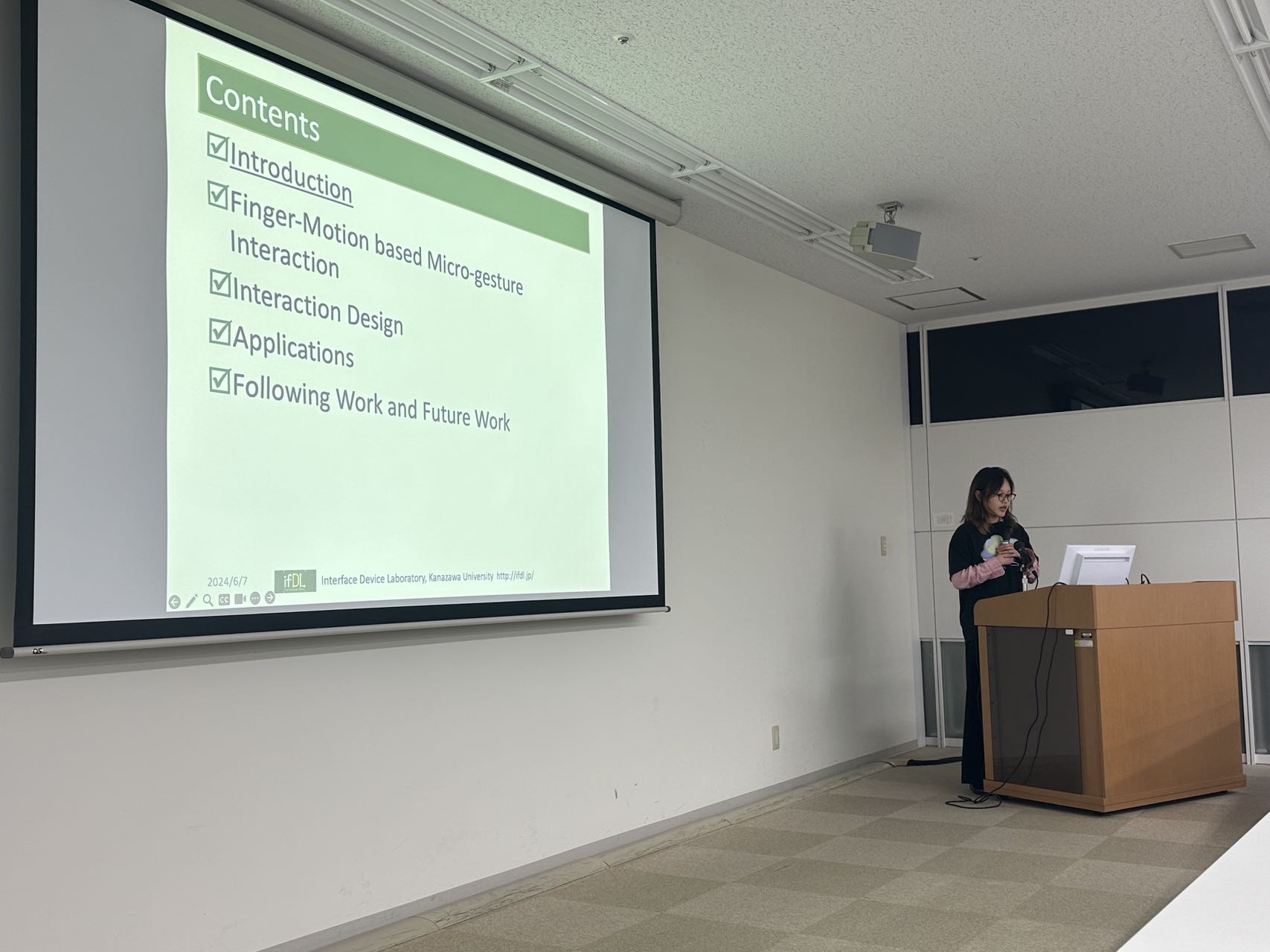
Attending IIAI AAI 2026: Stories from Fukui, Japan

From July 13 to 16, I had the chance to attend an international conference as a presenter at IIAI AAI 2026 (20th IIAI International Congress on Advanced Applied Informatics), now in its 20th edition, held at AOSSA, Fukui, Japan.
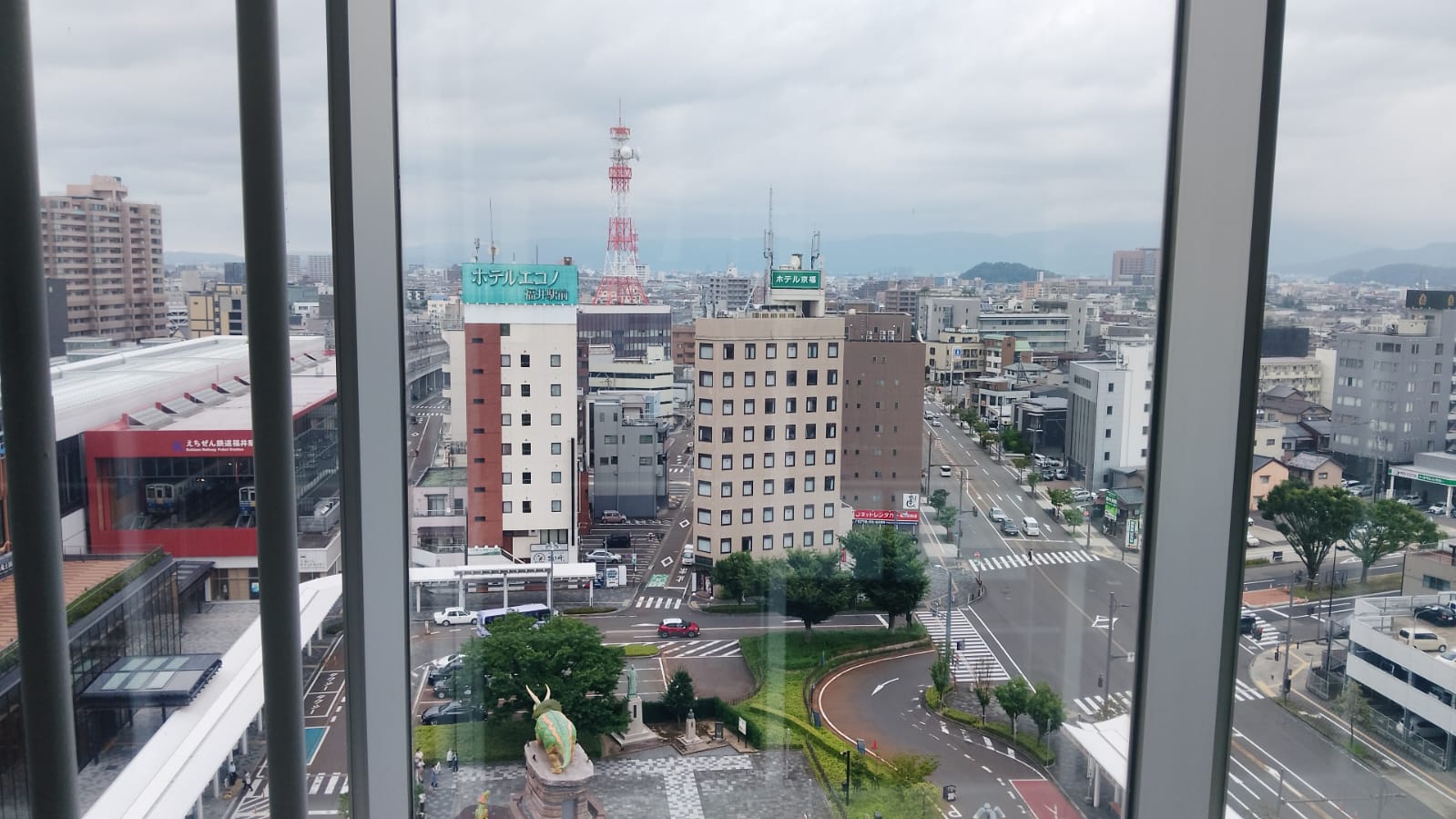
View from the AOSSA building

At the opening ceremony, the General Chair of IIAI AAI 2026, Yuichi Ono (University of Tsukuba, Japan), shared that this year’s conference received a total of 518 paper submissions from 19 countries/regions, reviewed by 384 program committee members from 40 countries. Of these, 131 papers were selected as regular papers (25.2% acceptance rate), 33 as short papers, and 17 as posters. My journey to the venue started on July 12, 2026. I took the local Happy Liner train from Kanazawa Station, about a 1 hour 25 minute ride to Fukui Station. I actively attended the conference sessions from July 13 to 16.
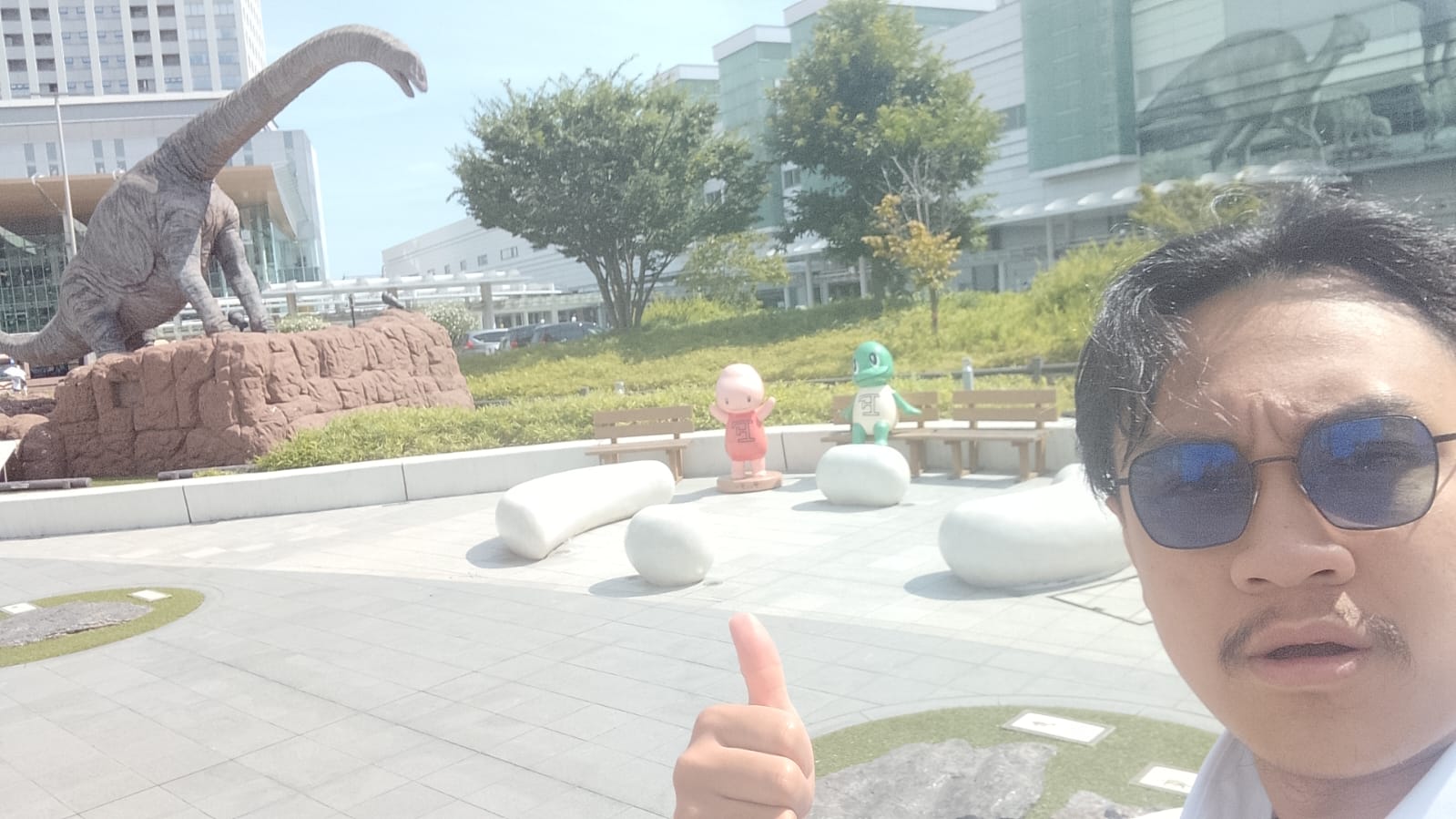
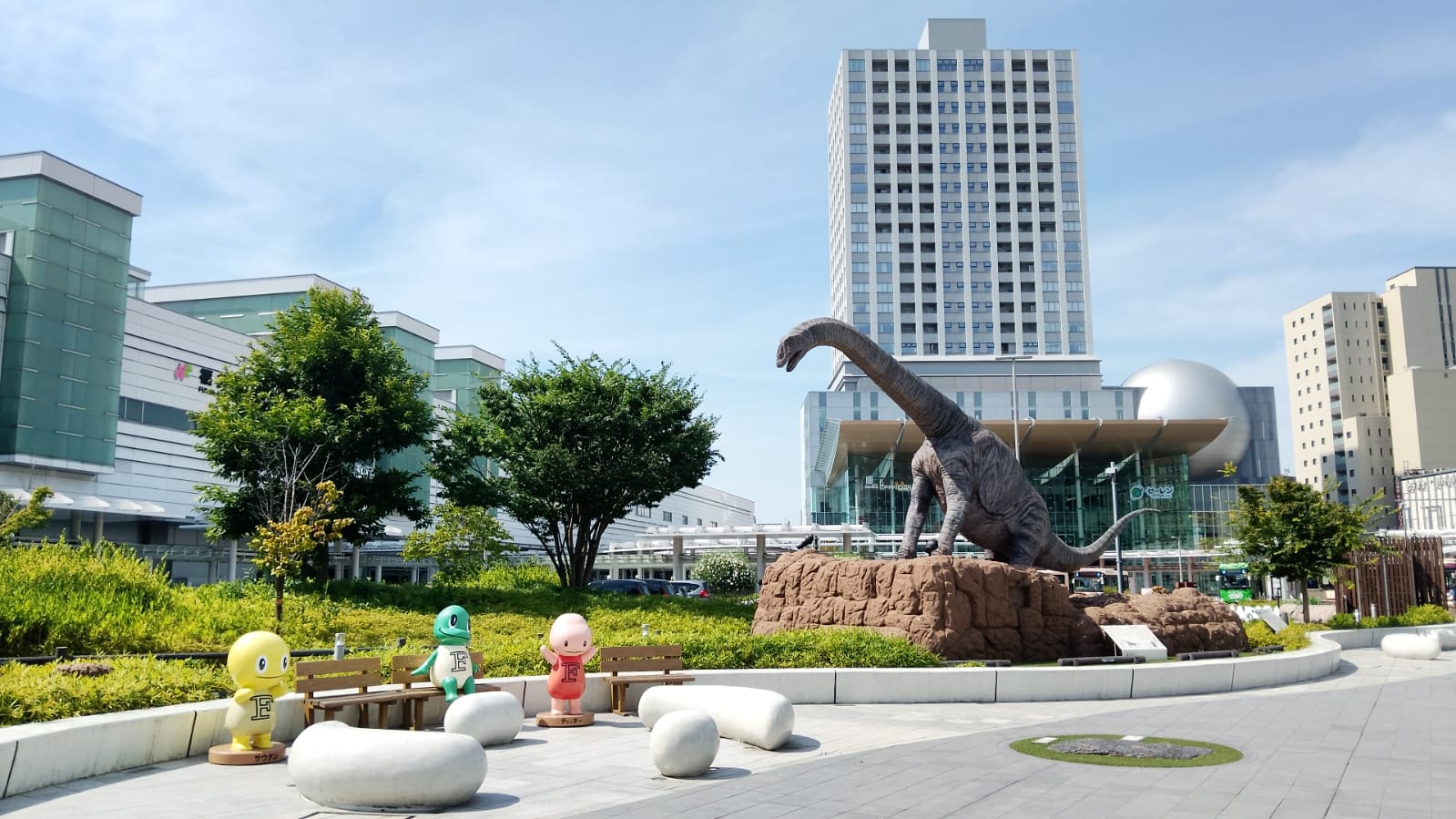
Welcome to Fukui, the Dinosaur Kingdom

Here’s my day-by-day story, from the sessions that caught my attention to the moment I stepped up to present our work.

Day 1: July 13, 2026
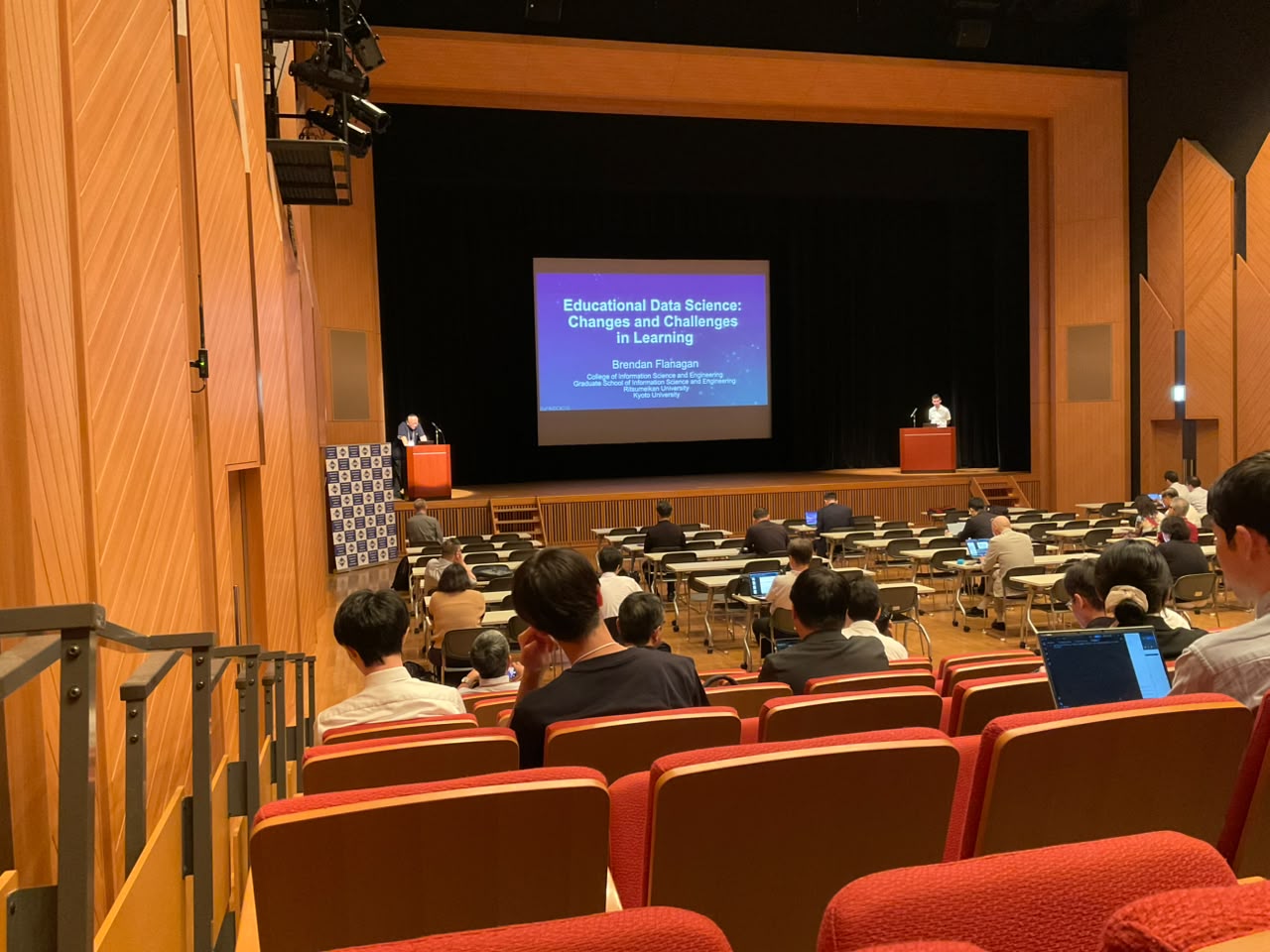
Keynote 1: Prof. Brendan Flanagan on Educational Data Science

The conference opened with a keynote from Prof. Brendan Flanagan (Ritsumeikan University), “Educational Data Science: Changes and Challenges in Learning,” about how educational data can serve as material for broader AI research. The part I found most interesting: there was an experiment where AI models were trained on synthetic data (to protect student privacy), and while the results looked great on the synthetic data, performance dropped sharply when tested on real data, showing that AI models can easily be fooled when trained on data whose characteristics differ from the real thing.
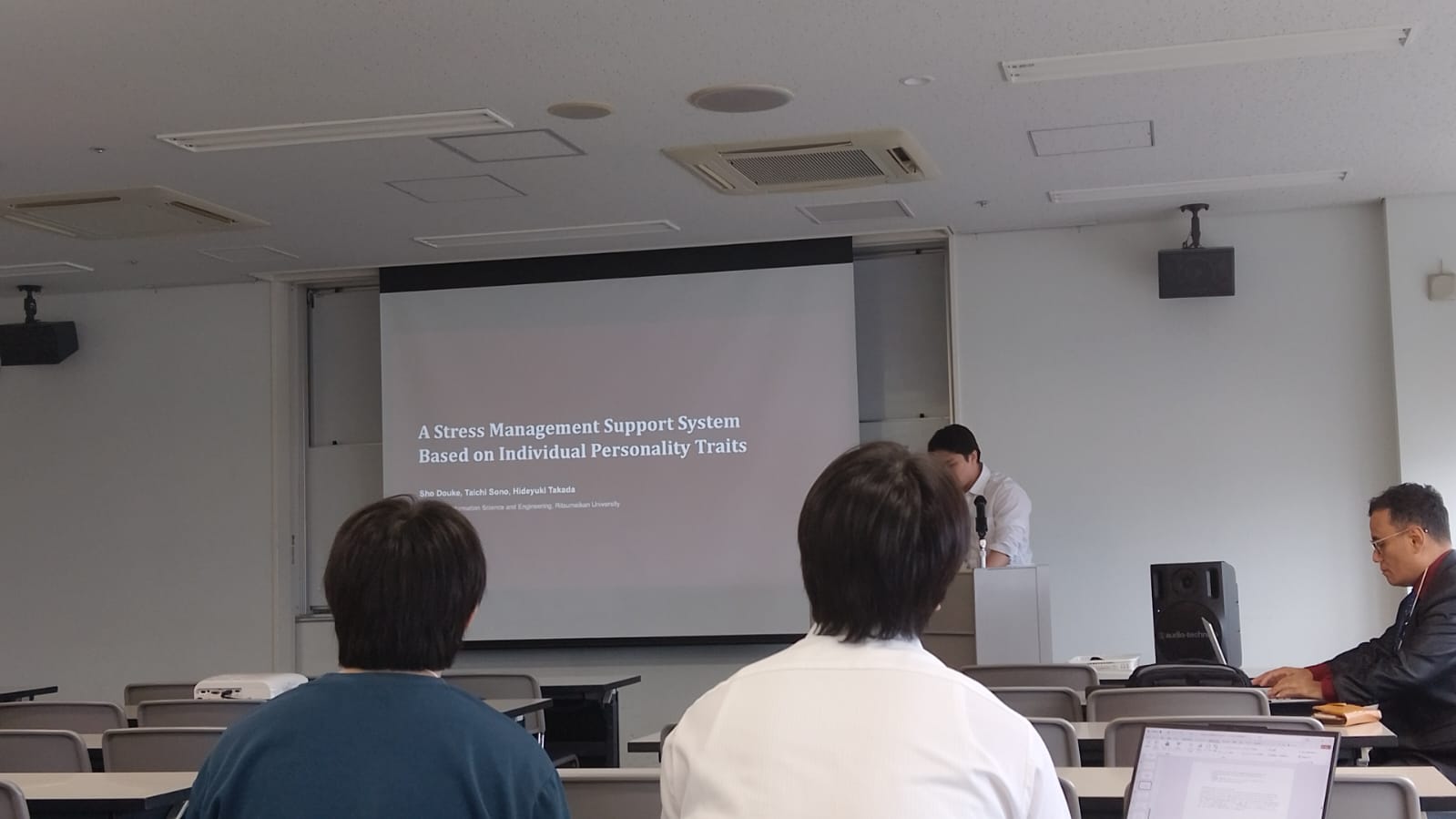
Presenting a personality-based stress management system

There were also two papers that caught my attention because they relate to assistive technology, a topic I’m interested in. First, “A Stress Management Support System Based on Individual Personality Traits” by Douke, Sono, Takada. The research about an AI application that gives stress-management advice tailored to each person’s personality, rather than generic advice given to everyone. They combined personality data with daily stress levels (measured via wearable), then had the AI generate personalized advice. The results showed people were more likely to actually follow the personalized advice and felt it was a better “fit.”

Second, “Infant Carrying as a Development-Adaptive Caregiving Practice” by Satoh, Herrera Cadillo, Nakano, Sakamoto, Takasaki. The research about an AI application that evaluates infant-carrying posture, which until now has assumed there’s a single fixed “ideal posture.” In reality, the ideal posture changes as the infant develops (horizontal carrying when the baby is small, shifting to vertical once the baby can support its own head). As a result, a caregiver who’s actually carrying the baby correctly could still receive a lower score, not because they’re doing anything wrong, but because the evaluation criteria hasn’t been updated to match the baby’s development.
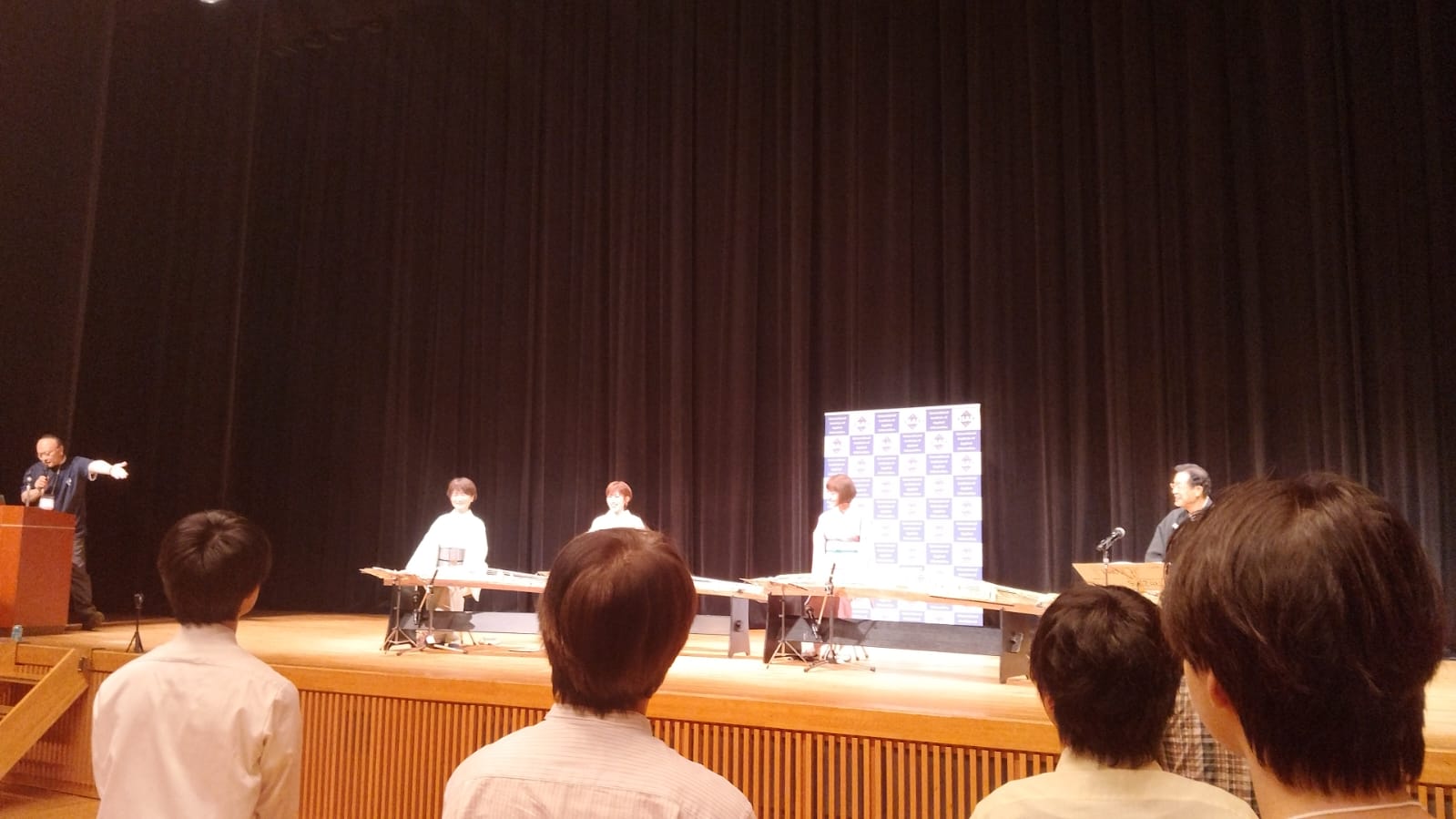
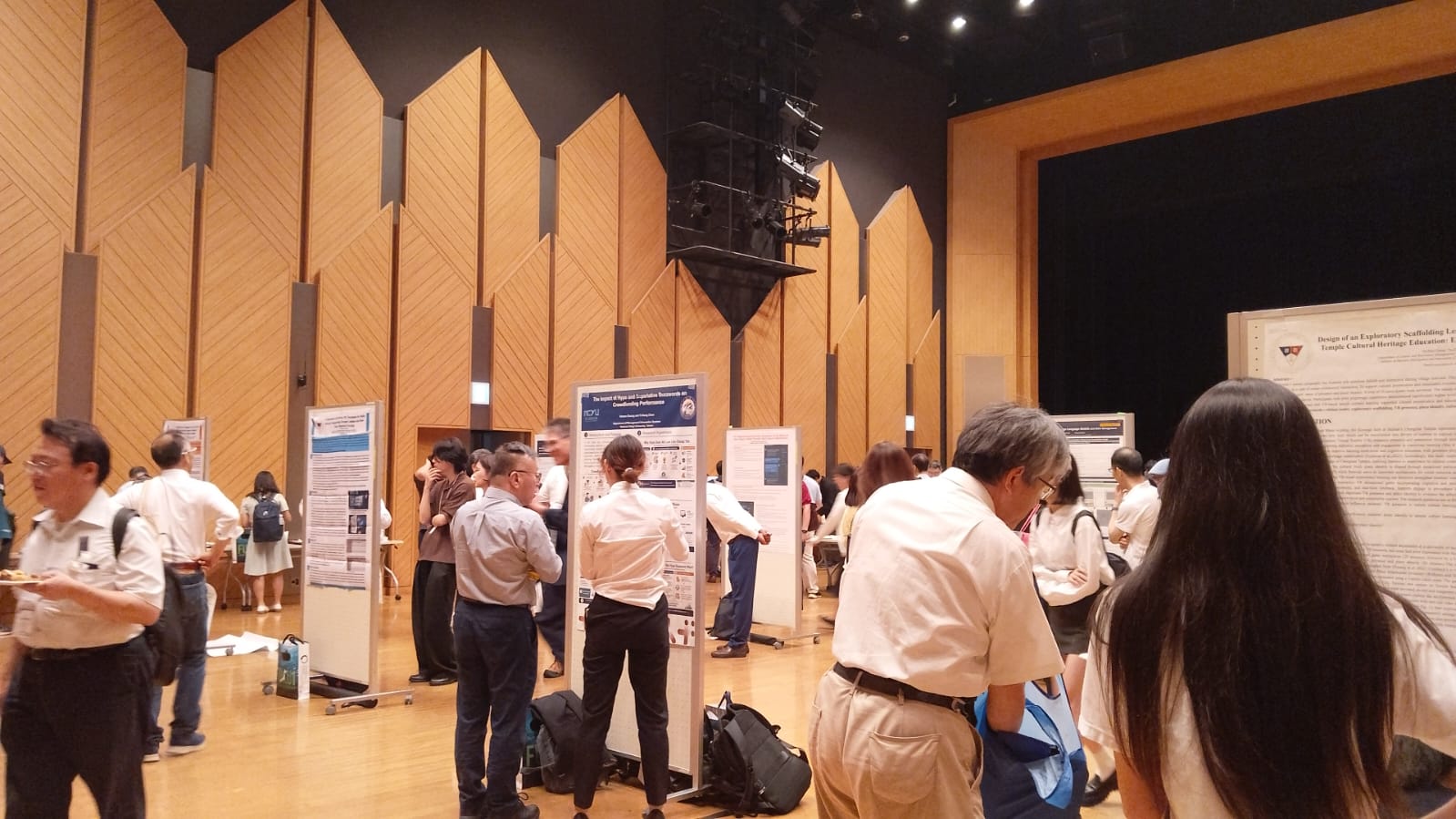
Welcome Reception and Poster Session

This was followed by the Welcome Reception and Poster Session at Hall A. In between poster sessions, there was a traditional Japanese music performance, koto, along with free drinks (wine and the like) and grilled meat skewers whose name I honestly didn’t catch, but they were delicious. The atmosphere was relaxed and social, with researchers exchanging business cards and chatting more deeply about each other’s research.
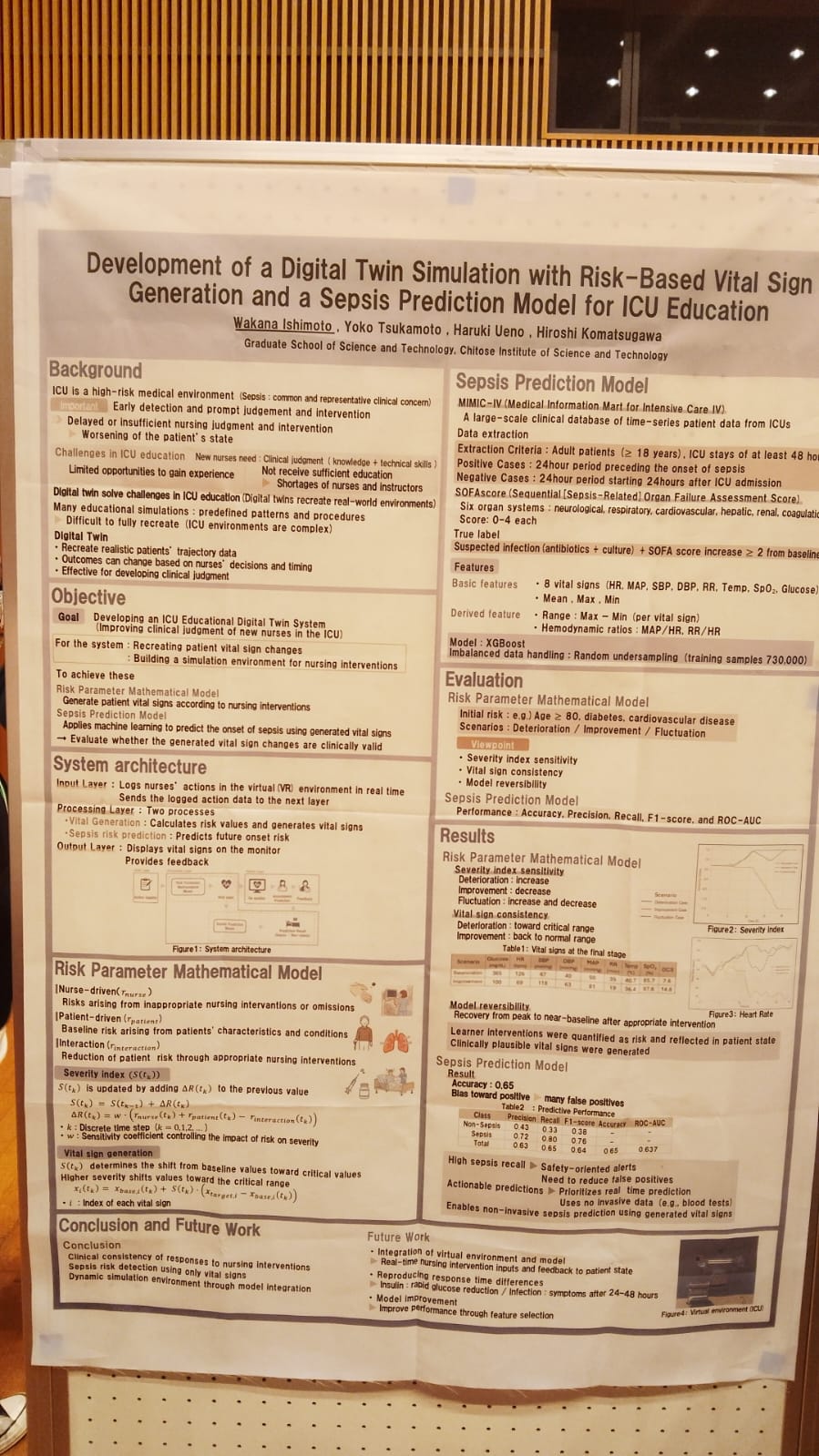
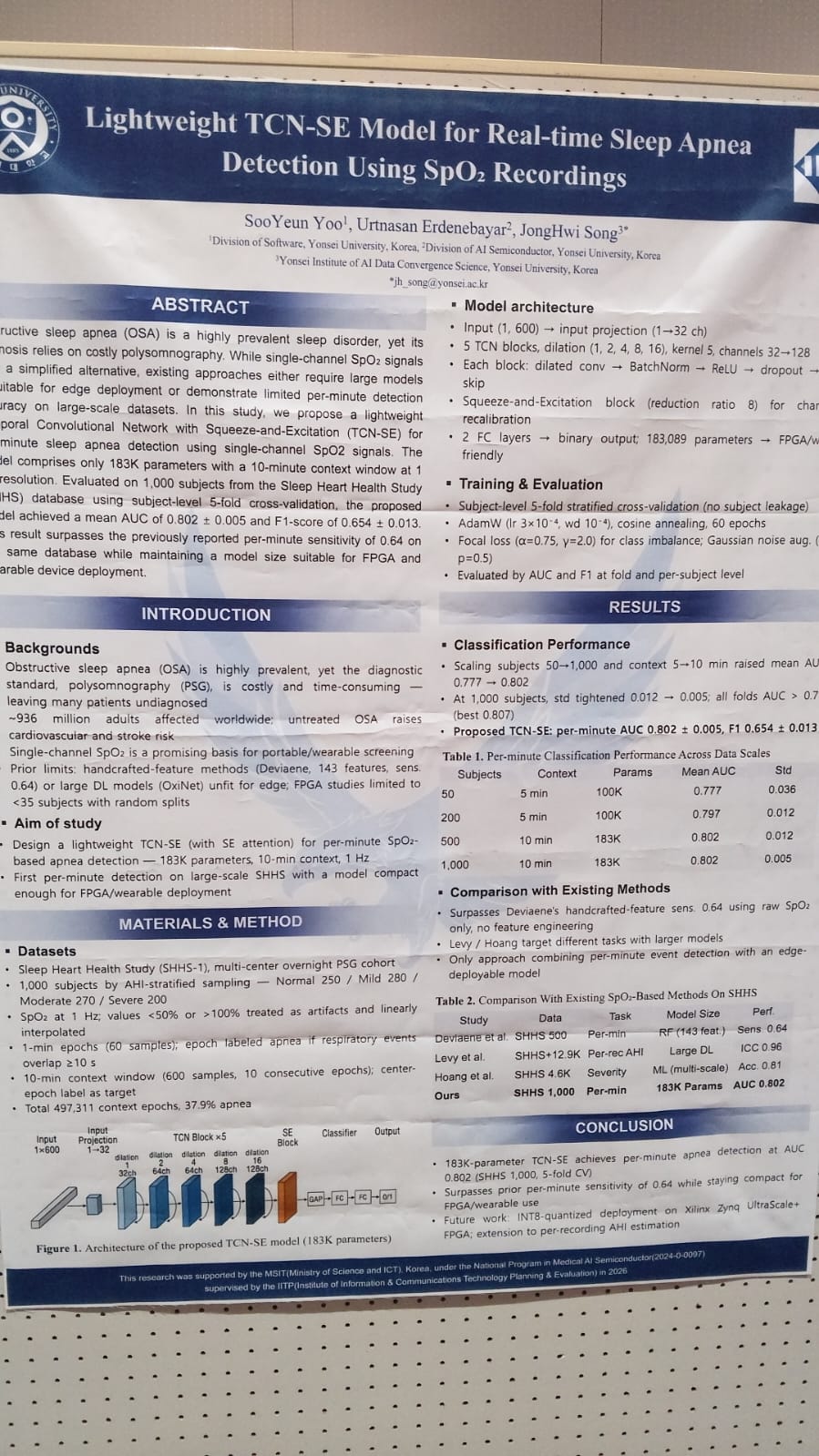
A few posters that stood out to me during the Poster Session

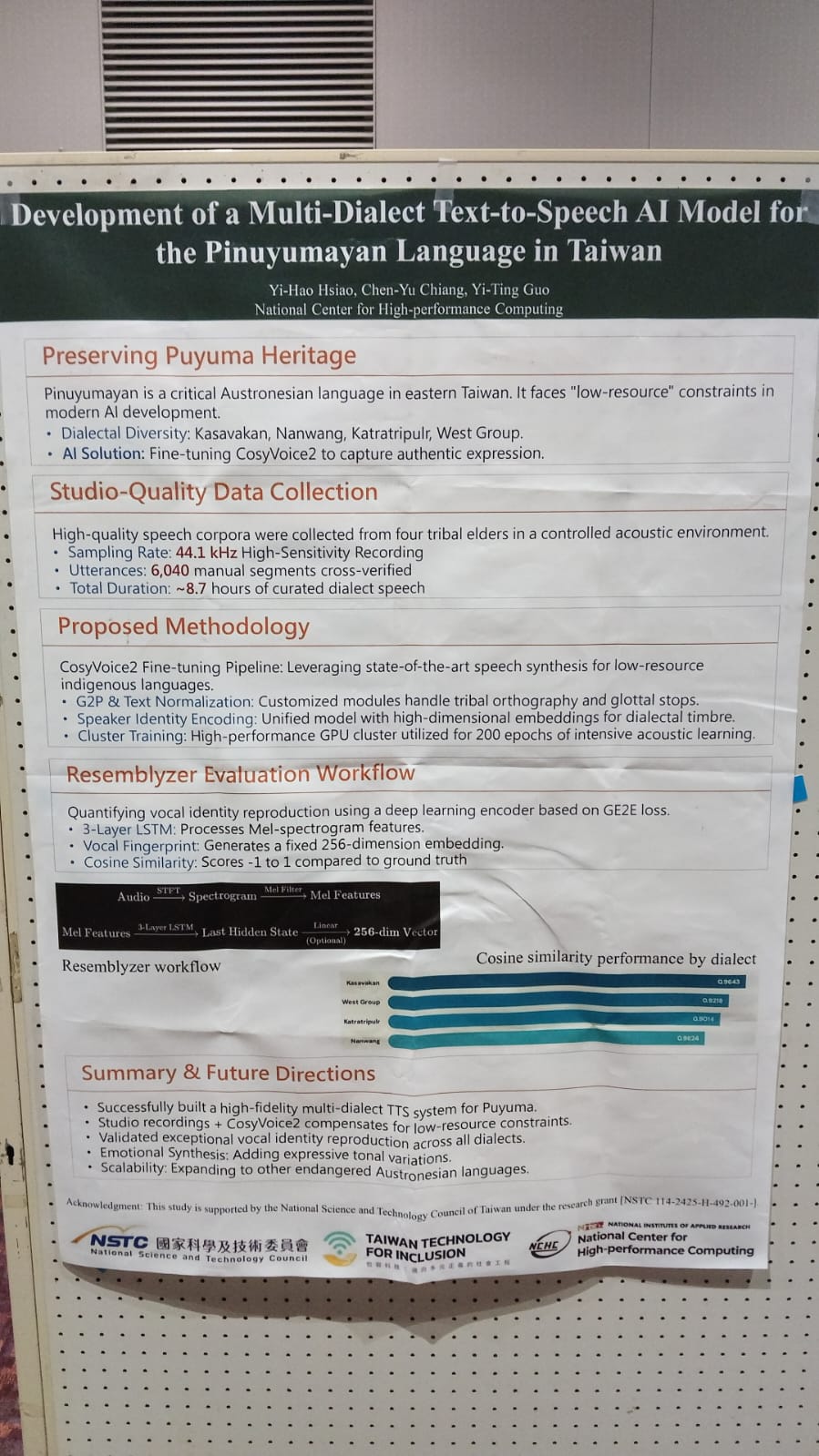
A few posters that caught my attention: “Lightweight TCN-SE Model for Real-time Sleep Apnea Detection Using SpO₂ Recordings” (Yoo, Erdenebayar, Song, Yonsei University), a lightweight sleep apnea detection model (183K parameters) that stays accurate while being designed to run on FPGA or wearable devices. One poster that felt fairly close to my own research was “Development of a Multi-Dialect Text-to-Speech AI Model for the Pinuyumayan Language in Taiwan” (Hsiao, Chiang, Guo, National Center for High-performance Computing), an AI text-to-speech model for Pinuyumayan, an endangered Austronesian language in Taiwan, built from recordings of four tribal elders and fine-tuned on a modern TTS model (CosyVoice2). This research shares the same spirit as my own work on sign language recognition: both are about building AI for languages underserved by mainstream research, and both face the challenge of limited data. The difference is that my challenge is domain gap and cross-signer generalization in ASL, while theirs is preserving the authenticity of voice and dialect from native speakers who are becoming fewer. Both, in the end, are about how AI can help preserve a community’s way of communicating, not just languages that already have abundant data. The last poster I looked at was “Development of a Digital Twin Simulation with Risk-Based Vital Sign Generation and a Sepsis Prediction Model for ICU Education” (Ishimoto, Tsukamoto, Ueno, Komatsugawa, Chitose Institute of Science and Technology), a digital twin simulation for training new nurses to recognize signs of sepsis in the ICU.

Day 2: July 14, 2026

Day two had two presentations that caught my attention. The first, “Image Analysis with a Vision-Language Model Using Affordance and User-Characteristic Prompts” by Koichi Nakamura, Sakuei Onishi, and Hiromitsu Shiina, addressed the problem that standard VLM captions don’t reflect individual characteristics. Their solution borrows the concept of affordance from Gibson: the VLM first analyzes what the image “affords” from an environmental and cultural standpoint, then combines that with the user prompt. The result was that for clear preferences (nature-oriented, urban-oriented), caption scores rose significantly across two different datasets. An example photo of Okayama Station made the difference clear, going from a caption that focused narrowly on a single element to a description of a coherent urban landscape.
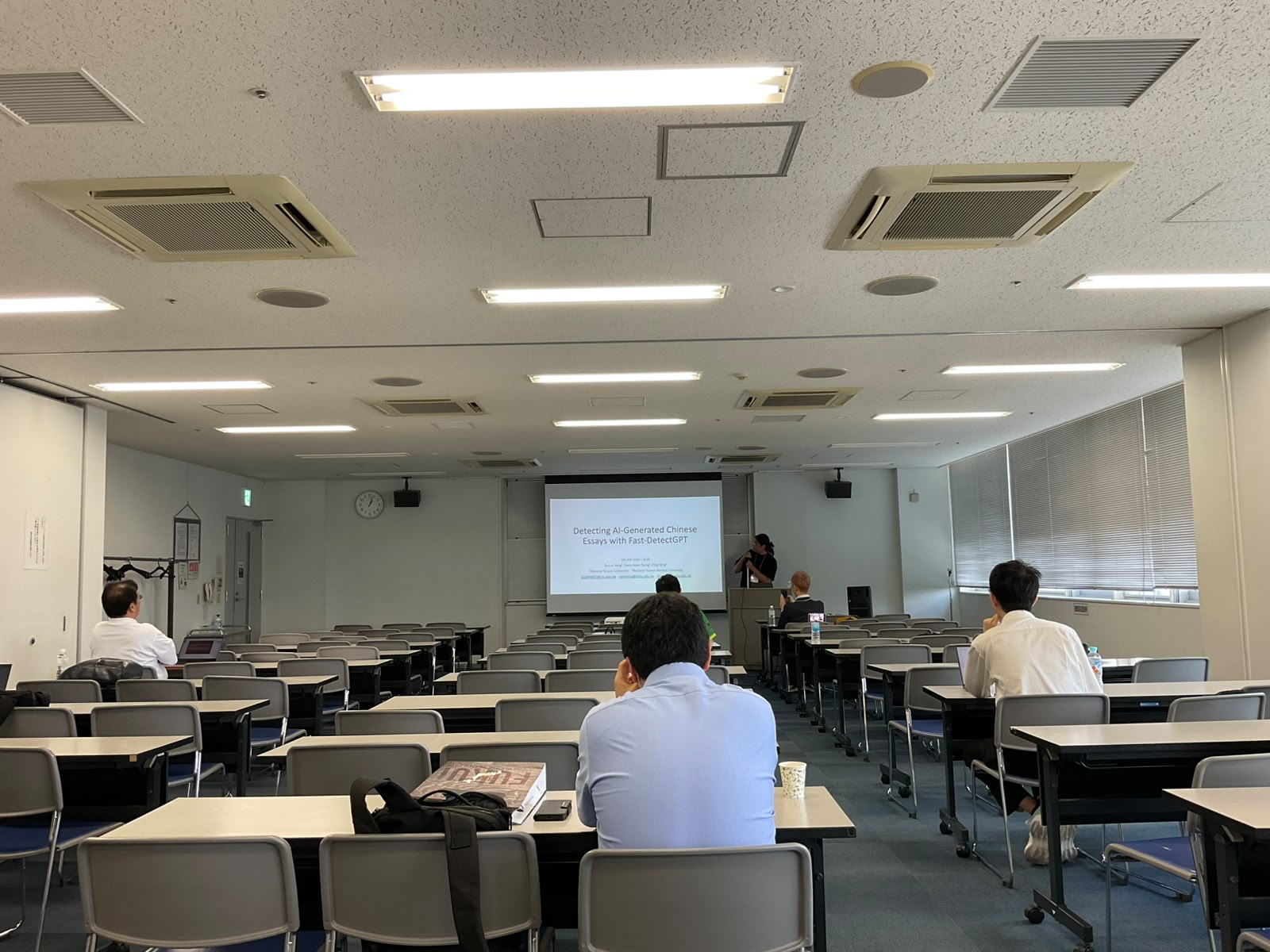
Presentation of ‘Detecting AI-Generated Chinese Essays with Fast-DetectGPT

The second presentation, “Detecting AI-Generated Chinese Essays with Fast-DetectGPT” by Te-Lun Yang, Yuen-Hsien Tseng, Ping Yang, was opened by a presenter who is also the development lead of WASS, a plagiarism detection system used across Taiwan that can only detect verbatim plagiarism and has no way of knowing how many AI-generated papers already exist in its database. They compared handwritten exam essays from Taiwanese junior-high students against AI-continued versions of the same essays, then detected them using Fast-DetectGPT, which measures how far a text’s log-probability deviates from the model’s own expectation. The result was a near-perfect AUROC across the three open-source models they tested. This topic felt especially relevant given how, as AI tools become easier to access, more and more students are taking a shortcut: producing an essay or assignment purely with AI and submitting it directly without any editing or self-review. What I appreciated about this paper is that they didn’t stop at the impressive numbers. They were careful to emphasize that this method should serve as a screening signal supporting human review, not as an automatic verdict.
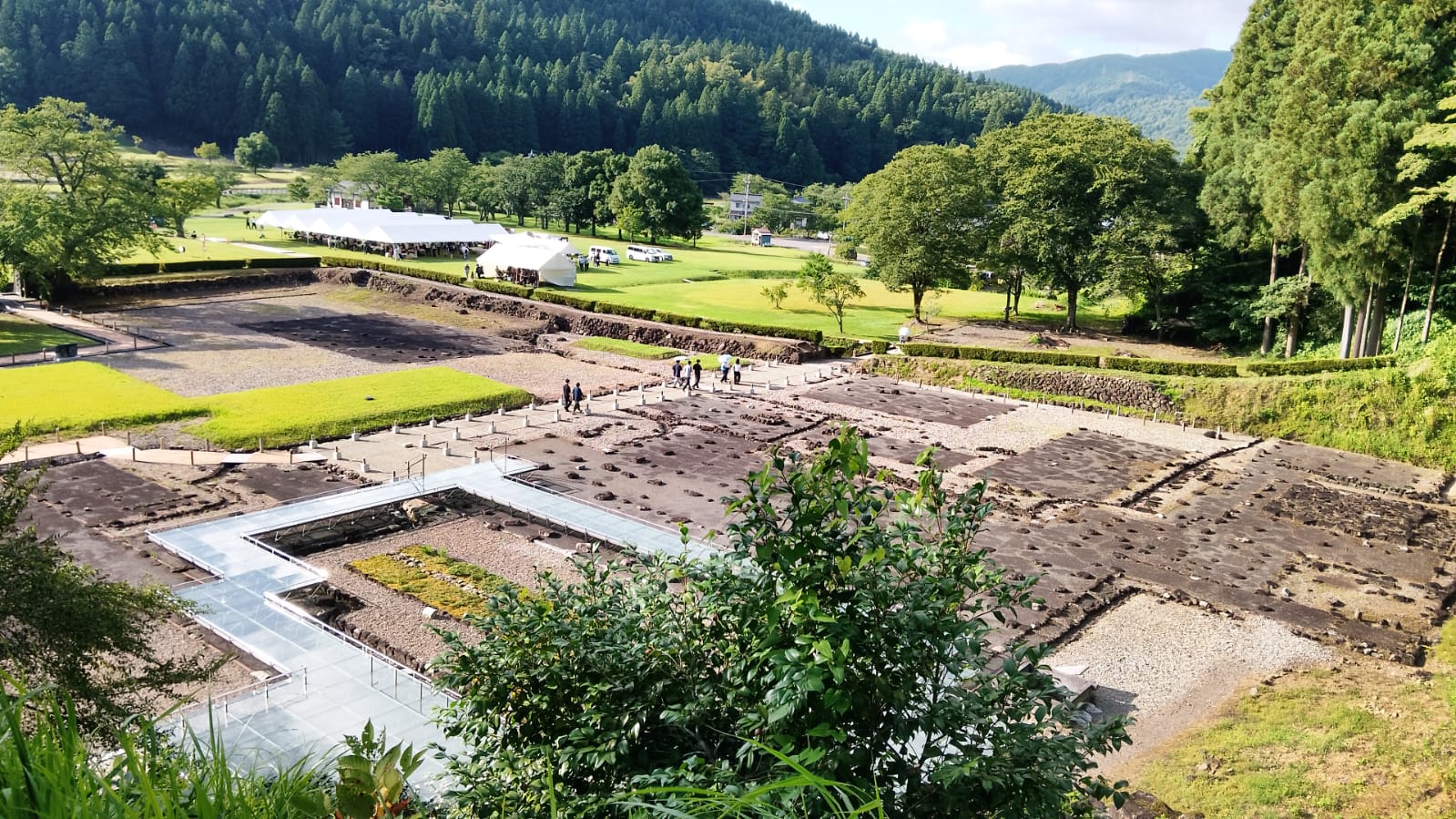
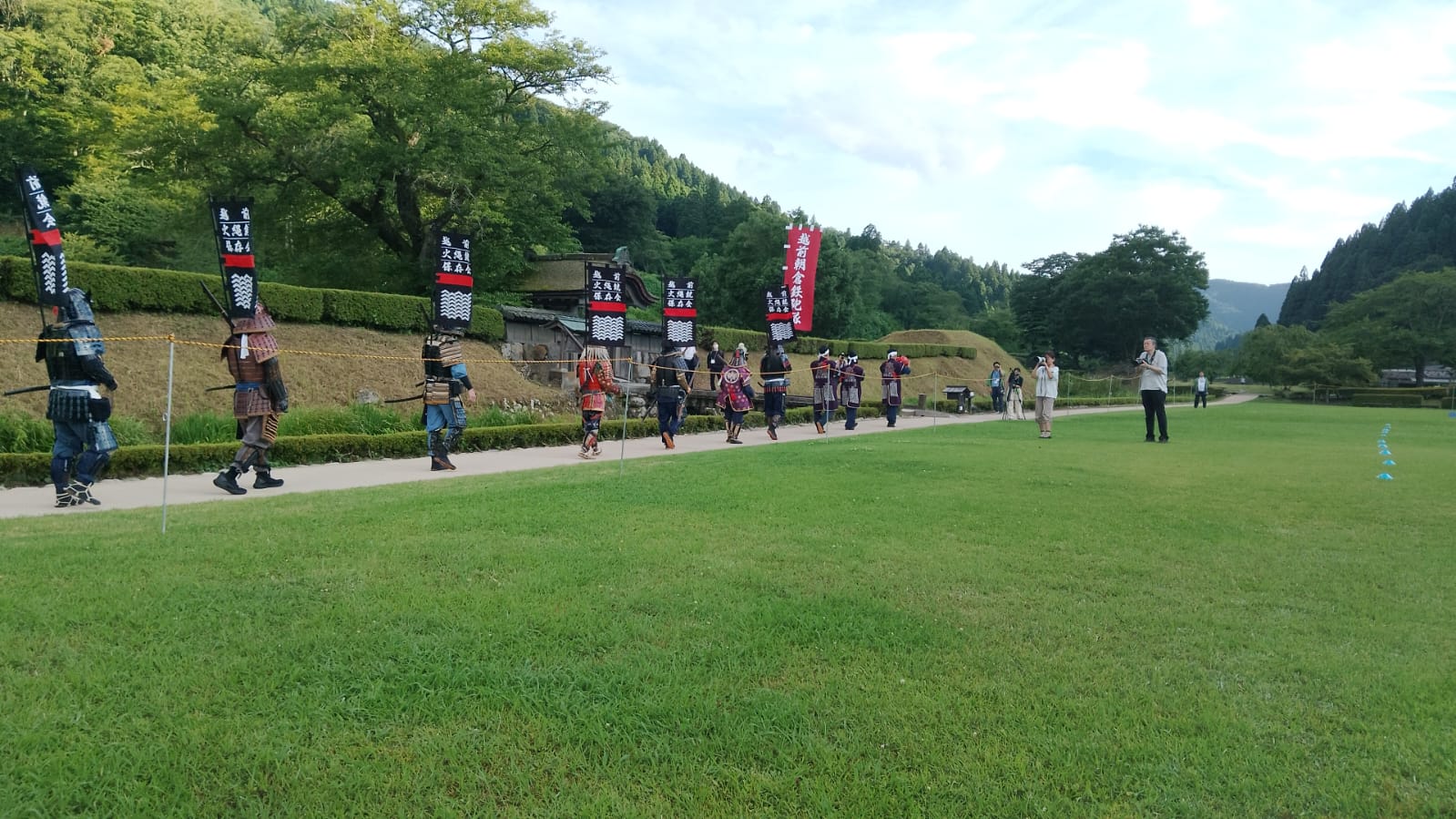
The ruins of Ichijo-dani, once a thriving Sengoku-era stronghold
A teppo troupe marching through the ruins before their fire demonstration

The day closed with a visit to the Ichijo-dani Asakura Clan Ruins, the former stronghold town of the Asakura clan, who ruled the Echizen region for roughly 100 years during the Sengoku era. Walking among the excavated foundations spread across a valley surrounded by forested mountains, one of the moments that caught my attention most was a performance by a teppo troupe (matchlock/arquebus gunners in the style of the Sengoku period) in full armor, marching in formation with banners raised along the site’s path, before carrying out a synchronized blank-fire demonstration, complete with a loud bang and a burst of white smoke that genuinely startled me (hahaha).
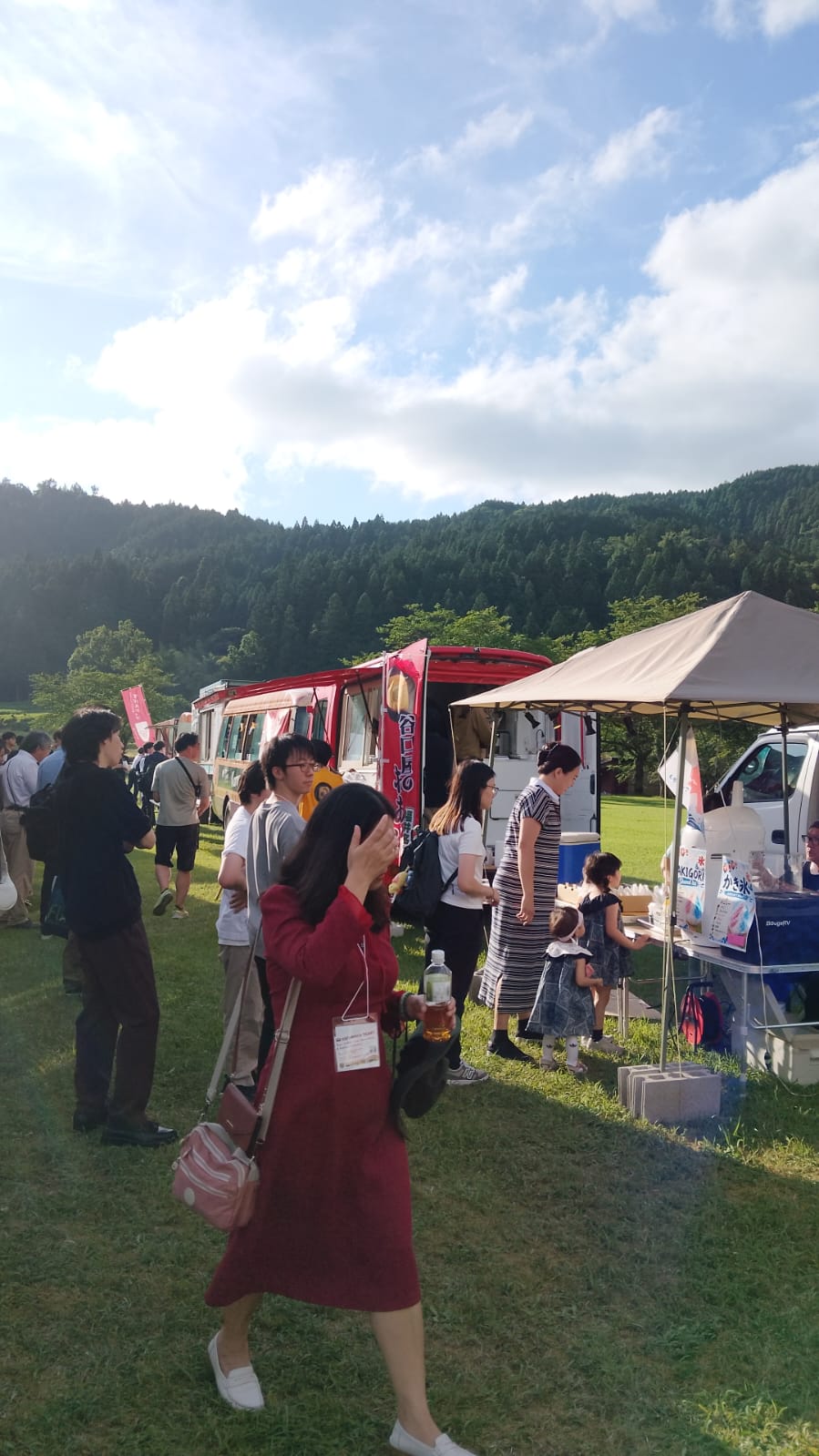
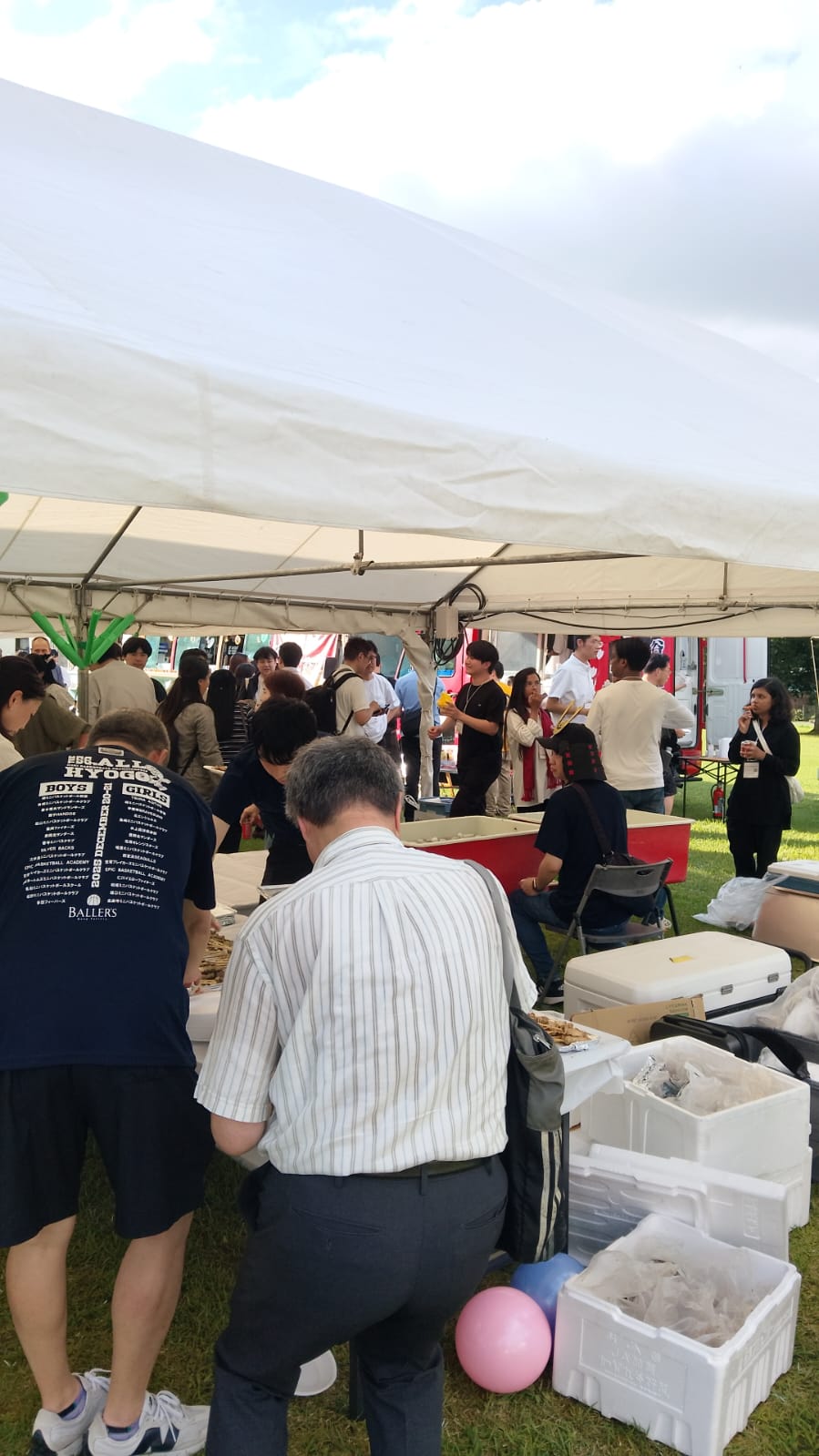
Food trucks and fellow researchers at Ichijo-dani

The organizers also set up several food trucks with free food and drinks scattered across the lawn near the site. It turned out to be the perfect time to mingle with fellow researchers outside the conference rooms, chatting over food and drinks as the sun set behind the mountains.

Day 3: July 15, 2026
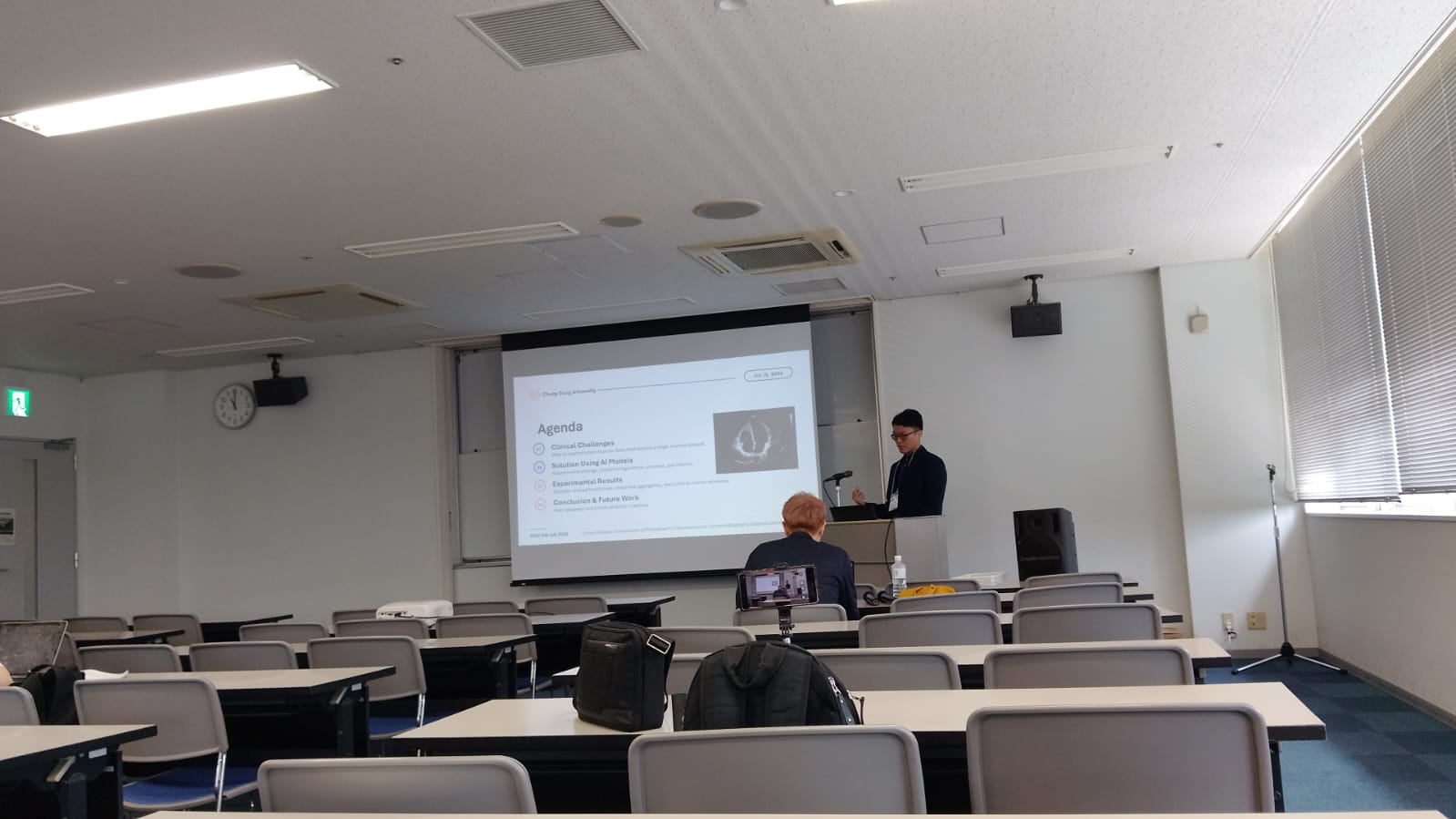
Presenting cross-dataset results on echocardiography segmentation

Today was the day of my own presentation, so I felt a bit nervous from the morning (mweheheheh), but I tried to focus on the other sessions first before my turn came. One presentation that caught my attention was “Cross-Dataset Comparison of Pretrained CV Backbones for Echocardiography Segmentation” from Chang Gung University. This research starts from a real clinical problem: even the smallest error in left ventricle segmentation can propagate into errors in volume and LVEF calculations. They compared four backbones with different pretraining strategies (EchoNet as an echo-specific CNN, Google-ViT as a supervised ImageNet ViT, GenMAE as a self-supervised model, and Pixio-5B as a web-scale MAE model), all using the same decoder, then tested them in two settings: trained on EchoNet-Dynamic and evaluated across datasets, and trained specifically on CAMUS A4C. The result was that EchoNet performed best on its own source dataset, but once tested across domains, GenMAE was the most consistently strong performer across all external datasets. The conclusion was clear: pretraining strategy is the most decisive factor under dataset shift, so backbone selection should be based on cross-dataset reliability rather than just the internal test score on a single dataset.
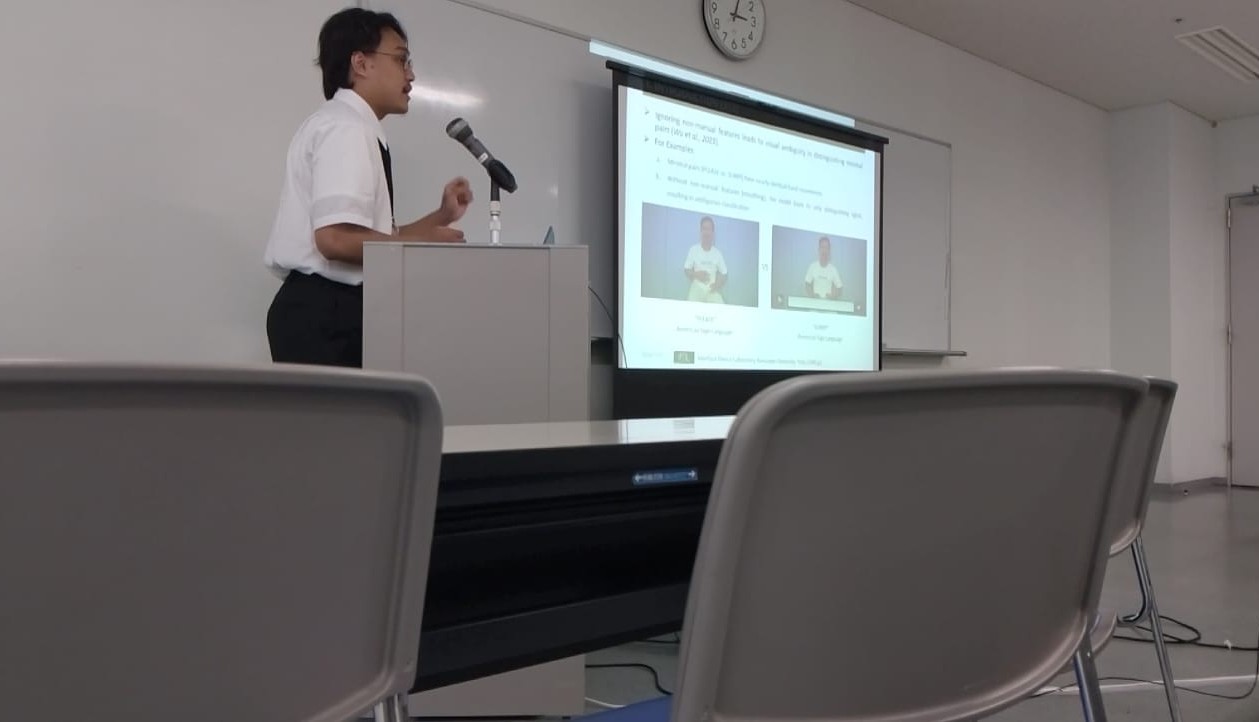
Presenting our dual-stream fusion architecture for ASL classification

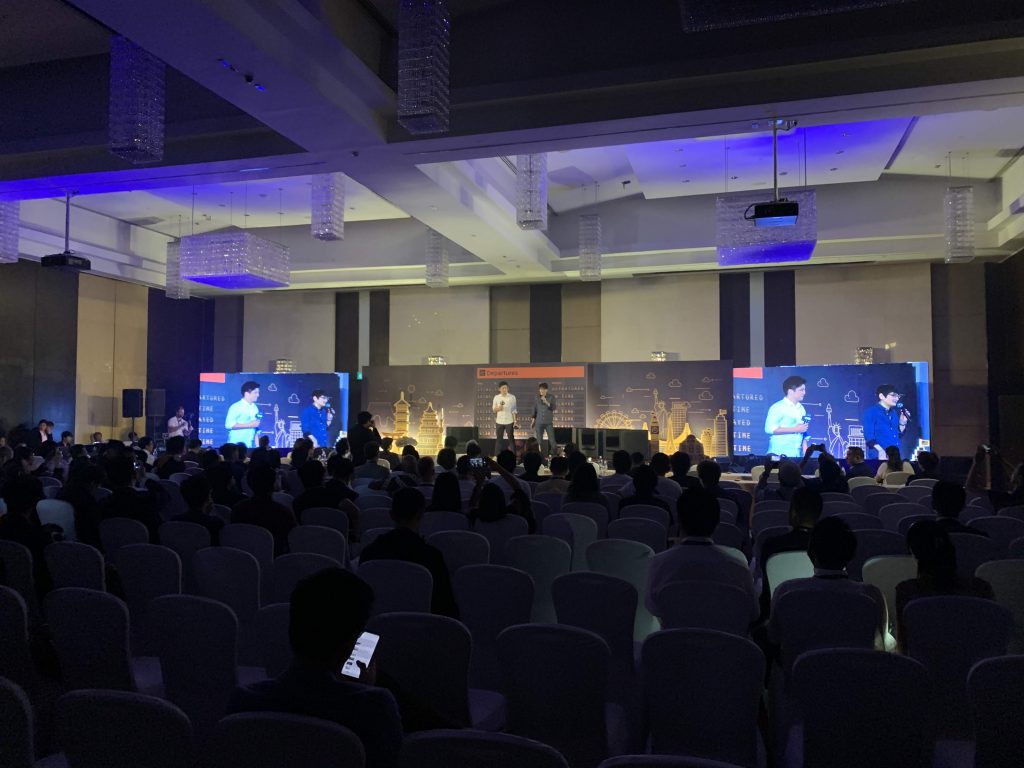
After that, it was my turn to present. Thank God the presentation went smoothly, though the 25 minutes allotted for the talk and Q&A felt like they flew by, so I only ended up getting two questions. The first was about whether there are any future plans to develop this research into a tool. The second actually bundled two questions together: why my hand sign stream involves facial keypoints or landmarks such as the nose, mouth, and eyes, and why I chose American Sign Language as the focus of this research. Thank God I was able to answer all of them smoothly, and they ended up being valuable input I can factor into how I develop this research further.

Day 4: July 16, 2026

The last day of the conference, and since my own presentation was already done the day before, today I could sit back and enjoy other people’s sessions without any nervous jitters. Two presentations stood out to me today.
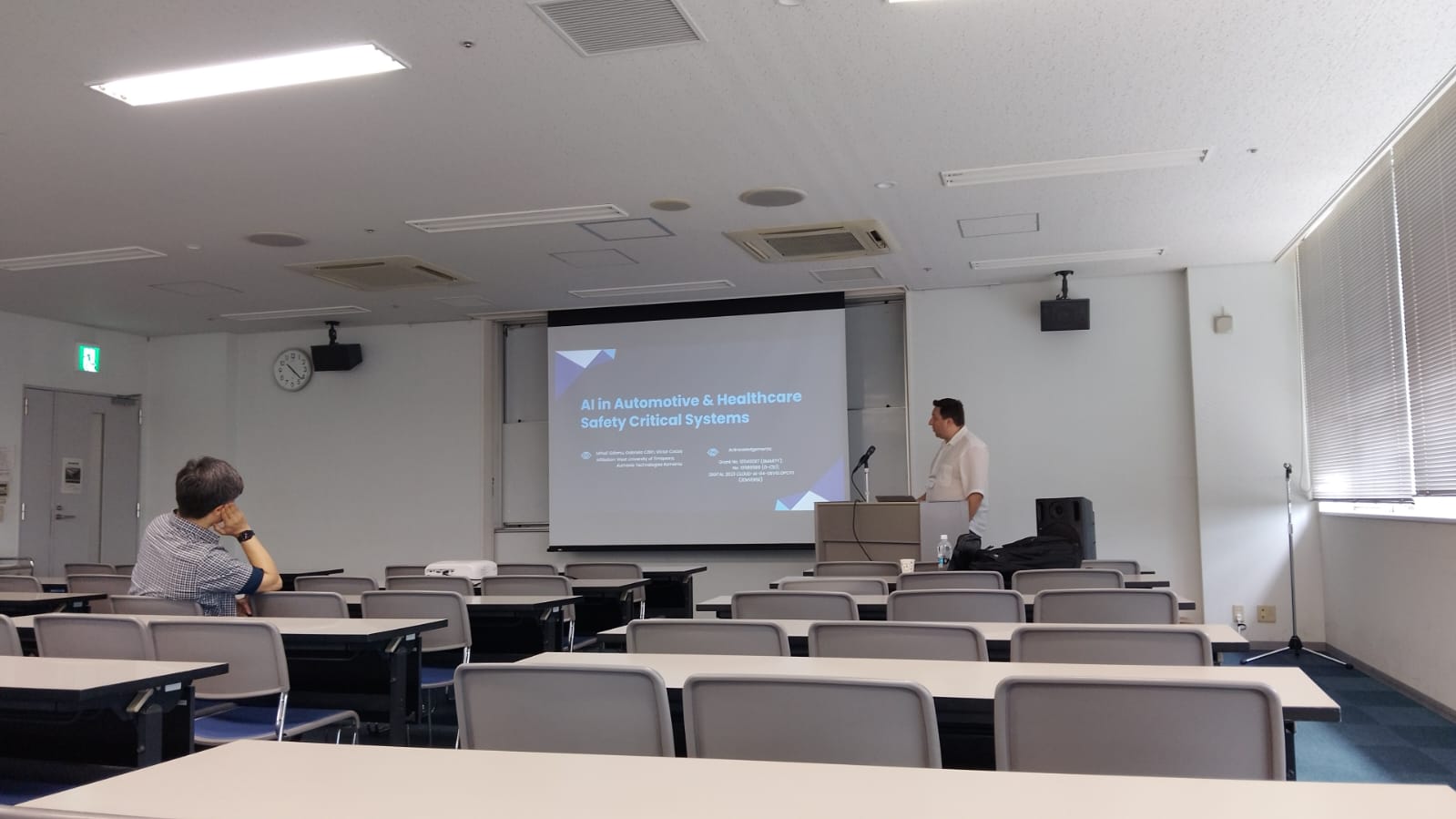
Presenting “AI in Safety-Critical Automotive and Medical Systems: A Cross-Domain Synthesis”

The first presentation,”AI in Safety-Critical Automotive and Medical Systems: A Cross-Domain Synthesis” by Gabriela Calin, Mihail Gaianu, and Victor Vlad Cocos
A systematic review comparing how AI is used in safety-critical systems across automotive and healthcare. Despite operating under completely different regulatory frameworks, both domains face the same underlying technical challenges: noisy data, expensive annotation, and strict assurance requirements, and both rely on the same three pillars (automation, simulation, assurance), just applied differently. What I found most interesting was the concept of “verified ground truth” as a shared bottleneck, a labeling error doesn’t just hurt model accuracy on paper, it can propagate into unsafe clinical advice or a bad driving decision.

The second presentation”An Adaptive Edge-Cloud Architecture for Reliable Pedestrian Action Recognition” by Carly-Jaurelle Boukandou Moukouama, Taichi Sono, and Hideyuki Takada
A pedestrian crossing detection system that stays reliable even as visual conditions shift from clear daylight to low-light night driving, running three lightweight models on the edge device and offloading only “uncertain” frames to the cloud. The part I found most compelling was how they distinguish a genuine drop in confidence from mere noise, using two exponential moving averages running at different speeds plus a hysteresis mechanism to stop the system from flip-flopping between edge and cloud. The result: cloud offloading automatically rose with scene difficulty (12% in good weather, 50%+ in low light), recovering reliable detection in conditions where edge-only failed entirely.
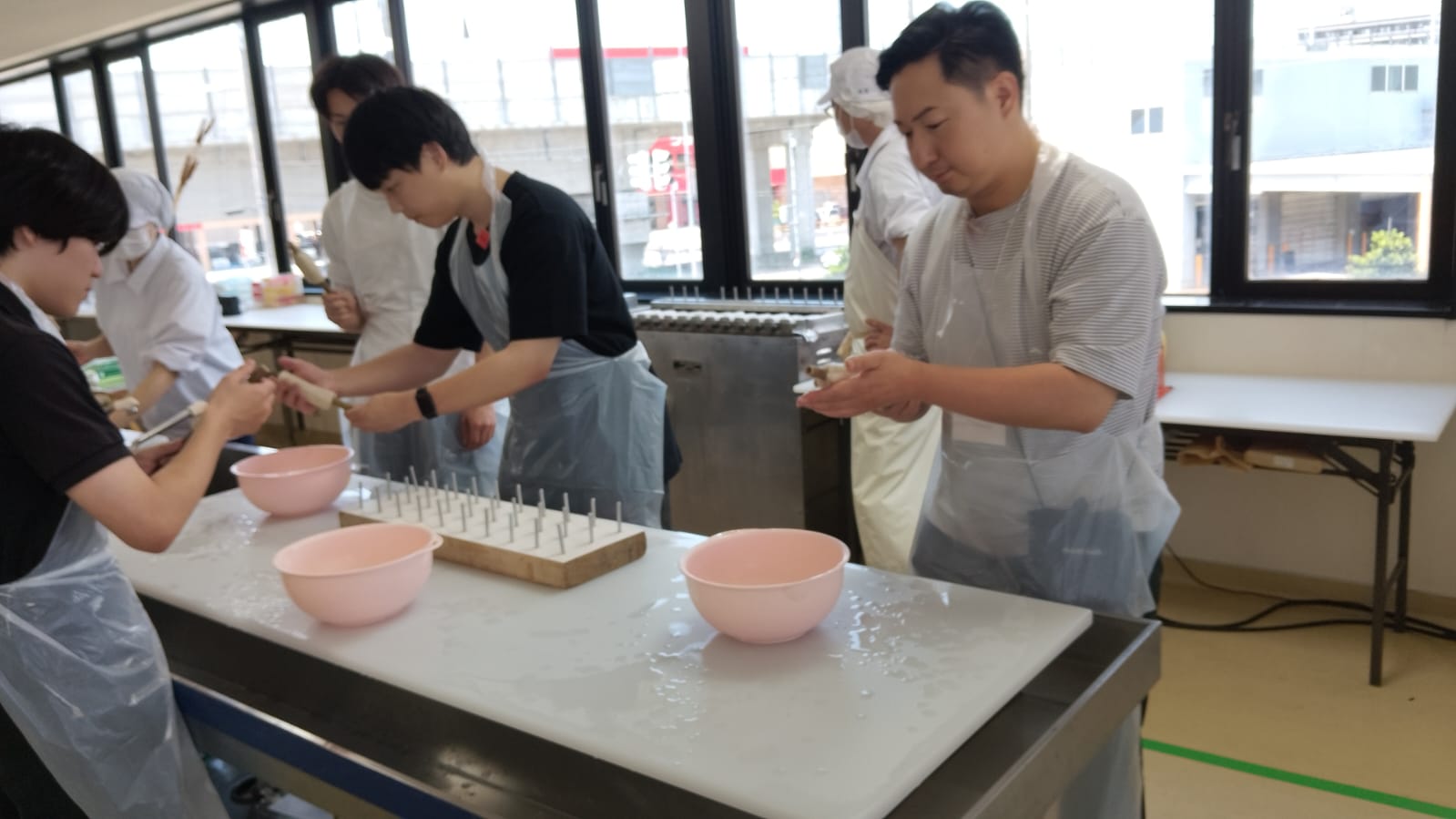
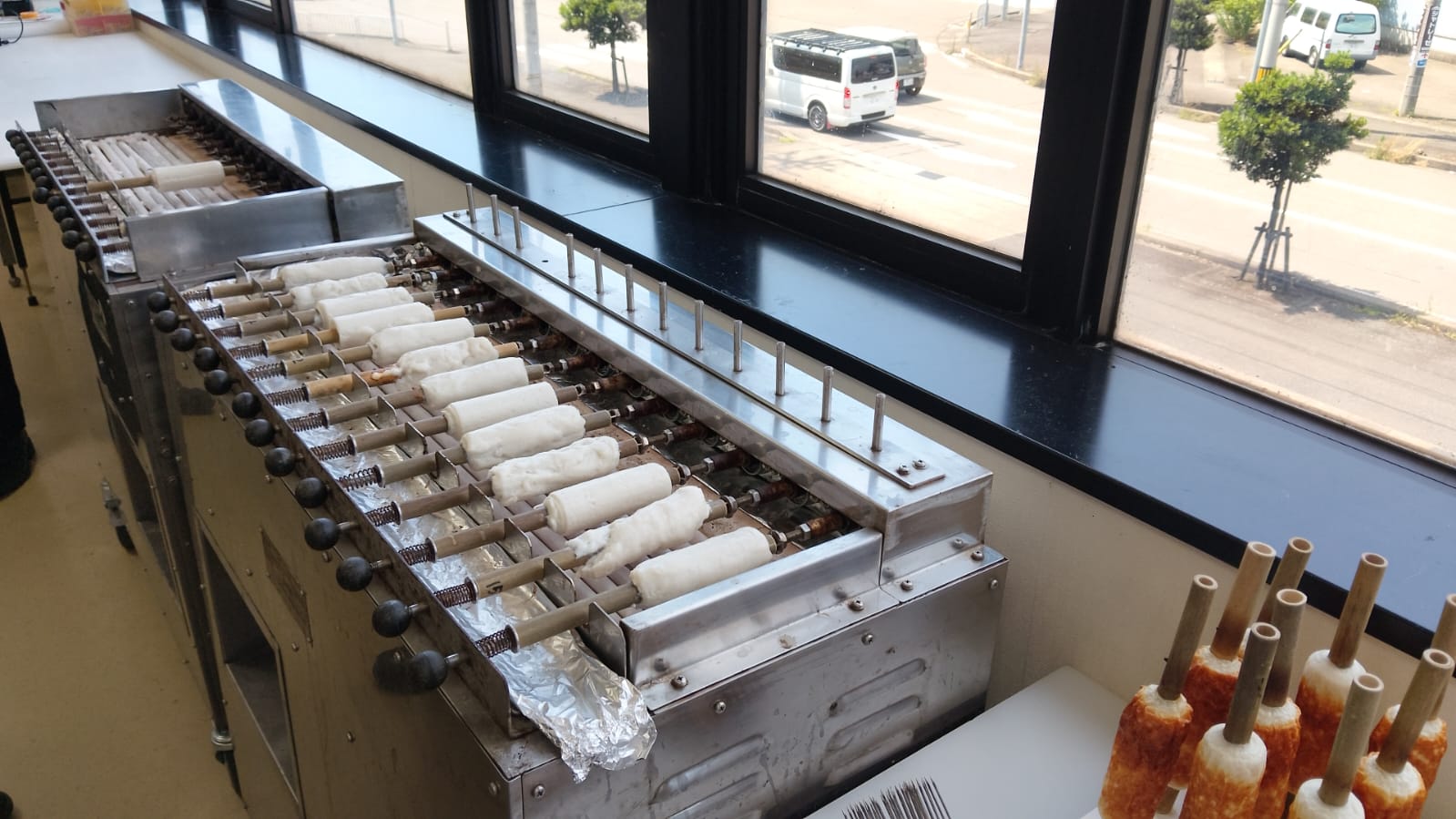
Hand-rolling and grilling our own Gamanoho at Yasuda Kamaboko Workshop

Beyond the presentation sessions, the conference also offered a technical tour and excursion, with 5 tour options: Tour 1 (EIGHT RIBBON & Ichijodani Asakura Ruins), Tour 2 (Kubota Brewery & Ichijodani Asakura Ruins), Tour 3 (Milk Kobo Okuechizen & Echizen Daibutsu), Tour 4 (Echizen Soba Village & Echizen Chiyozuru Museum), and Tour 5 (Yasuda Kamaboko Workshop & Fukui City Museum of History). I picked Tour 5, held on July 16, so after attending a few presentation sessions, I joined this tour.
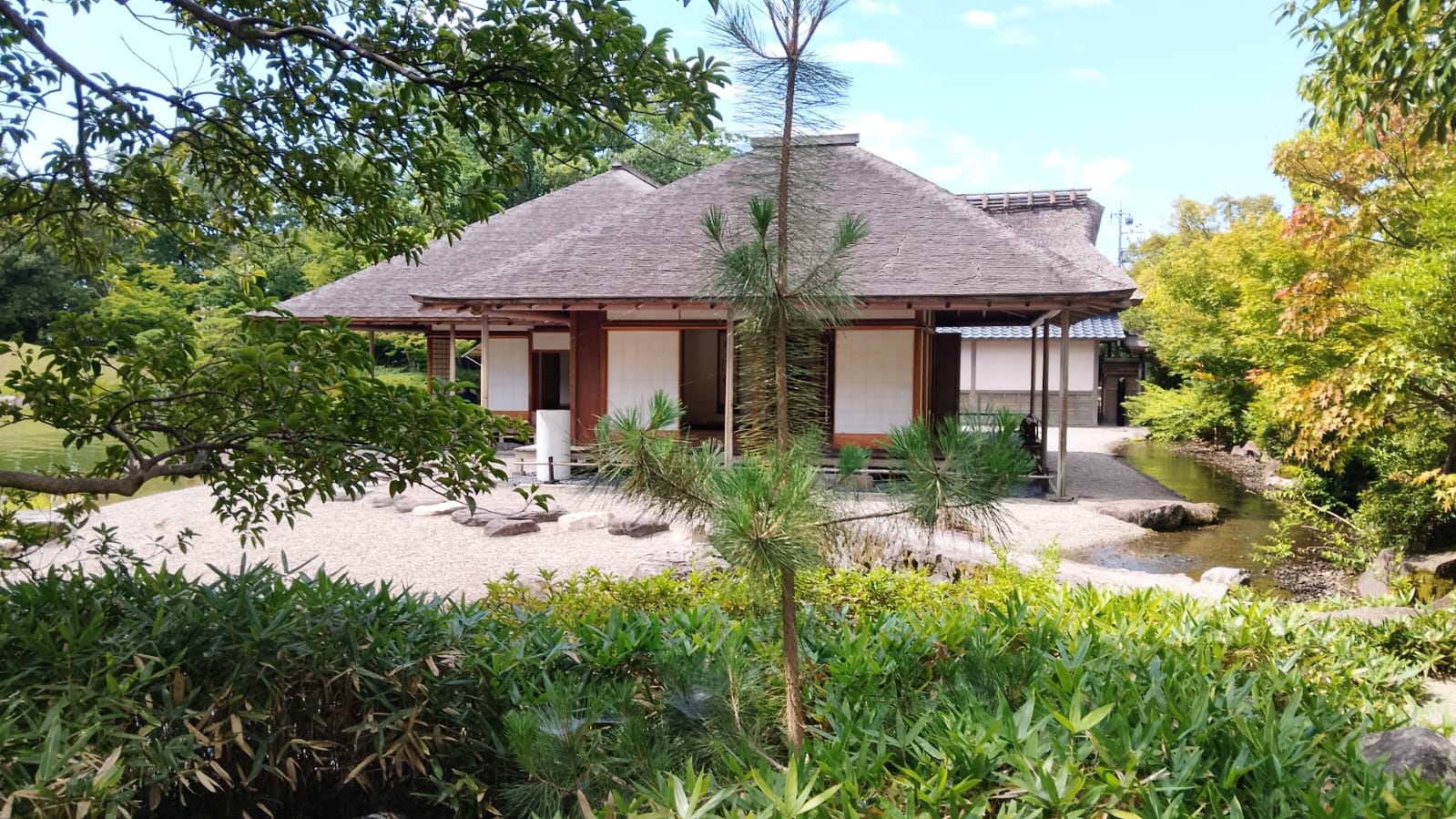
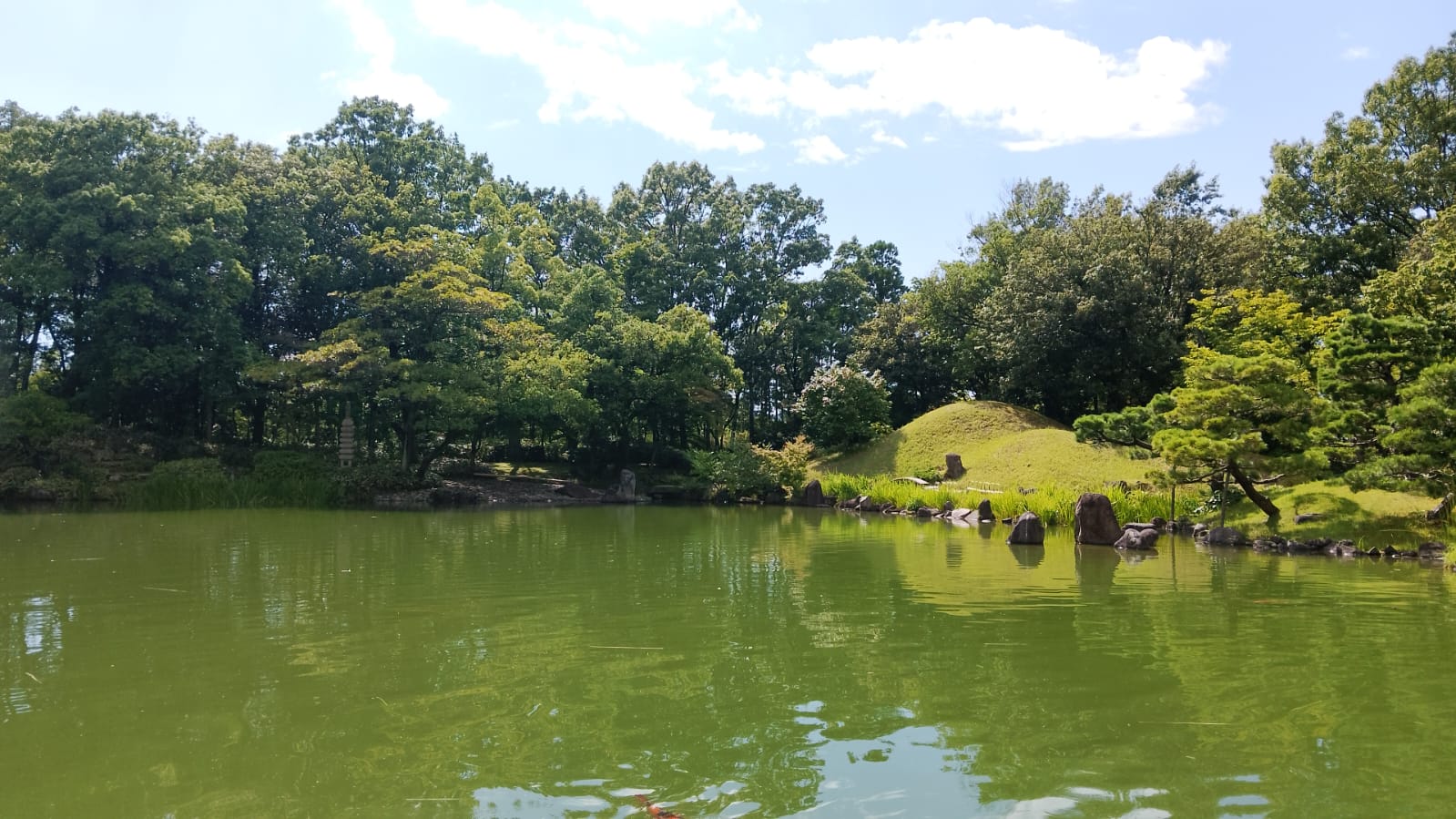
Yokokan Garden, once a retreat for the lords of the Fukui Domain

At the Yasuda Kamaboko Workshop, I got to make my own “Gamanoho,” a traditional grilled fish cake wrapped around a bamboo stick, using techniques passed down for generations, then enjoyed it fresh right after making it. The tour continued to Yokokan Garden, a beautifully restored Edo-period garden that once served as a retreat for the lords of the Fukui Domain, before ending at the Fukui City Museum of History, where I learned a lot about the history and culture of Japan, particularly around the Fukui region.
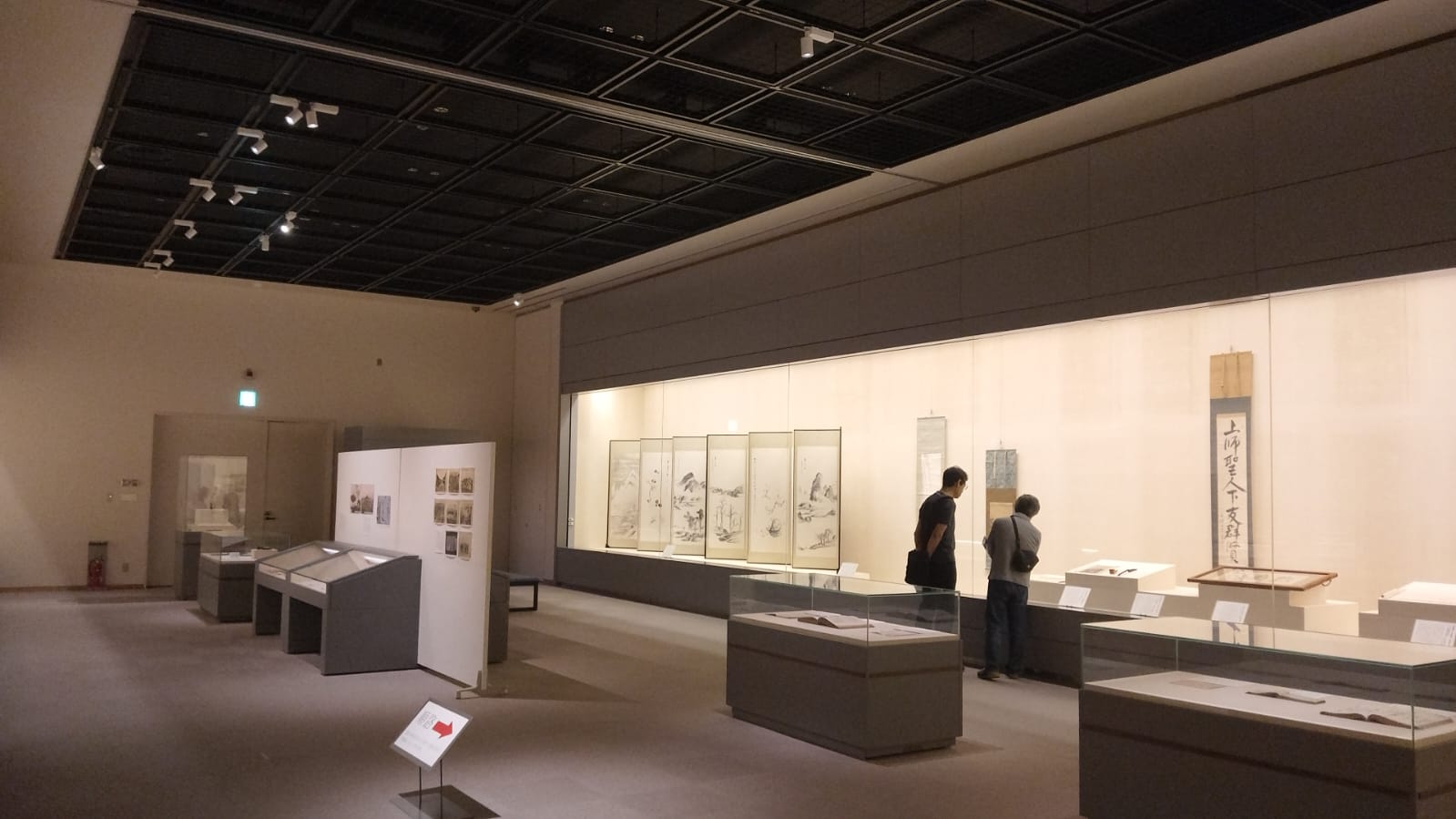
Inside the Fukui City Museum of History

Four days, dozens of sessions, one nerve-wracking presentation, and more grilled skewers than I can count (hahaha). Beyond the technical takeaways, attending several presentations also made me realize something fundamental that I sometimes forget: research involving humans directly carries a deeper layer of consideration than just building an accurate model. There’s an ethical weight to it, because the people involved are human, not just numbers on paper.

IIAI AAI 2026 didn’t just give me new research ideas to think about and deepen my understanding of my field, it also helped me build connections with fellow researchers. See you at the next conference!
全国学生VRハッカソンに参加しました(尾瀬)

こんにちは。M1の尾瀬です。

今回は、東京で開催された全国学生VRハッカソンに参加してきましたので、その報告を行いたいと思います。ハッカソンの詳細はこちら -> 全国学生VRハッカソン2023 (notion.site)

ハッカソン開始前の説明の様子。

簡単な説明の後、テーマごとにチーム分けを行い、作品制作に取り組みました。

ハッカソンにおいて重要な課題設定に関する講義もあり、作品制作やアピールの方法などにおいて、とても勉強になりました。

開発の様子。

わずか2日間という短期間のため、難易度の高いものではありましたが、なんとか作品を完成させることができました。個人的には、ハッカソンの経験はあったものの、VRにテーマを絞ったハッカソンというものは初めてであり、どのような作品をつくれば良いか、どのようにアピールすべきか、という点が難しかったです。結果としては、私たちのチームは三位入賞という好成績を納められました。

チームの集合写真(尾瀬は右下)

好成績であったことはもちろん、チームメンバーと創意工夫しながら良い雰囲気で開発に取り組むことができ、とてもよい経験ができました。以上、簡単ではありますが、これで報告を終わります。(尾瀬)

Interaction2025報告 (高須)

2010-14年ぐらいの、チームラボに所属してまだ日本にいてニコニコ学会などの活動を行っていたころは、HCI分野の先生方の研究室を尋ね、学会に参加することが多くありました。いくつか記事を書いたことなどもあります。

人とコンピュータの未来 インタラクション2013レポートhttps://atmarkit.itmedia.co.jp/ait/spv/1303/22/news008.html

その後シンガポール/深圳と海外に引っ越してから、メイカーフェアやNT以外の国内イベントにはご無沙汰になってしまい、メイカーフェア会場で会わない先生方とはご無沙汰になってしまいました。今所属しているスイッチサイエンスで販売しているツール類は、まさにHCI分野の研究室が多く使うものなので、SNS上での付き合いは今も続いています。インタラクション2025は、この記事から10年以上ぶりの学会になりました。かつて研究室にいた学生さんたちが助教や教授として各大学で活動している様子も、久しぶりにお会いした先生方が相変わらず精力的に指導や発表を行われている様子がとても嬉しく、まるでホームタウンに戻ってきたような感覚がありました。

研究としては、M5が効果的に使われているもの

Toioなどスイッチサイエンスで扱ってるツールの使われ方

などに目が行きますが、それ以外で面白かったのがこの研究

一般的な理解の、「よく寝たほうがいろいろ捗る」とは違い、短期では寝不足のほうがパフォーマンス上がるというのをデータ取って分析したのが非常に興味深かったです

残念ながら研究した人と会えず、ディスカッションできなかったのが残念。

こういうデモ中心の学会は、予想を裏切る驚きにしょっちゅう出会えるので、ECなど今後もなるべく参加したいと思います

My Journey to Interaction 2024(HUA)

Hello everyone, I’m HUA (M2), and I’m thrilled to have had the opportunity to attend Interaction 2024, held at the Hitotsubashi Hall in Tokyo from March 6th to 8th, 2024. This event was an incredible chance for me to delve into cutting-edge research and design and to engage with students, educators, and professionals from various fields. The excitement of being part of such an inspiring and creative gathering was truly exhilarating.

During the three-day conference, I participated in various exciting lectures and interactive experiences with anticipation. I am particularly concerned about issues related to AI, VR,AR and sustainable design, as I believe these fields will be an development trend in the future. At the same time, I have focused on research related to gaze estimation and gaze tracking, not only because it is related to my own research, but more importantly, I hope to establish connections with like-minded people and find inspiration from their research.

Entrance to the venue
On site presentation
Demo display

This system was developed by a company and uses gaze control to turn pages in assembly manuals, employing Tobii for eye tracking. Using it feels very effortless. They informed me that the system is currently in the experimental phase and hasn’t been officially deployed yet. Naturally, there are still some points that need improvement.

Demo display

This system, aimed at young children, fosters programming thinking. Although it might seem like just playing simple games, I believe this system underscores the current emphasis on coding education. At Interaction 2024, I observed numerous studies related to support for coding education, which highlights the future importance of programming education.

Demo display

This study explores the concept of pseudo-haptics, where users can perceive tactile sensations without actual haptic feedback devices, simply by subtly altering the position and speed of a cursor. Related research includes “Visual Haptics,” which replicates the feeling of physically touching objects by manipulating cursor movement and deformation based on the state of the object being touched. This approach can simulate various sensations such as roughness, viscosity, three-dimensionality, depth, resistance in liquids, and resistance as if being blown by the wind. In this research, the cursor manipulation was achieved using eye-tracking technology provided by Tobii.

IgNobel Prizes winner talk

Several professors shared their award-winning experiences and research insights with the students, engaging in a fruitful exchange. There were also moments when students posed questions, to which the professors provided detailed responses. I found this lecture to be incredibly enriching.

As Interaction 2024 ends, I reflect on these past few days with a sense of profound gratitude and fulfillment. This conference has been an invaluable learning opportunity for me. Each lecture and demo experience have taught me so much. I believe the inspiration and knowledge gained at Interaction 2024 will greatly assist and enlighten me in my future studies and work endeavors. My heartfelt thanks go to Interaction 2024 for this unforgettable journey. I eagerly look forward to next encounter.

技術書典18のオフラインイベントに参加しました

こんにちは.修士1年の小杉です.

2025/06/01開催の技術書典18 オフラインイベント(会場は池袋サンシャインシティ)に,出展者として参加しました.今回はその報告をしていきたいと思います.

技術書典では,出展者それぞれがオリジナルの技術書をブースにて販売します.今回私は「CPUとコンパイラを自作しながら一貫して理解するSWとHW」という技術書を販売しました.この本の内容は,題名の通り,CPUとコンパイラを両方作ることで,ソフトウェアとハードウェアを一貫して理解することを試みるというものです.

上の写真は,私たちのサークルの出展ブースを写したものです.左側の緑色の本が私の技術書で,右側のものが今回一緒に出展した秋田先生の技術書です.

今回私は紙の技術書を50冊印刷し,1000円で販売しました.電子版(pdf版)も同時に800円で販売しました.内容がかなりニッチなものなので,買ってくれる人がいるのかとかなり不安だったのですが,いざ始まってみると,思っていた以上に反響があり,たくさんの方に買っていただくことができました.

意外だと感じたのは,買っていただいた方は若い世代が多かったということです.若い世代にとってはハードウェアよりもソフトウェアの方がトレンドで,CPUやコンパイラなどの低レイヤの話はあまり興味をひかないのではと思っていたからです.しかし,実際には本を手に取りながら,熱心に質問してくださる方が非常に多く,低レイヤに興味のある若い世代は一定数いることを実感しました.

50冊あった紙の技術書は,イベント終了の1時間前に売り切れてしまいました.売り切れる際に,最後の一冊も売ってしまうという痛恨のミスをしました.最後の一冊を売ってしまうと,見本がないという状況になるため,これ以上売れなくなってしまいます.今回は,PCの画面で電子版のデータを見せたり,先生のタブレットをお借りして,手に取って読める環境をなんとか整えて対応しました.反省点として受け止め,次回(機会があれば)は見本を残しておくようにします!

技術書典18では,私がCPUとコンパイラを作成する上で得られた知見を広めることができたと同時に,低レイヤに興味のある若い世代が一定数いることを知ることができました.また,他のサークルでは,自作CPUやFPGA回路設計などの低レイヤの分野で技術書を出しているところも数多くあり,刺激的でした.お客さんや,他のブースの方々と交流して得られた知識,感じたことなどは今後の研究活動に活かしていきたいと思います.

INTERACTION2024に参加しました(坂本)

こんにちは!
2024/3/6 – 8に開催されたINTERACTIONに参加・発表してきました.

発表は最終日の8日に行いました.
スライドのポスターとデモ機を用意し,実際に操作してもらいながら説明しました.
多くの方から質問や助言・アドバイスをいただきました.
これによって新たな課題や方向性を得ることができました.
来場された方,また販売してくれとおっしゃっていただいた方
ありがとうございました!

次に聴講していて気になった研究を紹介します.

ユーザーの属性から意外な単語を組み合わせたミドルネームとものに置き換えた単位を生成する手法,(岸本遼太郎,橋田朋子),早稲田大学

こちらは人の属性をもとにミドルネームを作成するという研究です.
与えられた質問に回答することで,オノマトペ×名詞のミドルネームを作成,またユーザーの属性(研究ではタイピング速度)を提示するものとなっています.
手法としてはミドルネームはあらかじめ用意されたオノマトペと回答で得られた名詞の類似度をすべて計算し,最も類似度の高いオノマトペと得られたオノマトペから最も類似度の低い単語の類似語を並べること(しゅわしゅわと鉱石など)を行っている.
属性は質問内で答えられた出身県をもとに単位を設定(出身県の鳥),タイピング速度とタイピング音の提示を行っている.
日本人になじみのないミドルネームを作成しようとする点,そのミドルネームの生成方法,またそれが背景にあるように修飾関係にない面白さを得られる点が興味深いと感じました.
実際に自分のミドルネームを作成することはできませんでしたが,自分に関係した世の中にないオンリーワンな属性を得られることが新しい発想をもたらしそうと感じました.

異なる抽象度のビデオゲームアバタがプレイヤに与える影響の調査と各アバタの研究適応可能性の分析,(飯田和也,渡邊恵太),明治大学

こちらはアバタの抽象度が与える影響や印象の調査についてです.
プリミティブからリアルを4段階に分けてアバタを作り,それぞれのアバタを用いて魅力度・プロテウス効果・資格情報の調査を行っていた.
プロテウス効果とは,アバタの外見がユーザの行動や認知に影響を及ぼす心理効果である.
結果としてリアルによればプロテウス効果が起こりやすくなり,ゲームの内容に応じてアバタの外見を適切に処理する必要があるとあげられている.例えばFPSといったアクションゲームにはリアルアバタが適している.
個人的にプリミティブなアバタでのゲームは簡素で軽くプレイするなと共感を持ったこと,またそれによるゲーム体験の質や実験時の意欲について影響を及ぼしかねないと知ったことから興味を持ちました.

corobos plus: 卓上・壁面・天井の間を移行する群ロボット,(森村太一,韓 燦教,苗村 健 ),東京大学

こちらは卓上・壁面・天井間を移動できる群ロボットの研究である.
床面だけでなく壁面,または天井にも移動することができるロボットに興味を持ちました.

自分は今年度で修了ですが,実機を作成して触れてもらうこと,またそれによって反応が得られたことで研究として一区切りつけられたなと感じました.
研究に協力していただいた方,研究にご覧に来ていただいた方,意見をいただいた方など多くの方の助力によってこの研究は成り立っています.
携わっていただいたすべての方に感謝申しあげます.
この経験を糧にこれからも活躍していきます!

大学生活初旅行!!中国深圳に行ってきました!

学部1年の笹林です。

2025/5/22〜26に中国に行ってきました。今回の件が決まった経緯は少し特異?で、訪中1週間前に中国に行く事が決まり、そこから急いでSIMなどの必要用品を用意していくという形でした。教授や先輩は海外慣れしているのか普段通りの感じでしたが、僕は初めて家族以外と海外に行く経験だった事もあり、1週間ずっと楽しみでうきうきしていました。

旅行中、本当に濃い時間で、色々な事があったのですが、全てを書いていると流石に多くなりすぎるのでここではほんの一部の出来事を写真について言及していくという形で書かせて頂きます。

初深圳つきました!中国って感じの謎の匂いがしてました。上に見えている看板のデザインの服を先生は着てました。

これはまじで美味しかったです。日本に帰ってからも自作するほど美味しかったです。油条の名前の由来を覚えとくと中国に行った時に話が1種広がります!

自動車運転です!!今年、北京で自動車運転車が事故ったらしく、完全無人では無かったですがいい経験ができました。乗り心地は比較的良く、中国で普通のタクシーに乗るより安全な気がしました。

中国の地下鉄です。基本的にどの建物も最近できたようで、とても綺麗です。毎回乗車時にカバンの検査と、持ち込み飲料の検査があります。乗車時はアプリのQRコードを見せるだけです。

さすがDJIの本社です。日本では見ることがなかなかなさそうな構造でした。間の隙間はバルコニー的な状態になってるらしいです。

DJIの本社のエントランスには日本の枯山水を思い起こさせるモニュメントがありました。日本に対して好意的な感情を持っていてくれている気がしました。

400円チャーハンです。中国はご飯が基本400円程度なので最高です。先生が食べていた、トマトラーメンも400円程度でした。安くて美味しい中国はもう最高です!

中国って案外綺麗で几帳面なのかもしれません。スーパはとても綺麗で、国としてあらゆる所にゴミ箱を設置しているからなのか、路上でゴミを見かける事は日本より少なかったと思います。

ドローン、Bluetooth、AI展に行ってきました!こういう展示会に行くのが初めてだったのでとてもいい経験になりました。ここで中国スピリットというか、交渉においてグイグイ行くという事を学びました。この精神は日本でとても活きます。

ドローン宅配を利用しました!思い描いている少し先の未来は深圳にすでにあります!ちなみにこの飲み物最高に美味ししかったです。中国最高!!

あれ、、、

中国のケンタッキーのお粥が先生のお勧めという事でケンタッキーに行ってきました!油条が美味すぎました。お粥の美味しさはまだ僕には理解できませんでした。

企業のイベントってここまで豪華な感じだと知りませんでした。抽選で僕はイヤホン、先輩はスマートウォッチあたりました!

スマホ修理屋さんです!中国ではGoogleは通じません。(あるpcb工場では使われてましたが

先輩おすすめの謎らーめんです。なぜかお腹の中にスルスル入っていきました。ちなみに、中国では麺の種類が5種類程度あります!

街全体がライトアップされる超大規模マッピングです。万博やユニバーサルスタジオジャパンなど比にならないです。しかし電気代は2万程度らしいです。

中国の一部地域ではお皿がビニールに包装されて置いており、それを破って熱湯で洗うという文化があるらしいです。机がベチョベチョになってしまいました。

フルーツ食べ放題はテンション上がりました。正直、プレゼン内容は中国語が分からない事もありなにも頭に入ってきませんでした。

中国では、夜アルコールを飲むと寝れなくなるという理由などで、花の味のお茶を飲むらしいです。

羽田から小松までの飛行機からの景色です。

結論。無茶楽しく、多くを学べました。先輩、先生、高須さん、今回出会った方々、本当にありがとうございました。

INTERACTION2024 (WU)

I am very happy to participate in this year’s Interaction Symposium. I saw a lot of excellent works and also learned from different developers about different ways of thinking in the field of HCI. The following is my summary of the symposium this time.
Many of the works presented made me feel the breakthrough of interaction ways, and also made me understand the importance of exploring different interaction ways. I used to think about new interaction methods from the perspective of practicality and problem solving all the time, by that way, my thinking has been limited to existing interaction methods and problems, at the same time I used to do not understand the significance of some new interaction methods that cannot be directly applied. Through these days’ study, I realized the importance of breaking through new interaction methods, and that the research on interaction methods should not be limited to the expansion and enhancement of the existing methods, but needs to explore the possibilities in all aspects, no matter it can be used right now or not. Meanwhile, i kind of understand the difference between research in HCI and regular develop in HCI. The main purpose about research in HCI is to provide the novel ideas and technologies and see what it could be used in the future, it’s about showing the unlimited possibilities no matter how uncanny it is. This field is full of imagination and innovation.

Some of the works in this symposium cleverly utilize the physical properties of different substances as a medium for interaction, such as ice, iron power or screen windows.

interaction by using various material with different physical properties

In the terms of gesture interaction, different developers have proposed multifaceted interaction methods from different perspectives. Utilizing existing systems to recognize and learn gestures allows non-signers to communicate with signers. Utilizing gesture information for expansion. Or to solve the problem of improving the experience of practical interaction in virtual space etc.

Through conversations with different developers, we all explored and researched in different directions in which we are interested, and I was also very happy to learn from them many different ways of thinking, as well as many different development mediums and technologies.
I am very happy to have this opportunity to visit the symposium, happy happy happy ^^.

大湾区見学に行ってきました ~JLC星火会・JLC珠海工場~

B3になりました、小川です。深圳の企業で基板製造サービスを中心に提供している嘉立创(JLC)グループの基板工場の見学とそれにまつわるできごとを報告します。

1日目

5月下旬にして大湾区はもう真夏で、日向にとても立っていたくない暑さです。香港の將軍澳にある役場で用事を済ませ、今回は東鐵綫の落馬洲駅を経由して深圳に入境しました。地下鉄で2駅北上した福田区の会展中心ではいつでも何かしらの展示会をやっていて、今回はAI展、ドローン展、Bluetooth展などを見学しました。

AI展全景の半分

AI展

文字通り少しでもAIに関係のあるものを持って広範に企業が集まっていました。特に気になったのは华强グループとSEGグループです。この2社は世界的な電気街として有名な华强北の一等地を二分する企業で、それぞれ異なった方針でブースを出していました。内容は実店舗の雰囲気と近いものをかなり感じます。
HQ(华强グループ)は取引のある企業の製品をいくつも出展する形式で、华强北にオフィスのあるElephant Roboticsや小さい人型ロボットのUBTechなどが展示されていました。壁面には华强北の歴史や試作から量産までのスピード感を説明するグラフィックが貼られていました。

HQのブース全景
Elephant

もう一方のSEG(赛格)はメーカーにとらわれず、というかOEM品もたくさんありそうなくらいにガジェットを色々並べています。AIマウスとかAIイヤホンとか、おそらく本質的にはAIが関係なさそうなものもとりあえず置いて販売している気前の良さがあります。SEGもHQもテナントに入居する形式であるため、どうやって製品を選んで公式としてここに並べるに至ったのかのプロセスも気になります。

SEGのブース全景
SEGのブースに並ぶガジェットたち

他にも、深圳メトロが地中調査や運行管理に応用しているAIシステムであったり、ファーウェイの通信やエネルギーのソリューション説明があるなど私でも名前を知っている企業がかなりありました。

Bluetooth展

会展中心は日本でいうビッグサイトのように大きな建物内に複数のホールがあり、隣ではAI展とは打って変わって非常にニッチなBluetooth展が開催されていました。人の数はだいぶん減りましたが、Bluetooth公式が主催し名だたるメーカーのブースが並んでいて年に一度のアジアで最大のイベントであることが伺えます。
一番お金を出していそうなNordicのブースでフライヤーをもらったり、私もDIY基板で使っているWCHのブースで社員の方と少し話したりすることができました。市場で売っているハードウェア製品に組み込まれている無線機能付きチップのメーカーが実際にこの目の前でブースを出していて社員の方も立っている空間は、AI展より地味でありながら濃密な体験でした。

WCHのブース

お弁当と餃子

香港空港で朝ごはんを食べたあと何も食べておらず、どうにもお腹が減っていたので早めの夕飯にしました。いつものお店を2軒回ってそれぞれ200円くらいのお弁当と餃子10個を調達したのち、HQプラザをXiaomiストアを通ってホテルに戻りました。
ホテルの部屋で大学の課題をやったり寝たりしていたら夜も遅くなってきました。またもお腹が減ってきて、夜更けでもやっている所を近所で1軒知っていたので体に悪いと思いながら2菜11元を食べました。

2日目

朝食

メトロの駅までの道中でちょっと高いお茶と小さい肉まんを買って食べつつ向かいます。

朝食の肉まんとお茶

JLC星火会

JLCが主催するイベントで、製品発表とオープンソースハードウェアの展示からなっています。
開始前と休憩時間にはロビーと通路にブースが並び、そのほとんどがDIYハードウェアかメイカー向け企業の紹介です。ホールではイベントがゲストのスピーチ数件から始まり、いくつかの分野の偉い人の偉い人が続きます。

tuyaopen

EasyEDA

今年一番のホットトピックはEasyEDAだと思います。これは、JLCが開発して提供しているブラウザ上で動作する基板設計ツール(EDA)です。有名なものにKiCadやEagleがありますが、私はEasyEDAを使っています。この話題のプレゼンは合計3枠あります。
まずはJLC社員の莫さんが、EasyEDAと自社オープンソースプラットフォームの発展について説明しました。全体に共通することとして、スピーカーも出席者も若い人ばかりです。特に、スピーカーの方々は日本語で言えば「EDA開発本部長」とか「公式開発ボード事業部長」といった立場のはずで、JLCがいかに急成長を遂げている会社であるかがわかります。

莫さんのプレゼン

続いて同じくJLC社員の罗さんが、EasyEDAについてプレゼンしました。30分間のほとんど新機能の話をしていて、たびたび歓声も上がりました。回路設計にLLMを融合させる新機能ももうすぐできるというような事も言っていて、バイブコーディング育ちの私にとってはいよいよハードウェアにも本格的にLLM-ageがやってきている確信がわきました。

罗さんのプレゼン

3人目の方さんはどうやら学生らしく、EasyEDAの拡張機能をたくさん作っている方でした。SDKはgiteeから落とせて、npmでパッケージまでできるよという指南や、これまで作られてきた拡張機能の紹介をしていました。写真は、スペクトル図からクリックした位置の波長に対応するLEDを検索する拡張機能です。

方さんのプレゼン_npmでやります
方さんのプレゼン_LED検索機

これらの話題をまとめると、EasyEDAがJLC提供のSaaSであるからこそ、AI支援機能の統合およびオープンソースハードウェアコミュニティとの連携に強みを見出そうとしていることがわかります。しかし、EasyEDA自体はオープンなソフトウェアでないためロックインのリスクもあり、そのような道を辿ったEDAソフトは実際に存在します。便利になるのはいちユーザーとして嬉しい限りですが、ある日突然とんでもないほどに高額な有料ソフトに変わらないことを願っています。

昼食

会場が結構いいホテルで昼食は中のバイキングでした。さすが、少なくなった料理はすぐさま補充されていました。

昼食のバイキング

星火会つづき

受賞者プレゼン

星火会ではオープンソースハードウェアのコンテストも行われており、二つの部門それぞれ約10点ずつ展示もありました。現場で投票してグランプリを決めているようです。
x.com/Ogawa3427/status/1926177943866265821
午後は昨年のグランプリを獲ったメイカー二人のプレゼンから始まります。10分の枠で開発に至った経緯、成果物の説明や観客へのメッセージを話していたため非常にテンポが速く、この2枠だけLTに近い感じでした。

星火会ではオープンソースハードウェアのコンテストも行われており、二つの部門それぞれ約10点ずつ展示もありました。現場で投票してグランプリを決めているようです。
x.com/Ogawa3427/status/1926177943866265821
午後は昨年のグランプリを獲ったメイカー二人のプレゼンから始まります。10分の枠で開発に至った経緯、成果物の説明や観客へのメッセージを話していたため非常にテンポが速く、この2枠だけLTに近い感じでした。
x.com/tks/status/1926166005488771227

開発ボード

最後は开发板のお話が2枠ありました。
まずは、Arduino開発の教材や開発ボードを作るメイカーのプレゼンです。「なぜカラフルな開発ボードを作るのか?」とある通り、彼はカラフルなマイコンボードを作っては発表しています。JLCが最近になって力を入れているカラーシルク印刷(基板上に施すペイントや印字を多色で行い絵などが描ける)を使っていることから、今回はスピーカーとして招待されているのだと思われます。ロビーにはブースもあり、彼の作品たちの中でそれも見つけることができました。

小智学長
小智学長のカラフルPCB

最後は、JLCの公式として販売している開発ボードの開発部長である吴さんです。日本国内ではJLCが開発ボードを売っていませんし、私も作っていることをこの会場に来て初めて知りました。
設計する方法や面白いトラブル、Tipsなどをどんどん紹介していきます。プレゼンなのにコールアンドレスポンスがあり、おそらく最後のこの枠が一番盛り上がっていました。上から仕事着を羽織って登壇しているところなどを見るに、かなりキャラクターの濃い人です。

吴さんのプレゼン、基板は3段階かけて小型化して製品にする

x.com/Ogawa3427/status/1926193184771637469
そして、これからのエンジニア育成のためにボードを作ると力強いメッセージを伝えていました。その他にもコンテストやクーポン配布など、新しいユーザーを育ててハードウェアのDIYをする人を増やすために施策を行なっていることがわかります。それなりに大きくなってきた企業が自身の事業を使って後進を支援する姿勢は、学生としてとても嬉しい状況を作っていると思います。
x.com/tks/status/1926192673083236473

WeChatと大湾区のオタクたち

さて、数日前から参加者のWeChatグループが作られており100人以上の規模です。てっきり運営サイドからの連絡事項が流れてくるものかと思っていたら、そうではなく参加者同士がずっと喋っている掲示板になっていました。参加者の方も非常に若く、ほとんど20代(特に前半)に見える人ばかりでした。そんな彼らはJLCユーザーでありメイカーであり、日本語圏インターネットでいうところの「オタク」ばかりのはずです。
x.com/tks/status/1925235942312550844
x.com/Ogawa3427/status/1926122717935173670
当日はさらに掲示板は活発に動き、プレゼンの内容について議論や補足が行われていました。はじめに出てきた莫さんが莫工と呼ばれ賞賛されているところに本人が「降臨」する場面もありました。カンファレンスのslackやDiscordでいう実況チャンネルとRandomチャンネルを足したような使われ方というとピンとくるかと思います。深圳以外の地域から来たギーク達も多く、互いの地域の給料や生活費の事情を交換し合う場面や、JLC社員からフランクな「ソフトウェアエンジニア足りないからうちで働かない?」という呼びかけに対しギーク達が「学生は卒業したらJLCだな」のような半分冗談半分本気で仕事の話をする場面がありました。1ヶ月が経っても週に何度かはチャットは動いています。

右の犬っぽい着ぐるみが本人

ロビーに出ていたブースにはいくつか企業ではなく個人でやっているものもあり、Nucleonさんはその1人です。(写真右)ブースで話したところ、私と同世代くらいでお互い少し言葉がわかりそうということでした。WeChatを交換してその後も相談をすることがあります。11月のMaker Fare Shenzhenでまた会えるのを楽しみにしています。

Nucleonさんのブース

星火会まとめ

中国のギーク達が集まるイベントや彼らのコミュニケーションの様子は、日本語メディアにあまり出ない一次情報でありとても勉強になりました。JLCのような企業が広い意味での協賛によって若手を育てる現場の活気は魅力的です。また、自分も一人のメイカーとして頑張って会話をしWeChatに参加したことで得られたことも多々あります。コミュニティについて知るには見学よりも一員になる方が早いとはこのことです。

星火会の後はdidiで华强北界隈に戻り、振兴路と华发路の交差点のところにある大好きな牛肉面のお店に行きいつもの鮮牛肉+牛丸トッピングを食べました。(画像は都合により過去のものを流用しています)

牛肉面

华强北でメインスマホのガラスフィルムを交換するなど所用を済ませホテルに戻りました。

スマホ修理屋

3日目

朝食

香辣牛肉包

3日目もメトロの駅までの道中で肉まんとジュースを買って食べながら向かいました。調子に乗って「香辣」にしたら思ったよりも辛くてしばらくピリピリしていました。駅の出口で自転車を拾って小さな川沿いをしばらく進むとチャーターされたと思しきバスが見えてきました。

バスで珠海に向かう

宝安の集合場所でさらに参加者を拾い座席は八割方が埋まっていよいよ深圳を離れます。深圳宝安国际空港の南から長いトンネルとそれに続く橋で珠江を渡ると中山市に入ります。もうしばらく高速道路で南下して珠海市内に到着しました。
高速道路から見えた文字:「孙中山故乡人民欢迎您(孫文のふるさとの人民があなたを歓迎します)」

孙中山故乡人民欢迎您

昼食

昼食入口、社名入りのポスターがしてある

バスを降りると広東省の郊外らしいレストランに案内してもらいました。入り口にはJLCのようこそ的なポスターがしてあり、気合の入った工場見学であることがわかります。見学の説明や点呼ののち、昼食が始まります。広東省らしいごちそうが並びます。揚げ出し豆腐っぽいものや丸ごと川魚の煮物など白米が進むものばかりで、会食ながらガッツリと食べる「飯」でした。

飯、深圳より美味いものも多い

いざJLC工場見学へ

外観が金沢大学すぎる

やけに既視感のある外装です。赤レンガ、ベージュ、ガラスの組み合わせが完全に金沢大学自然研の建物と同じなものですから、初めて来たという感じがしません。記念撮影を終えると2班に分かれて見学を始めます。

PCBAのA

まずは、SMTラインを白衣・マスク・帽子・靴カバーをして見学します。部品がなにも付いていない基板に、主に機械で部品を載せてハンダ付けする工程です。
反対側の壁が見えないくらい広いフロアには、ハンダを乗せる機械、チップマウンタ、リフロー炉が直列に繋がったラインが無数に設置されています。実際の作業は自動化されていて、作業場に立っているエンジニアは問題対応や部品補給などの管理業務をしています。そしてこのフロアが1つだけということはないはずです。

SMTの部品カート

画像の手前から左手奥にかけて並んでいるカートには、テープに巻かれた状態で表面実装部品がセットされています。このカートごとチップマウンタに差し込むと部品が供給される仕組みになってます。このように、基板に部品を載せる作業自体はほぼ完全に自動化されているものの、カートに部品を置くのは人間が主体です。頻繁に使われる基本的な部品はセットの状態でカートが準備されているのに対し、少しマニアックな部品は手動でセットされます。目の前こそが、いつもPCBAを発注するとき部品によって料金が変わるその現場であるわけです。

カートの下に入っているAGV

このフロアでは既存の台車を下から少しだけ持ち上げて動かすタイプのAGVが少しだけ走っています。おそらく、部品やPCBを載せて次工程や倉庫との間を移動する用途であると思われますが、見学した時点では単体だったり空だったりとあまり仕事をしている感じではありませんでした。

待機しているAGV

この後はスルーホール部品をハンダ付けするエリアがありました。溶かしたハンダに基板を浸けるラインもあれば、作業机と椅子のセットが並び人力でハンダ付けするエリアもあります。ここでも、発注の時にスルーホール部品があると手ハンダのために料金が高くなる現場を実際に見ました。

完成した基板がおなじみの赤いプチプチと青い段ボールで梱包されるのも同じ建物内でした。最終的に発送されるのは20センチくらいの箱から大きな段ボール箱まであり注文のスケールが多様です。国外と国内および配送業者ごとに仕分けられていました。

PCB

後半は基板そのものの製造ラインを見学します。
手動の加工はまったく見られませんでしたが、ほとんどの工程において加工機械に材料を搬入するのは人間でした。腐食液に基板を浸ける工程では出し入れのタイミングまで職人さんが管理していました。SMTに比べるとかなり複雑で、工程間の自動化もまだ浸透していません。いっぽう、工場全体で注文の閲覧と情報登録は随所のパソコンからアクセスするSaaSで行われています。このためのWebエンジニアもJLCの社員として働いているそうです。

腐食のあたり

最後に工場内の会議室らしい部屋で、夢に見た生ライチを食べながら企業紹介や質疑応答、クイズ大会などが行われました。多層基板やパッドオンビアの価格紹介では歓声も聞こえます。クイズ大会は早押し形式で、ここまでの内容からJLCのサービス内容のマニアックな問題でした。(例:JLCでは何層基板までできる?)非常に太っ腹なことに、正解者には50元の京东ギフトカードがプレゼントされたようです。

工場見学まとめ

機械を購入して同じものを大量に作るほど平均費用が低下して価格も下がるという原理が実務では複雑に要素同士が絡み合うようになるものの、JLCでもだいたいこの原理が支配しています。SMTマシンに標準カートの部品だけ使う基板が安くなるようなことです。もっといえば、電子化された注文と製造のデータから標準カートの中身や原材料の発注数を最適化するような大規模計算の利用も含まれるでしょう。
ただし、現実において新たな技術が登場した直後の過渡期ではこの理屈通りではなく、このようなサービスで最も面白い部分でもあります。JLCのような企業は新たな技術を導入するとしばらくの間はクーポンや割引を駆使して極めて安価に利用させてくれることがあります。会社全体として最終的に儲けが出るようにしているはずですが、これらは安定して続けるキャンペーンではない毎回異なる内容であり、メインのPCBAサービスの値付けと比べハイリスクで何段階も難しい判断だと考えられます。JLCがリスクを承知で安価に技術を開放するのは、開発ボードの老板(えらい人)が星火会で語っていたようなJLCが学生や開発者のためになるサービスのひとつです。

このように「toD」を意識するサービスへのアクセス性の高さは、深圳で感じる「日進月歩」の風土の一部であろうと思います。全てが成功することはあり得ないから、転べるうちに転ぶ土台を提供しているのです。

深圳に帰り宝安体育館の近くでちょっといい四川料理を食べました。麻婆豆腐がとても美味しく、ゴマくらいしかわかりませんでしたが色々と味がしました。香港空港では食事が期待できないので上等な食事をしてから出発できたのは幸運なことです。
x.com/tks/status/1926620856681173493
このあとはタクシーで深圳湾口岸から香港空港へ向かい、月曜日の2限に間に合うよう金沢に帰りました。報告は以上です、ありがとうございました。

※特記ない画像は筆者が撮影したものです。クォータマークのあるものはJLC公式から提供されたものです。