Attending IIAI AAI 2026: Stories from Fukui, Japan

From July 13 to 16, I had the chance to attend an international conference as a presenter at IIAI AAI 2026 (20th IIAI International Congress on Advanced Applied Informatics), now in its 20th edition, held at AOSSA, Fukui, Japan.
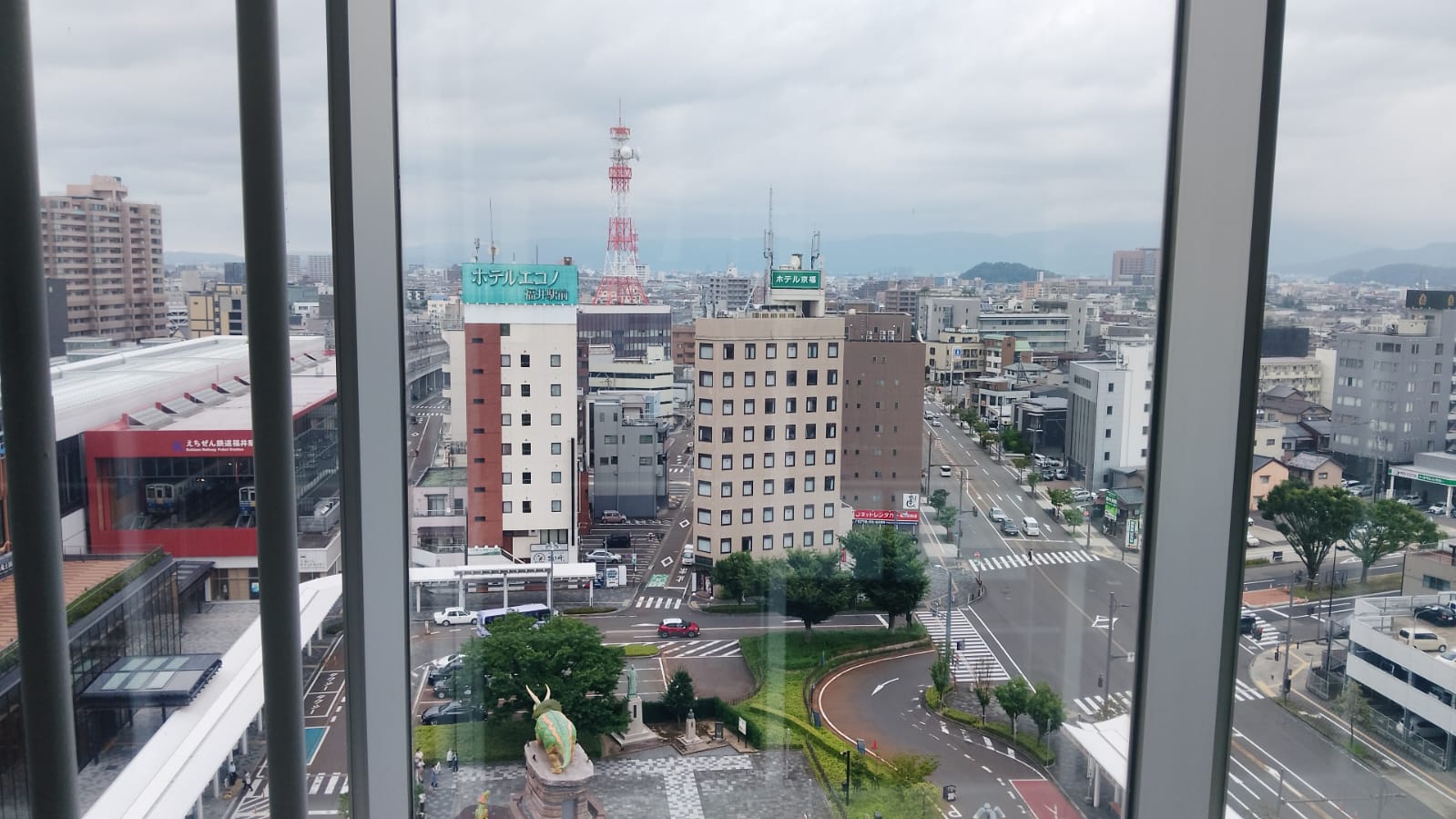
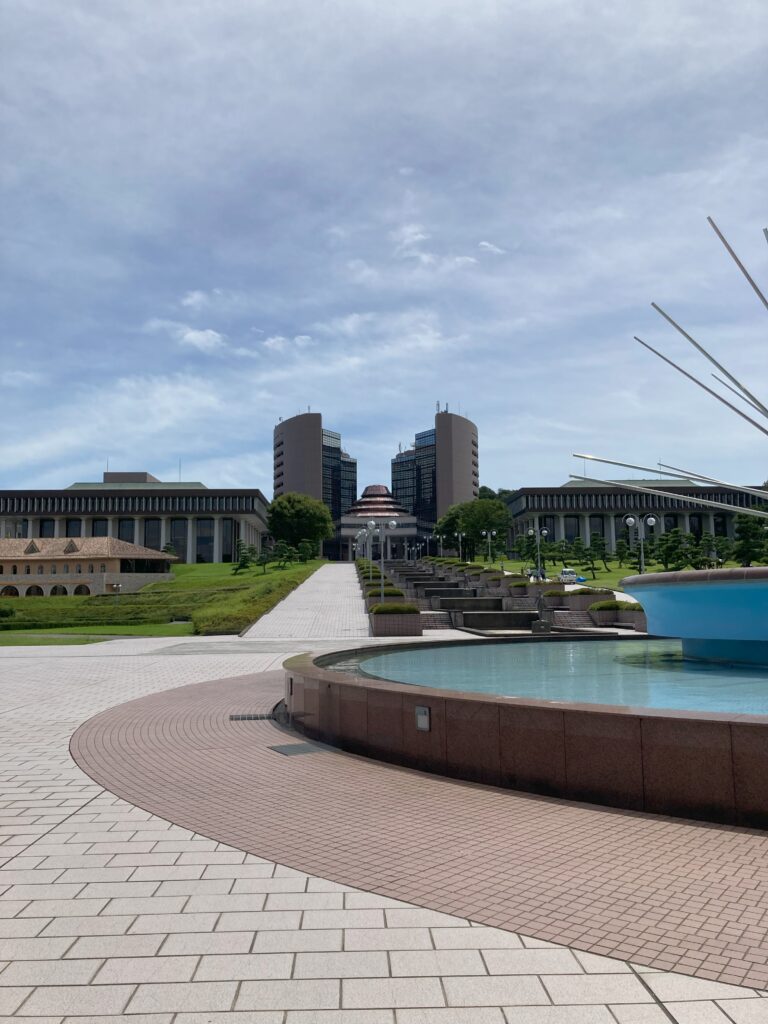
View from the AOSSA building

At the opening ceremony, the General Chair of IIAI AAI 2026, Yuichi Ono (University of Tsukuba, Japan), shared that this year’s conference received a total of 518 paper submissions from 19 countries/regions, reviewed by 384 program committee members from 40 countries. Of these, 131 papers were selected as regular papers (25.2% acceptance rate), 33 as short papers, and 17 as posters. My journey to the venue started on July 12, 2026. I took the local Happy Liner train from Kanazawa Station, about a 1 hour 25 minute ride to Fukui Station. I actively attended the conference sessions from July 13 to 16.
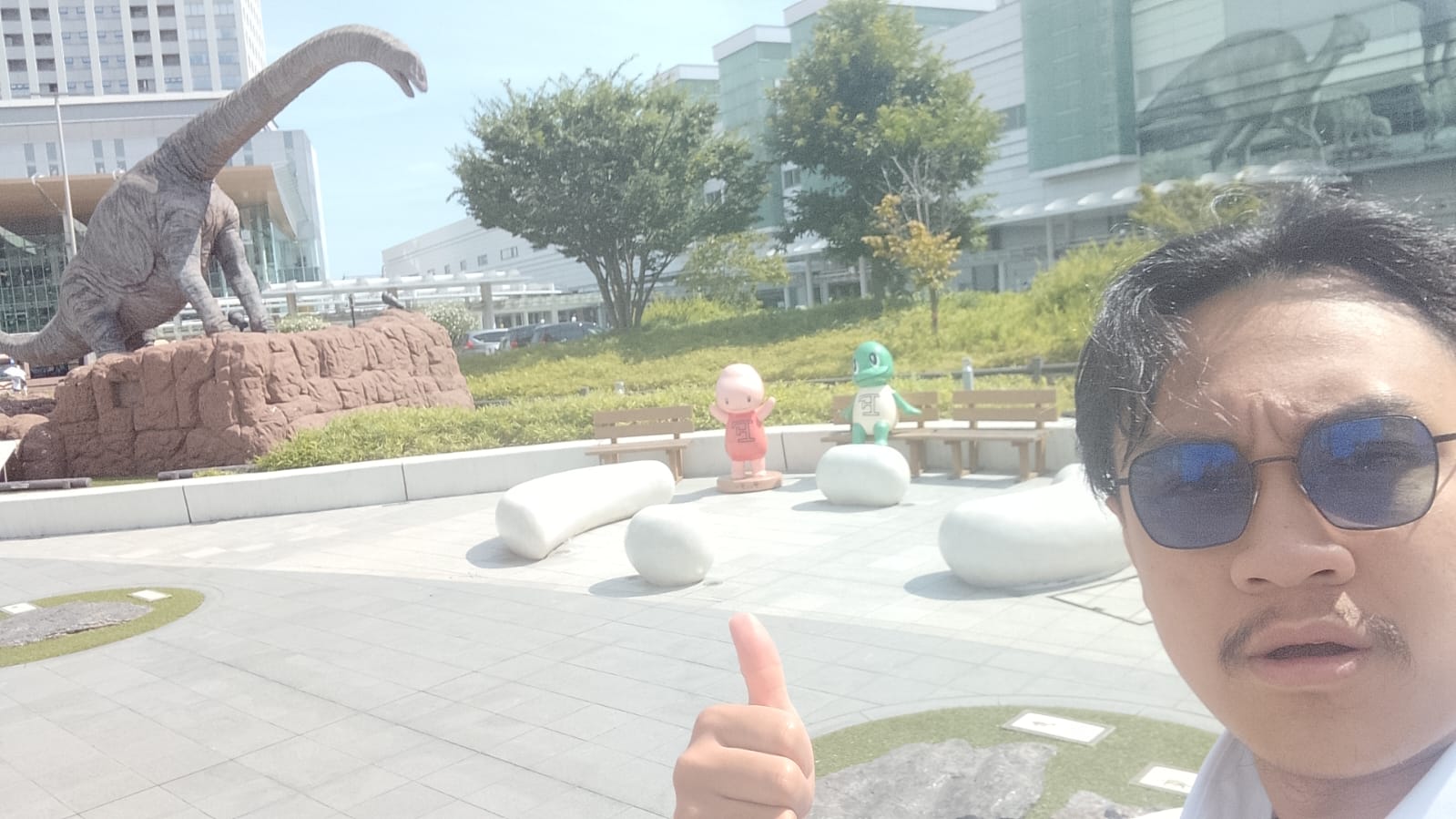
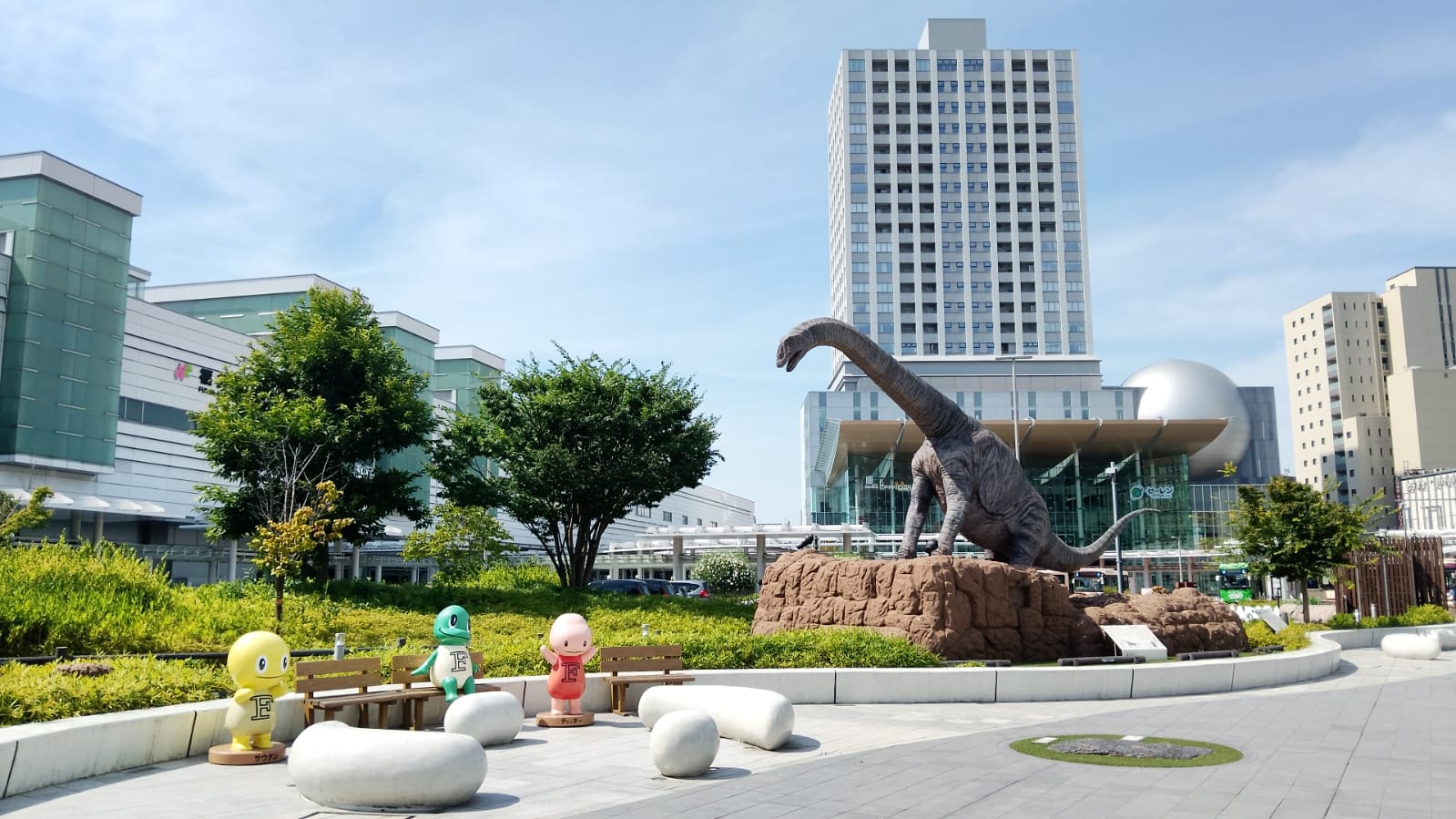
Welcome to Fukui, the Dinosaur Kingdom

Here’s my day-by-day story, from the sessions that caught my attention to the moment I stepped up to present our work.

Day 1: July 13, 2026
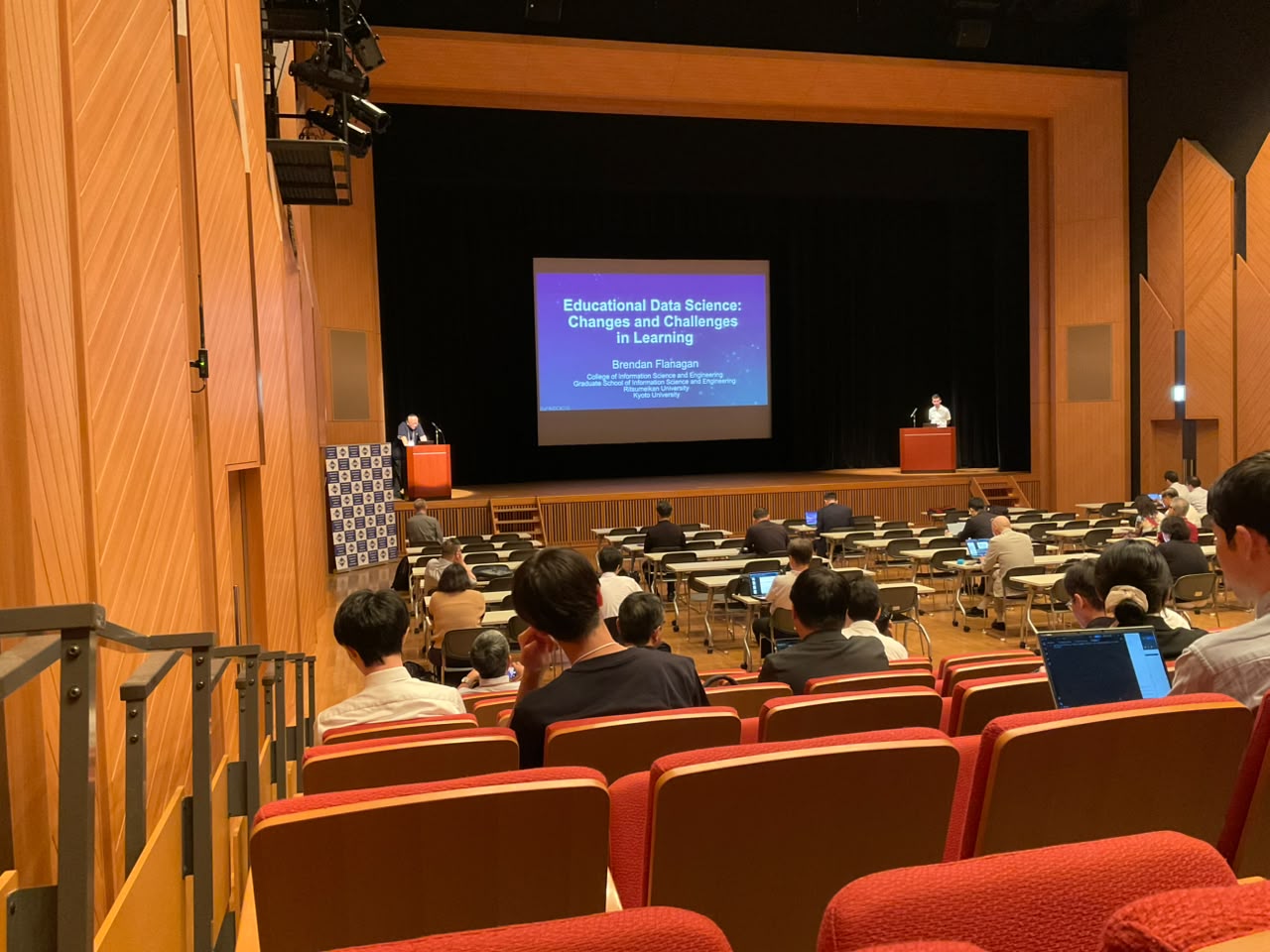
Keynote 1: Prof. Brendan Flanagan on Educational Data Science

The conference opened with a keynote from Prof. Brendan Flanagan (Ritsumeikan University), “Educational Data Science: Changes and Challenges in Learning,” about how educational data can serve as material for broader AI research. The part I found most interesting: there was an experiment where AI models were trained on synthetic data (to protect student privacy), and while the results looked great on the synthetic data, performance dropped sharply when tested on real data, showing that AI models can easily be fooled when trained on data whose characteristics differ from the real thing.
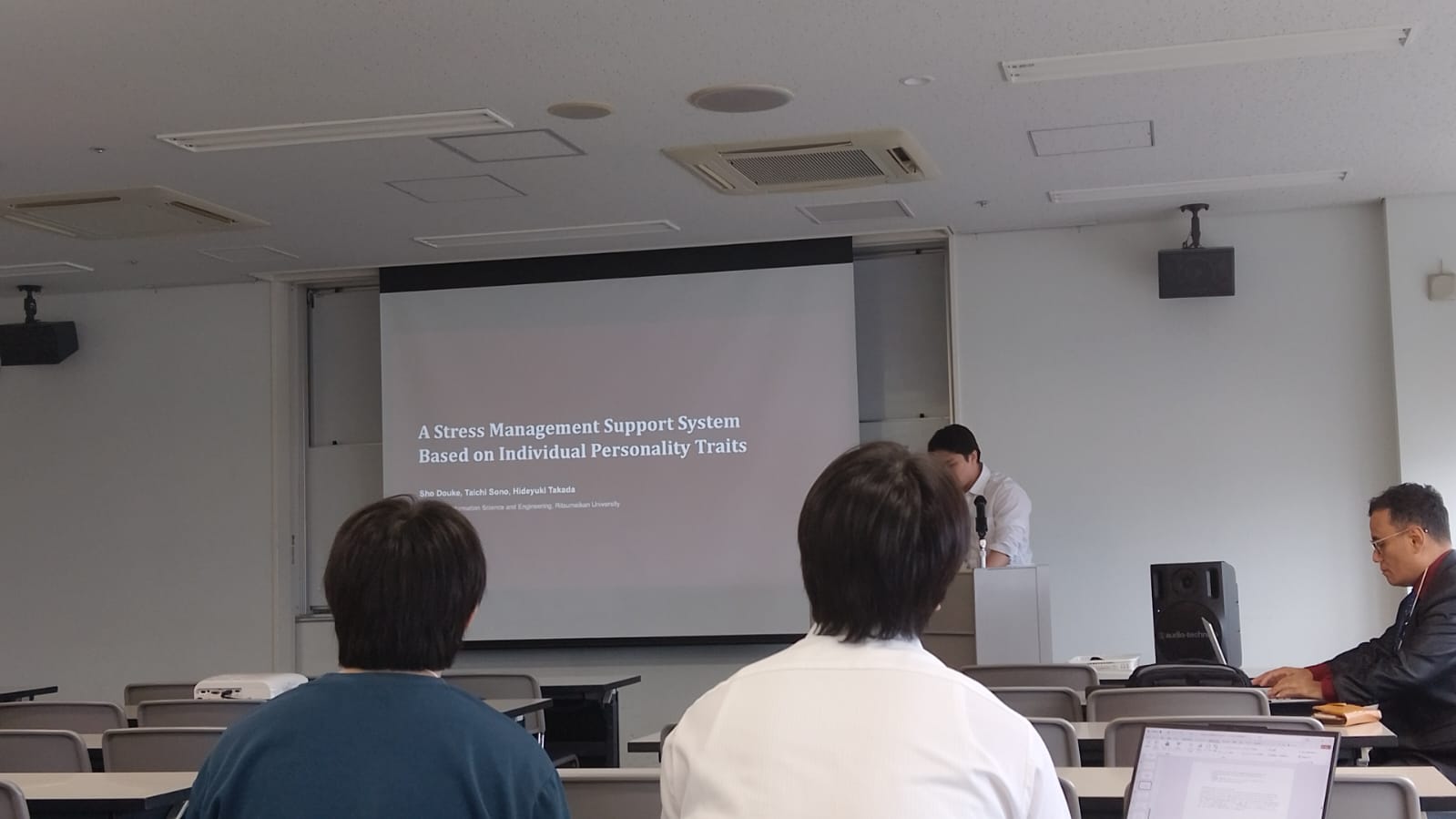
Presenting a personality-based stress management system

There were also two papers that caught my attention because they relate to assistive technology, a topic I’m interested in. First, “A Stress Management Support System Based on Individual Personality Traits” by Douke, Sono, Takada. The research about an AI application that gives stress-management advice tailored to each person’s personality, rather than generic advice given to everyone. They combined personality data with daily stress levels (measured via wearable), then had the AI generate personalized advice. The results showed people were more likely to actually follow the personalized advice and felt it was a better “fit.”

Second, “Infant Carrying as a Development-Adaptive Caregiving Practice” by Satoh, Herrera Cadillo, Nakano, Sakamoto, Takasaki. The research about an AI application that evaluates infant-carrying posture, which until now has assumed there’s a single fixed “ideal posture.” In reality, the ideal posture changes as the infant develops (horizontal carrying when the baby is small, shifting to vertical once the baby can support its own head). As a result, a caregiver who’s actually carrying the baby correctly could still receive a lower score, not because they’re doing anything wrong, but because the evaluation criteria hasn’t been updated to match the baby’s development.
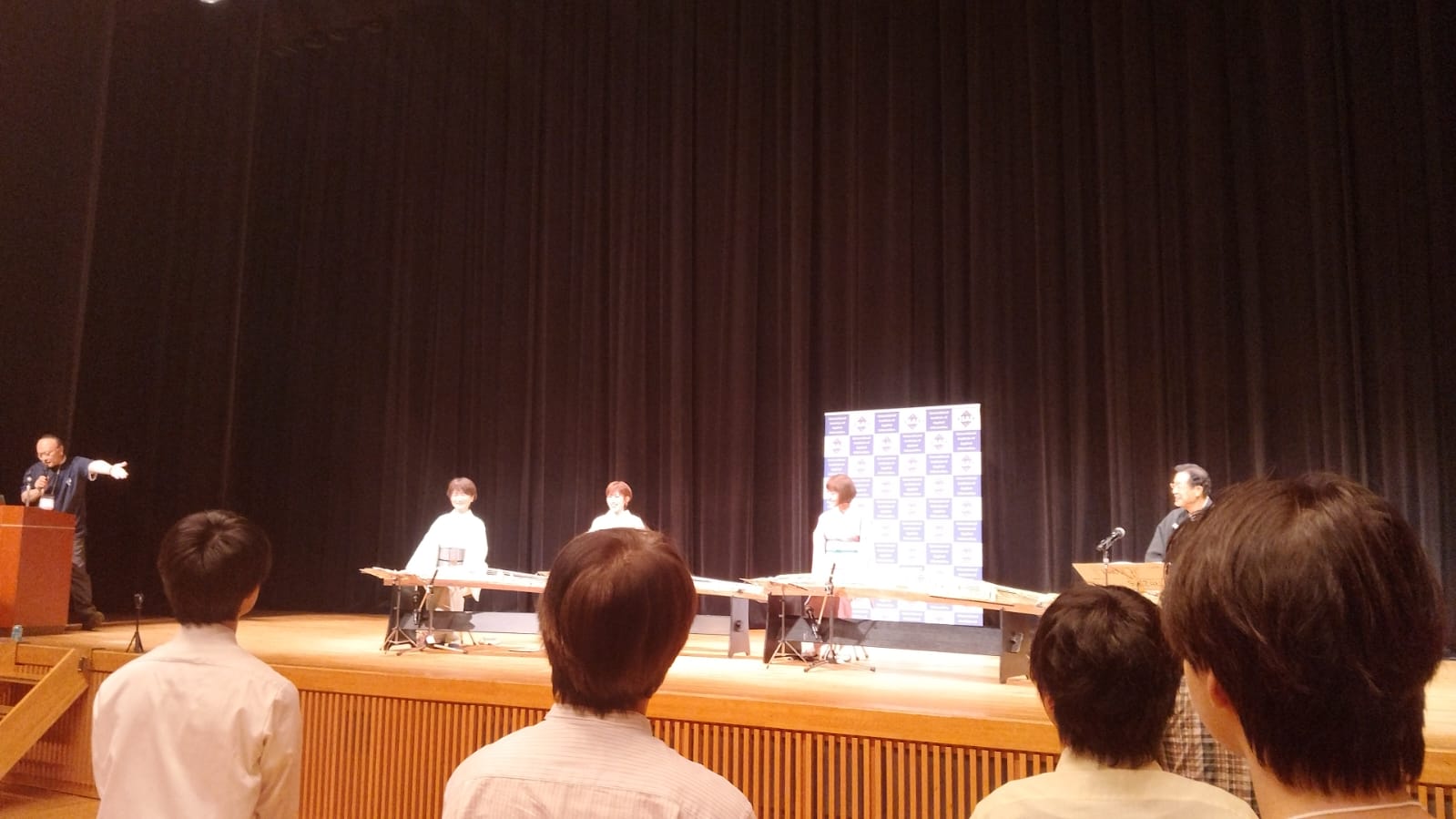
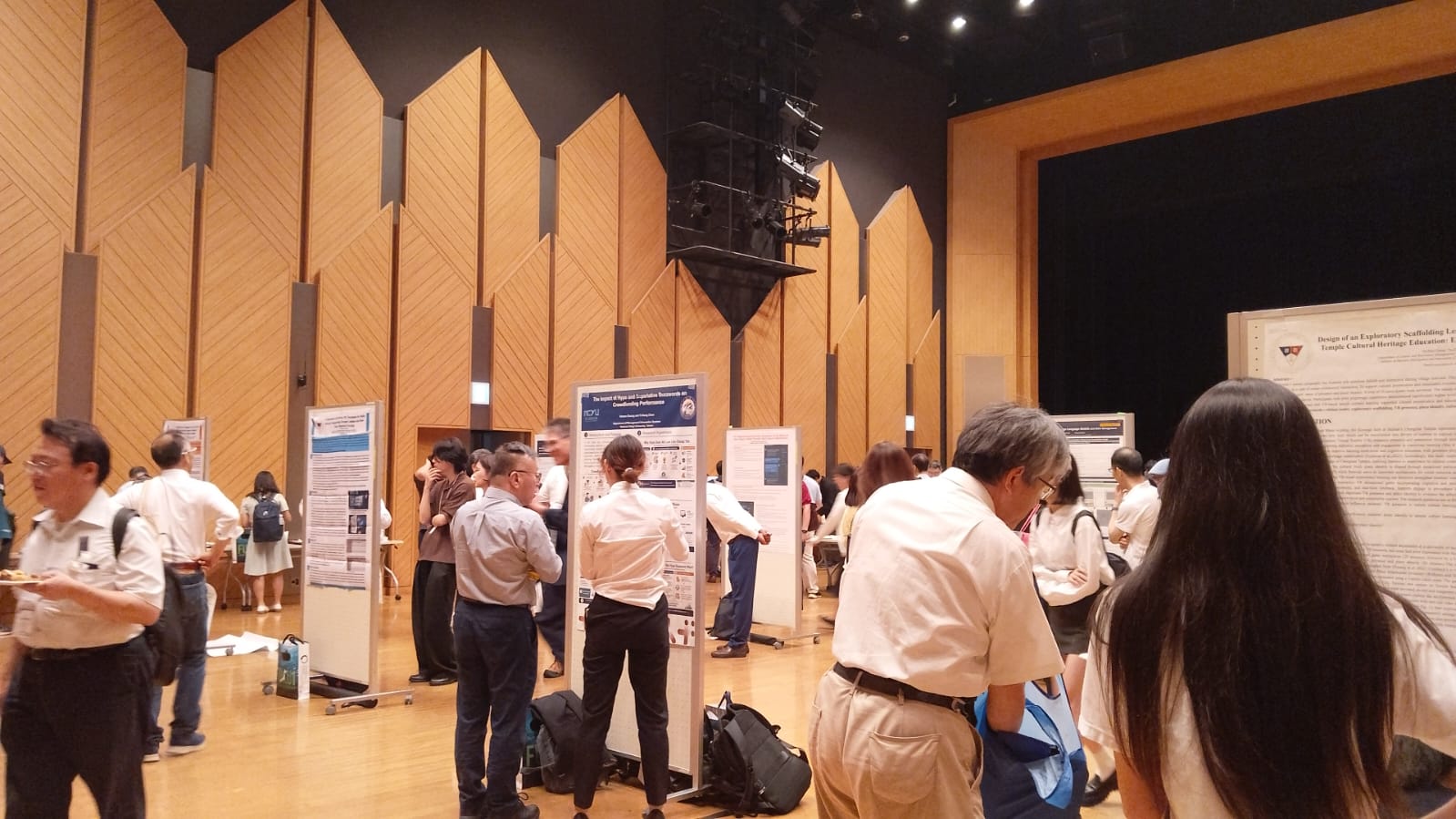
Welcome Reception and Poster Session

This was followed by the Welcome Reception and Poster Session at Hall A. In between poster sessions, there was a traditional Japanese music performance, koto, along with free drinks (wine and the like) and grilled meat skewers whose name I honestly didn’t catch, but they were delicious. The atmosphere was relaxed and social, with researchers exchanging business cards and chatting more deeply about each other’s research.
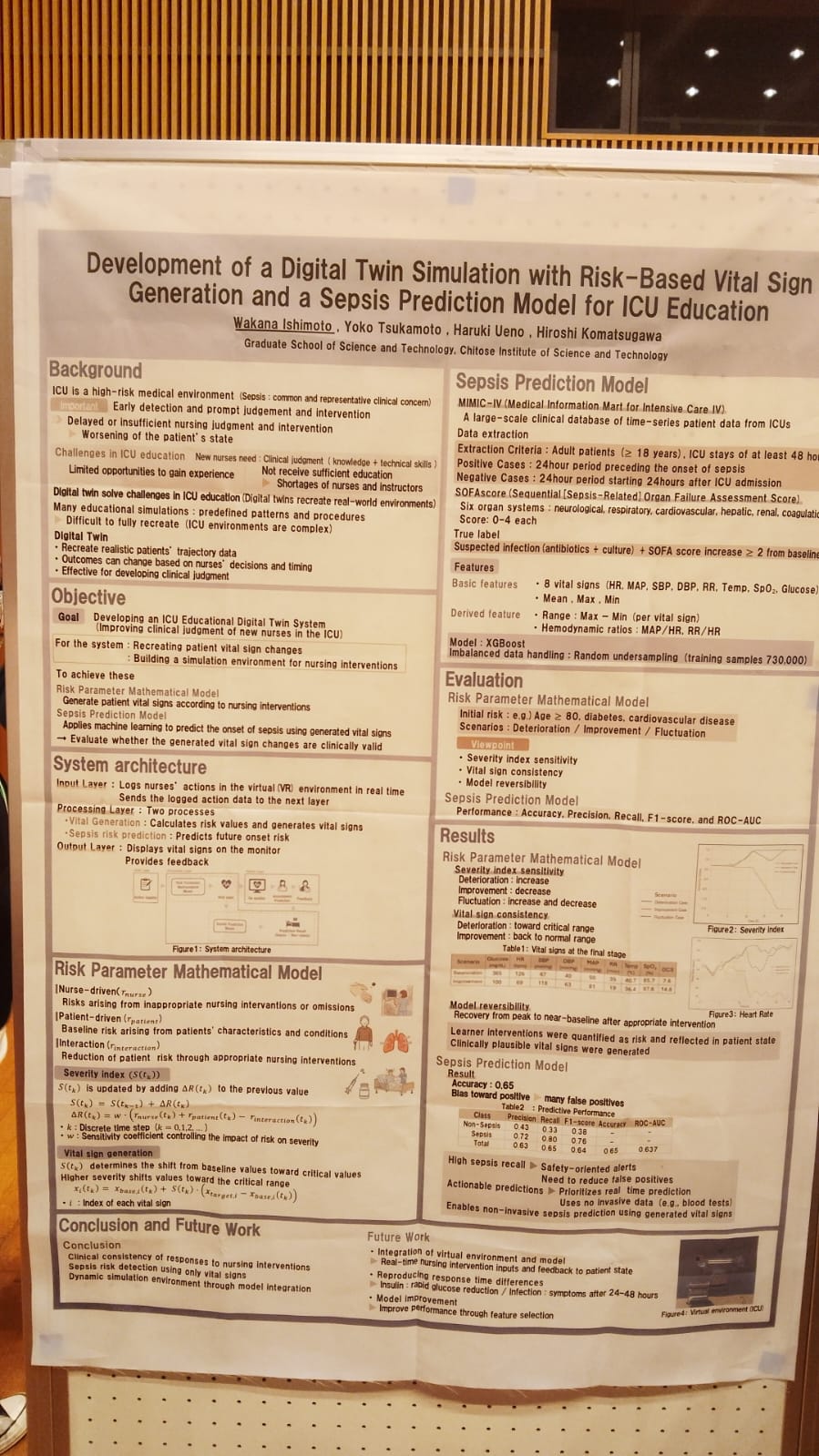
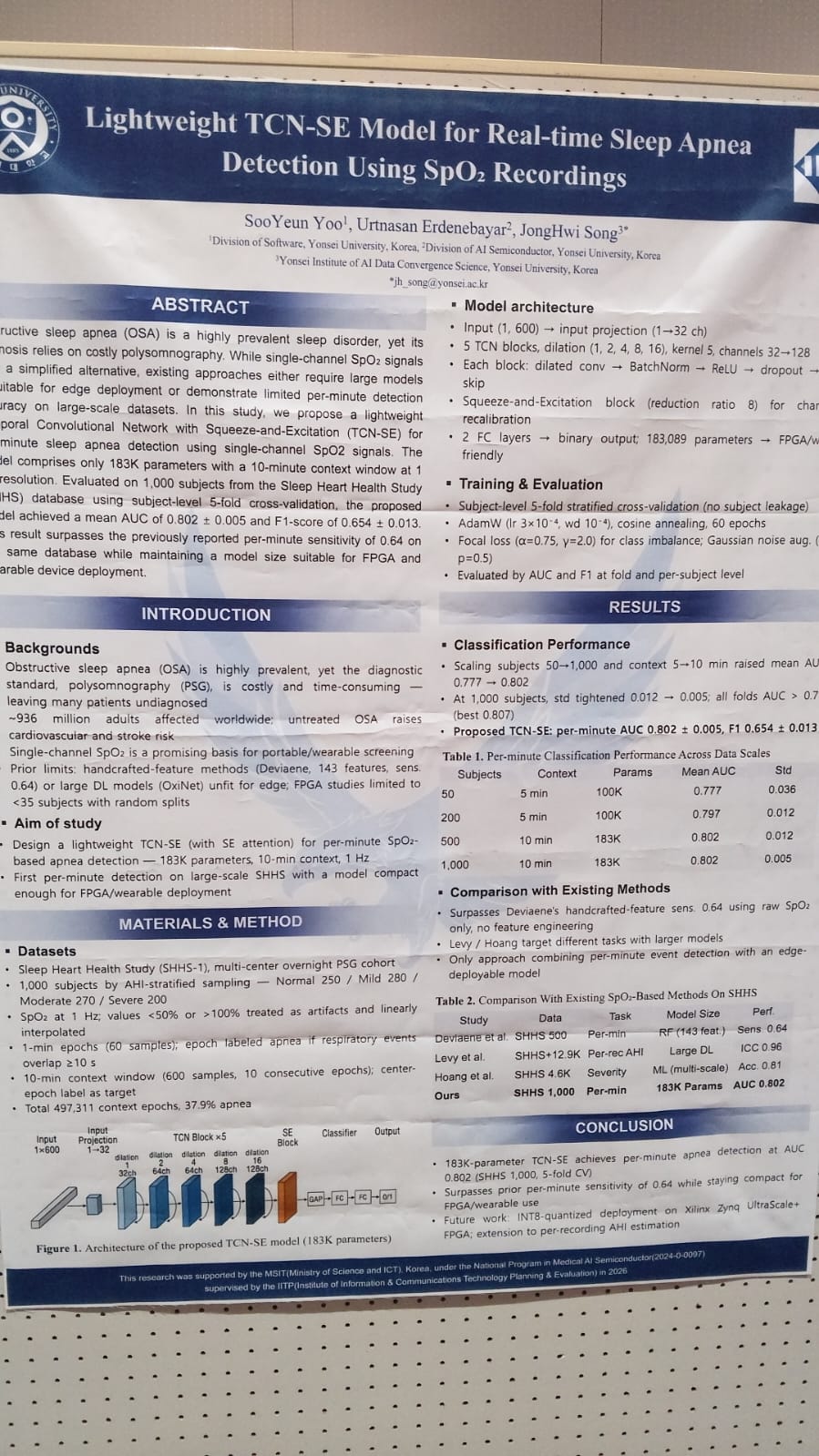
A few posters that stood out to me during the Poster Session

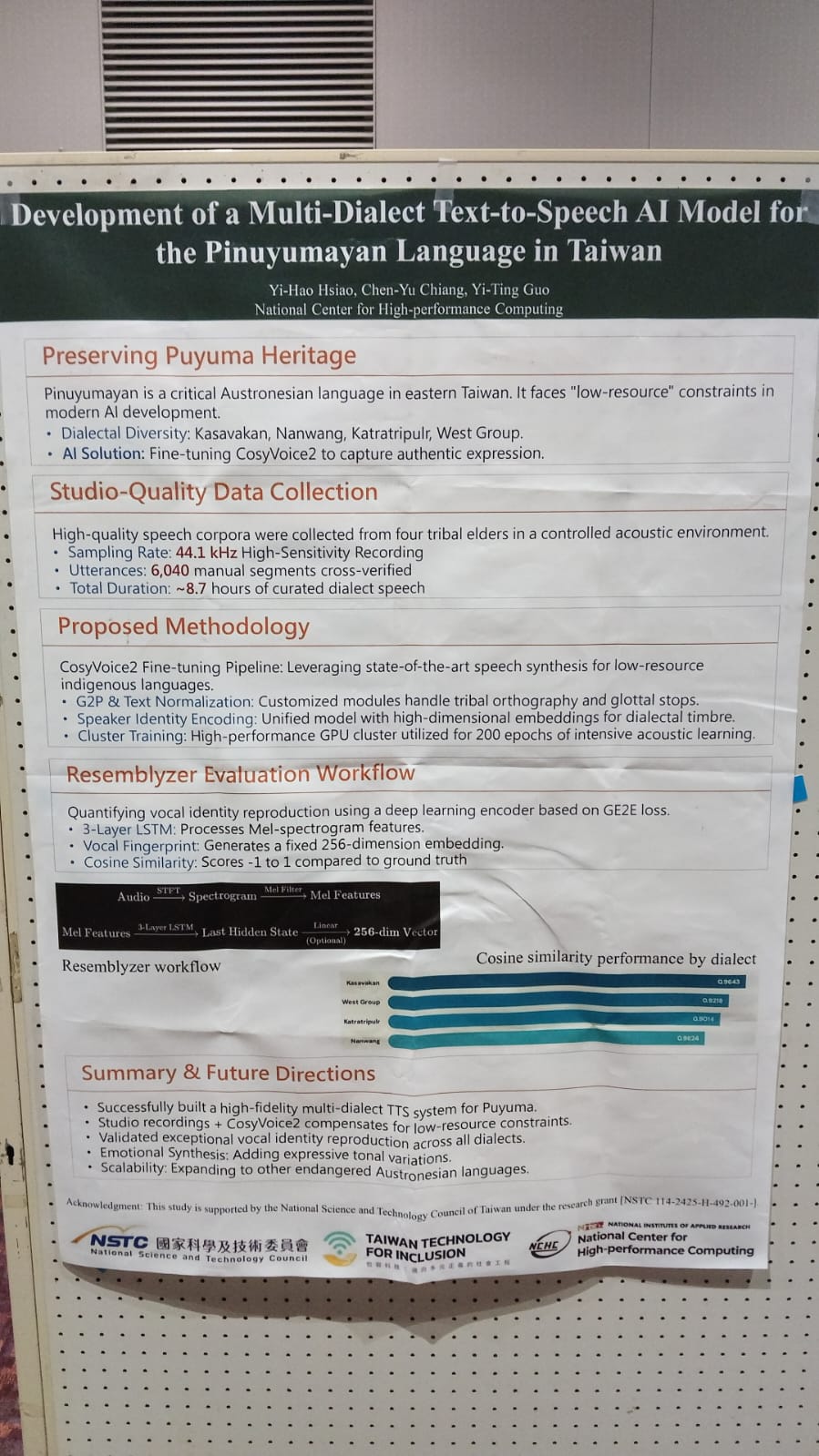
A few posters that caught my attention: “Lightweight TCN-SE Model for Real-time Sleep Apnea Detection Using SpO₂ Recordings” (Yoo, Erdenebayar, Song, Yonsei University), a lightweight sleep apnea detection model (183K parameters) that stays accurate while being designed to run on FPGA or wearable devices. One poster that felt fairly close to my own research was “Development of a Multi-Dialect Text-to-Speech AI Model for the Pinuyumayan Language in Taiwan” (Hsiao, Chiang, Guo, National Center for High-performance Computing), an AI text-to-speech model for Pinuyumayan, an endangered Austronesian language in Taiwan, built from recordings of four tribal elders and fine-tuned on a modern TTS model (CosyVoice2). This research shares the same spirit as my own work on sign language recognition: both are about building AI for languages underserved by mainstream research, and both face the challenge of limited data. The difference is that my challenge is domain gap and cross-signer generalization in ASL, while theirs is preserving the authenticity of voice and dialect from native speakers who are becoming fewer. Both, in the end, are about how AI can help preserve a community’s way of communicating, not just languages that already have abundant data. The last poster I looked at was “Development of a Digital Twin Simulation with Risk-Based Vital Sign Generation and a Sepsis Prediction Model for ICU Education” (Ishimoto, Tsukamoto, Ueno, Komatsugawa, Chitose Institute of Science and Technology), a digital twin simulation for training new nurses to recognize signs of sepsis in the ICU.

Day 2: July 14, 2026

Day two had two presentations that caught my attention. The first, “Image Analysis with a Vision-Language Model Using Affordance and User-Characteristic Prompts” by Koichi Nakamura, Sakuei Onishi, and Hiromitsu Shiina, addressed the problem that standard VLM captions don’t reflect individual characteristics. Their solution borrows the concept of affordance from Gibson: the VLM first analyzes what the image “affords” from an environmental and cultural standpoint, then combines that with the user prompt. The result was that for clear preferences (nature-oriented, urban-oriented), caption scores rose significantly across two different datasets. An example photo of Okayama Station made the difference clear, going from a caption that focused narrowly on a single element to a description of a coherent urban landscape.
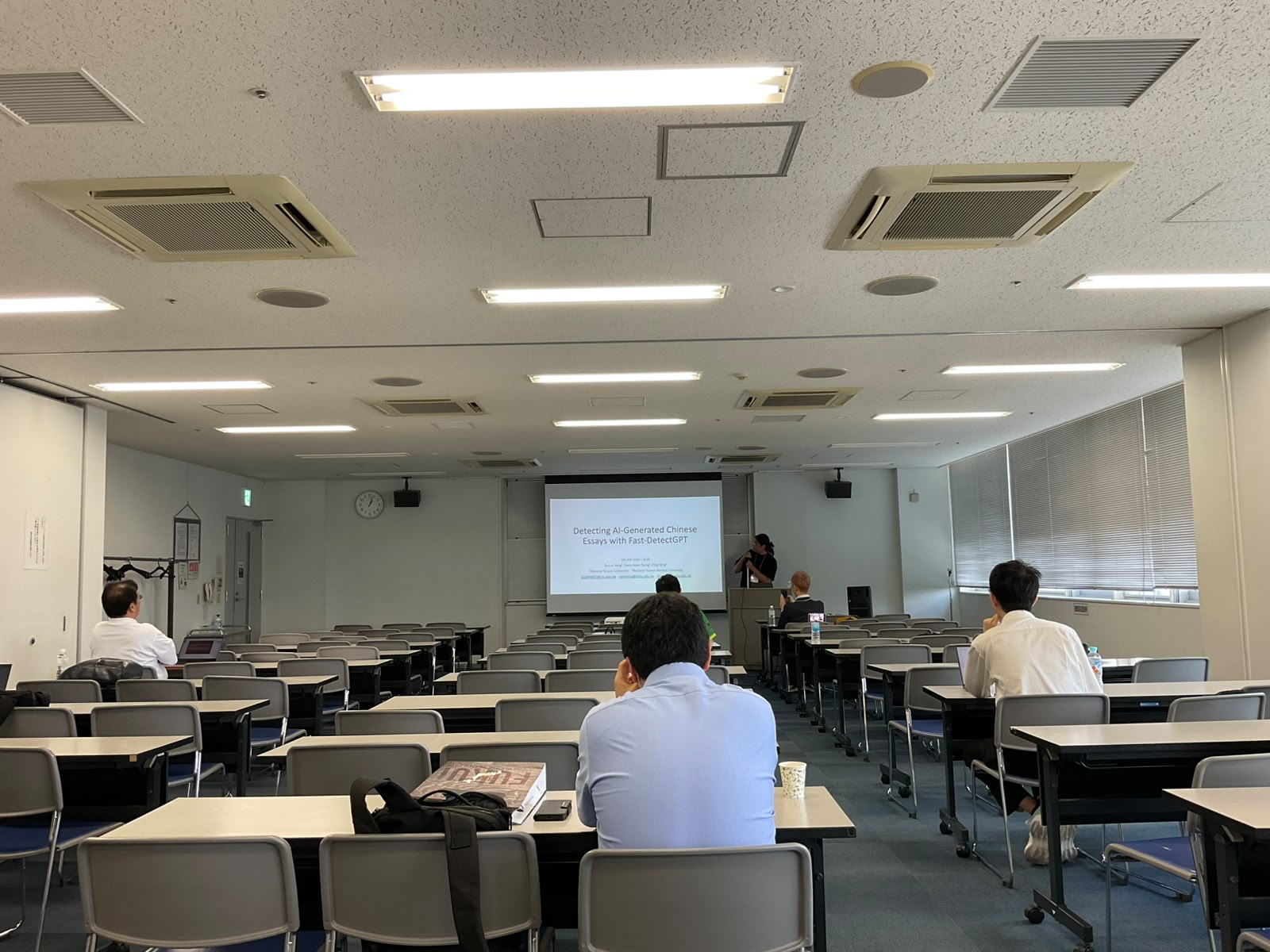
Presentation of ‘Detecting AI-Generated Chinese Essays with Fast-DetectGPT

The second presentation, “Detecting AI-Generated Chinese Essays with Fast-DetectGPT” by Te-Lun Yang, Yuen-Hsien Tseng, Ping Yang, was opened by a presenter who is also the development lead of WASS, a plagiarism detection system used across Taiwan that can only detect verbatim plagiarism and has no way of knowing how many AI-generated papers already exist in its database. They compared handwritten exam essays from Taiwanese junior-high students against AI-continued versions of the same essays, then detected them using Fast-DetectGPT, which measures how far a text’s log-probability deviates from the model’s own expectation. The result was a near-perfect AUROC across the three open-source models they tested. This topic felt especially relevant given how, as AI tools become easier to access, more and more students are taking a shortcut: producing an essay or assignment purely with AI and submitting it directly without any editing or self-review. What I appreciated about this paper is that they didn’t stop at the impressive numbers. They were careful to emphasize that this method should serve as a screening signal supporting human review, not as an automatic verdict.
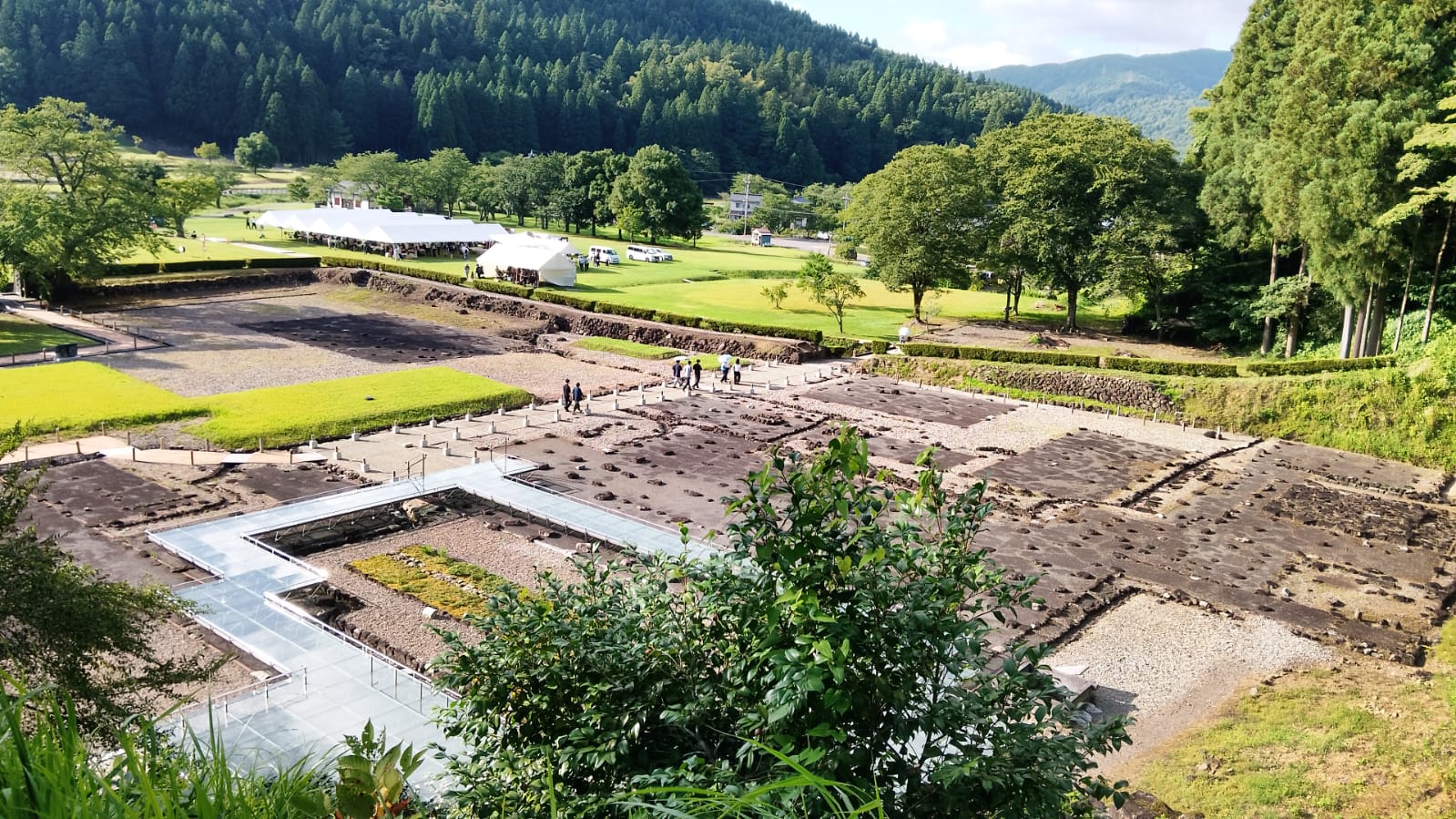
The ruins of Ichijo-dani, once a thriving Sengoku-era stronghold
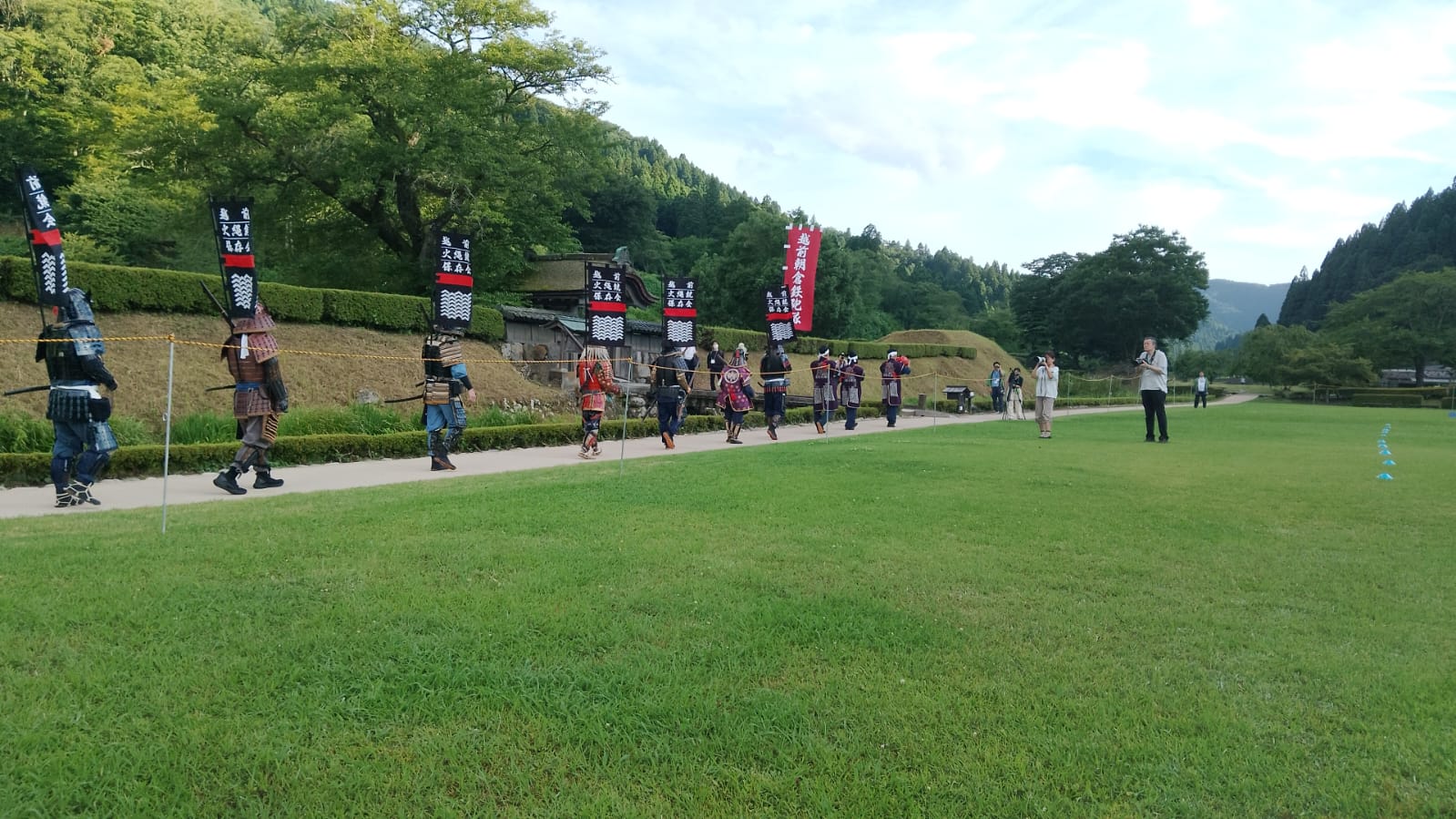
A teppo troupe marching through the ruins before their fire demonstration

The day closed with a visit to the Ichijo-dani Asakura Clan Ruins, the former stronghold town of the Asakura clan, who ruled the Echizen region for roughly 100 years during the Sengoku era. Walking among the excavated foundations spread across a valley surrounded by forested mountains, one of the moments that caught my attention most was a performance by a teppo troupe (matchlock/arquebus gunners in the style of the Sengoku period) in full armor, marching in formation with banners raised along the site’s path, before carrying out a synchronized blank-fire demonstration, complete with a loud bang and a burst of white smoke that genuinely startled me (hahaha).
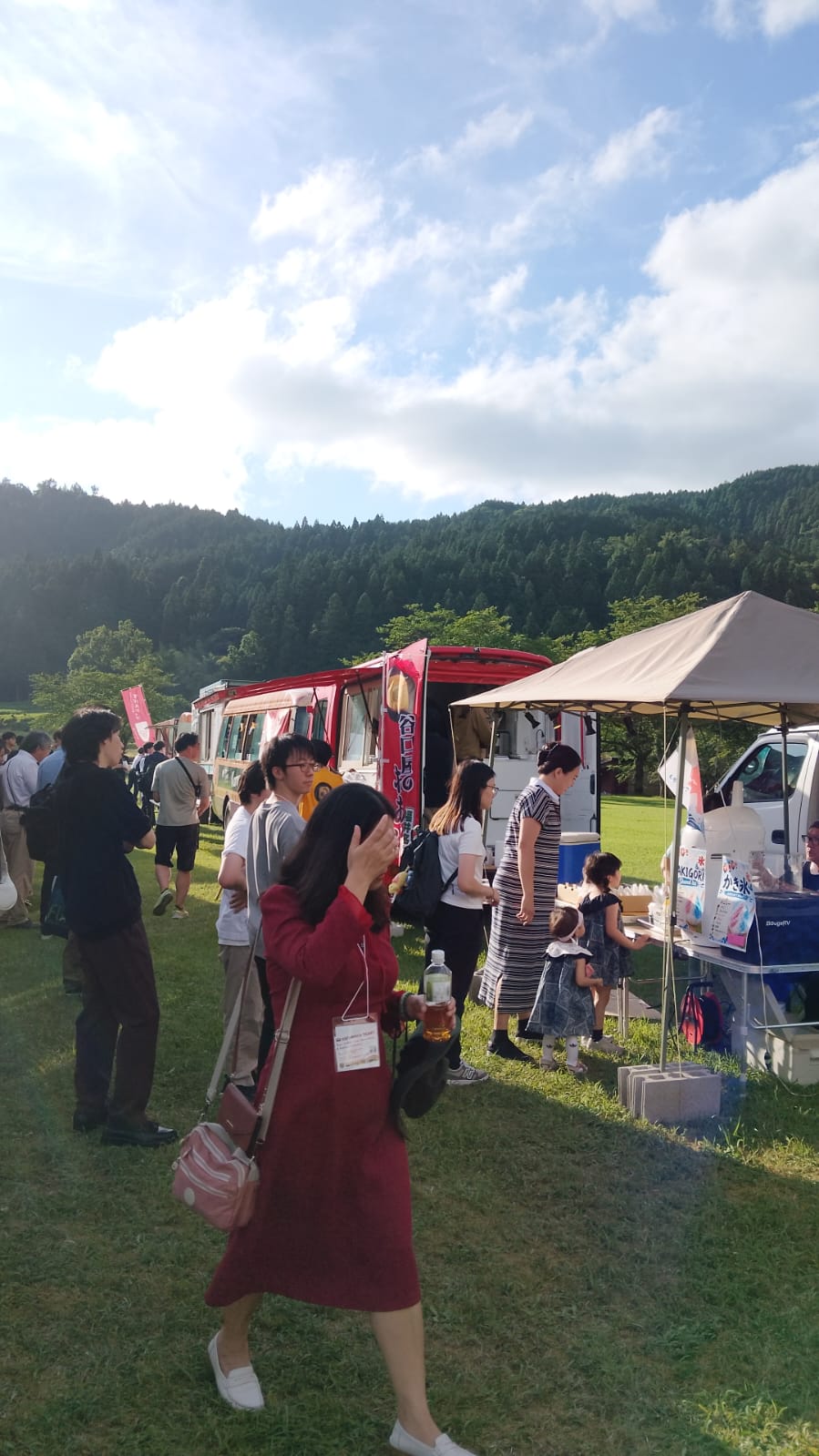
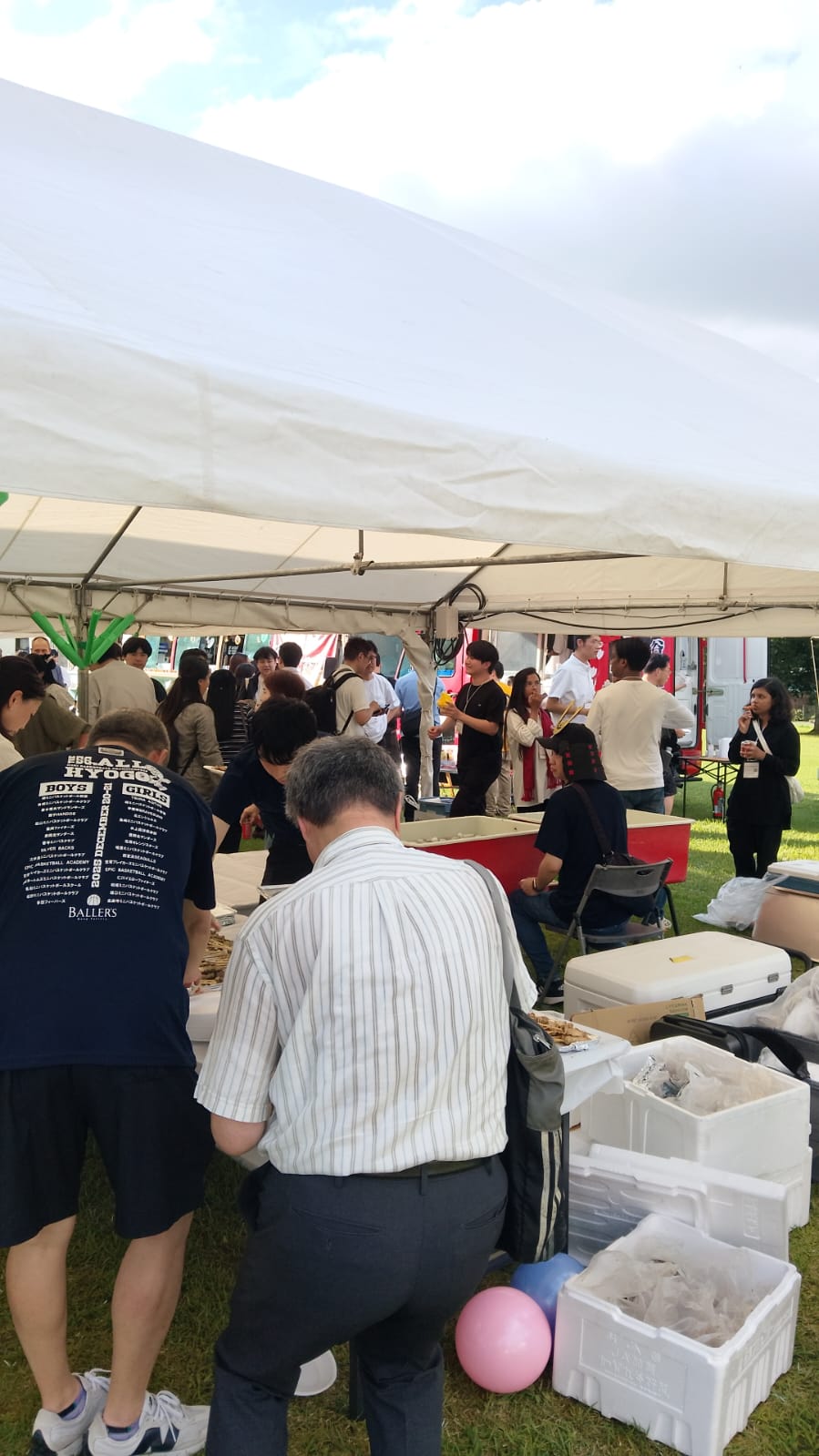
Food trucks and fellow researchers at Ichijo-dani

The organizers also set up several food trucks with free food and drinks scattered across the lawn near the site. It turned out to be the perfect time to mingle with fellow researchers outside the conference rooms, chatting over food and drinks as the sun set behind the mountains.

Day 3: July 15, 2026
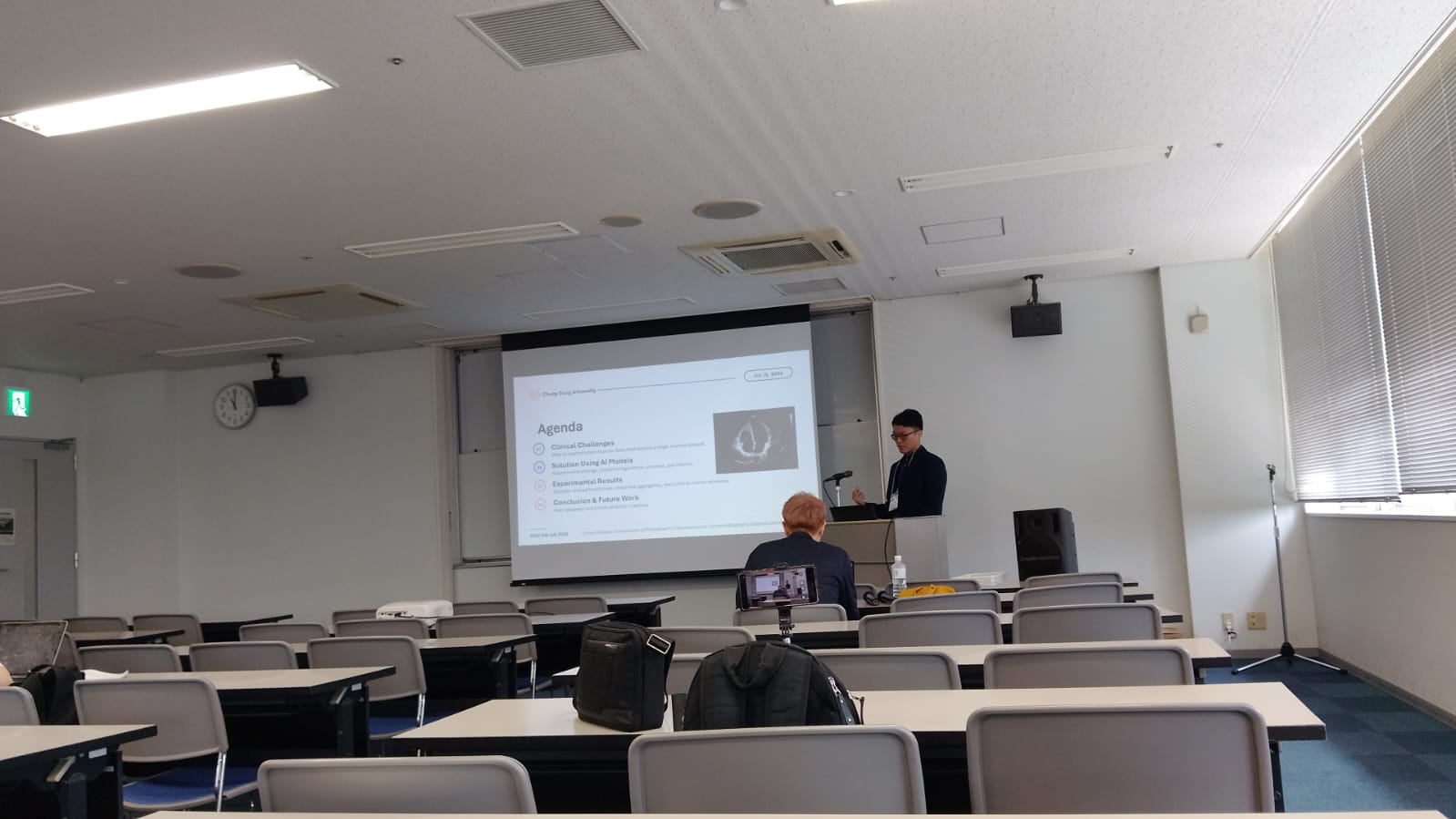
Presenting cross-dataset results on echocardiography segmentation

Today was the day of my own presentation, so I felt a bit nervous from the morning (mweheheheh), but I tried to focus on the other sessions first before my turn came. One presentation that caught my attention was “Cross-Dataset Comparison of Pretrained CV Backbones for Echocardiography Segmentation” from Chang Gung University. This research starts from a real clinical problem: even the smallest error in left ventricle segmentation can propagate into errors in volume and LVEF calculations. They compared four backbones with different pretraining strategies (EchoNet as an echo-specific CNN, Google-ViT as a supervised ImageNet ViT, GenMAE as a self-supervised model, and Pixio-5B as a web-scale MAE model), all using the same decoder, then tested them in two settings: trained on EchoNet-Dynamic and evaluated across datasets, and trained specifically on CAMUS A4C. The result was that EchoNet performed best on its own source dataset, but once tested across domains, GenMAE was the most consistently strong performer across all external datasets. The conclusion was clear: pretraining strategy is the most decisive factor under dataset shift, so backbone selection should be based on cross-dataset reliability rather than just the internal test score on a single dataset.
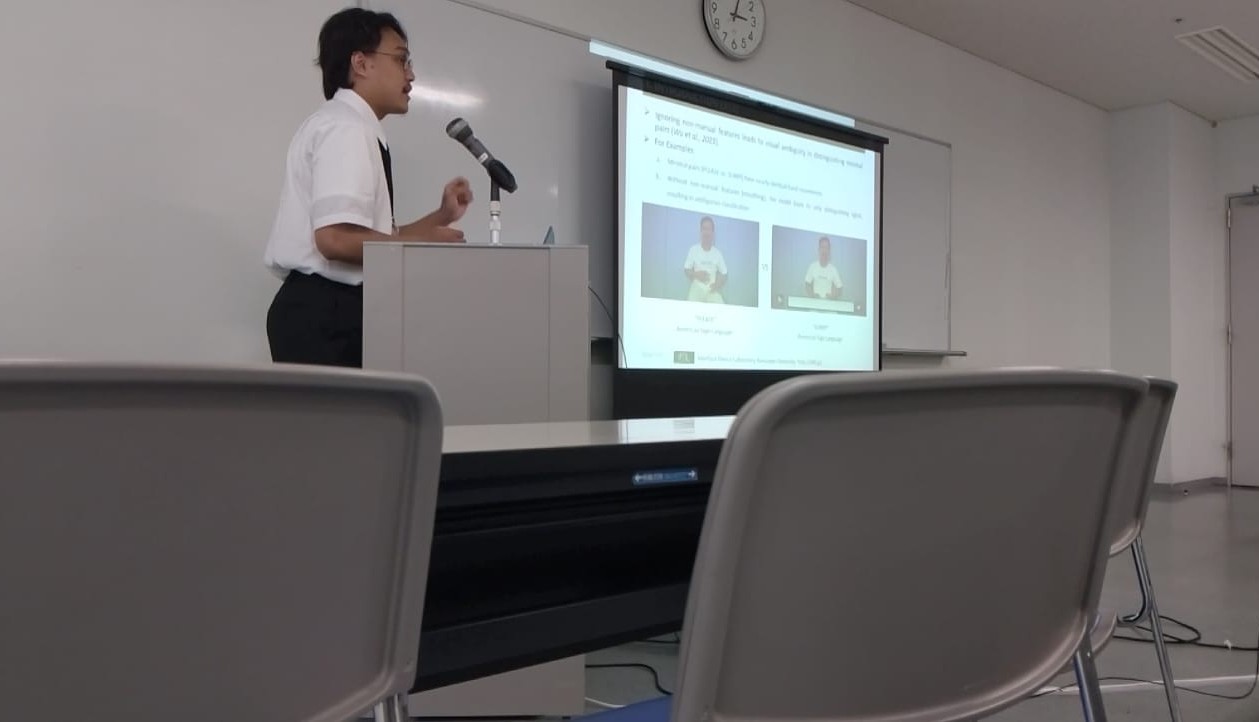
Presenting our dual-stream fusion architecture for ASL classification

After that, it was my turn to present. Thank God the presentation went smoothly, though the 25 minutes allotted for the talk and Q&A felt like they flew by, so I only ended up getting two questions. The first was about whether there are any future plans to develop this research into a tool. The second actually bundled two questions together: why my hand sign stream involves facial keypoints or landmarks such as the nose, mouth, and eyes, and why I chose American Sign Language as the focus of this research. Thank God I was able to answer all of them smoothly, and they ended up being valuable input I can factor into how I develop this research further.

Day 4: July 16, 2026

The last day of the conference, and since my own presentation was already done the day before, today I could sit back and enjoy other people’s sessions without any nervous jitters. Two presentations stood out to me today.
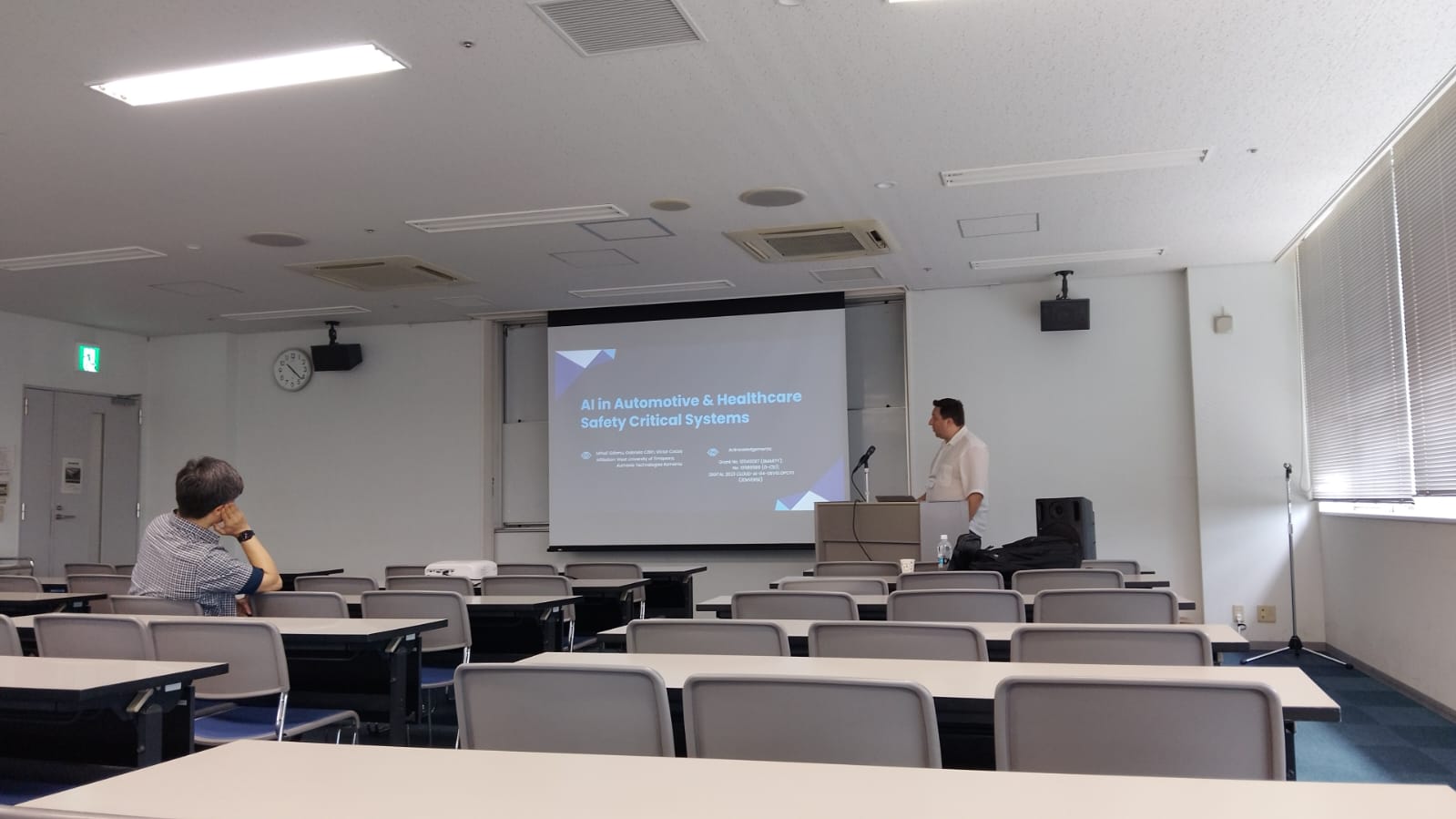
Presenting “AI in Safety-Critical Automotive and Medical Systems: A Cross-Domain Synthesis”

The first presentation,”AI in Safety-Critical Automotive and Medical Systems: A Cross-Domain Synthesis” by Gabriela Calin, Mihail Gaianu, and Victor Vlad Cocos
A systematic review comparing how AI is used in safety-critical systems across automotive and healthcare. Despite operating under completely different regulatory frameworks, both domains face the same underlying technical challenges: noisy data, expensive annotation, and strict assurance requirements, and both rely on the same three pillars (automation, simulation, assurance), just applied differently. What I found most interesting was the concept of “verified ground truth” as a shared bottleneck, a labeling error doesn’t just hurt model accuracy on paper, it can propagate into unsafe clinical advice or a bad driving decision.

The second presentation”An Adaptive Edge-Cloud Architecture for Reliable Pedestrian Action Recognition” by Carly-Jaurelle Boukandou Moukouama, Taichi Sono, and Hideyuki Takada
A pedestrian crossing detection system that stays reliable even as visual conditions shift from clear daylight to low-light night driving, running three lightweight models on the edge device and offloading only “uncertain” frames to the cloud. The part I found most compelling was how they distinguish a genuine drop in confidence from mere noise, using two exponential moving averages running at different speeds plus a hysteresis mechanism to stop the system from flip-flopping between edge and cloud. The result: cloud offloading automatically rose with scene difficulty (12% in good weather, 50%+ in low light), recovering reliable detection in conditions where edge-only failed entirely.
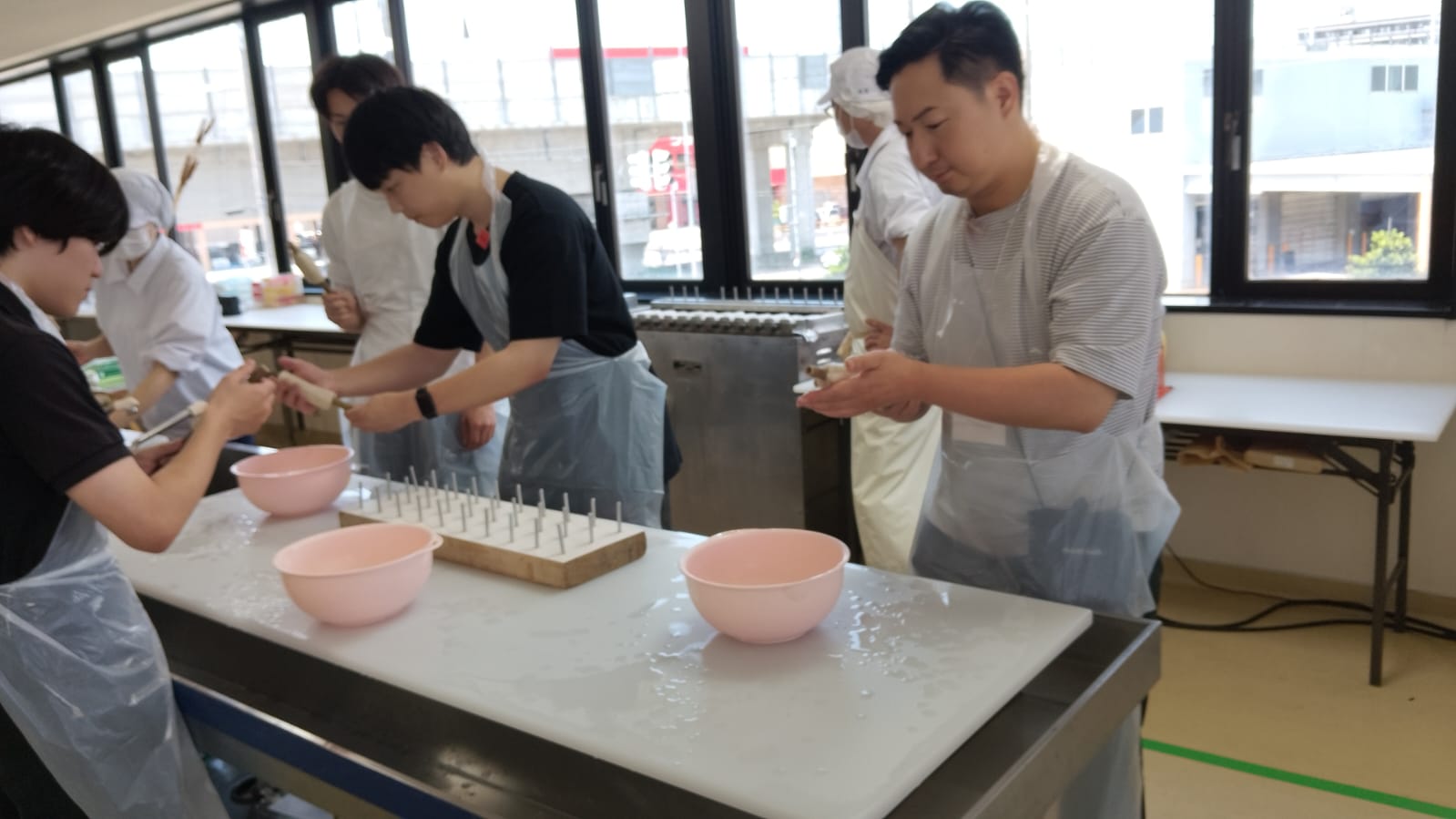
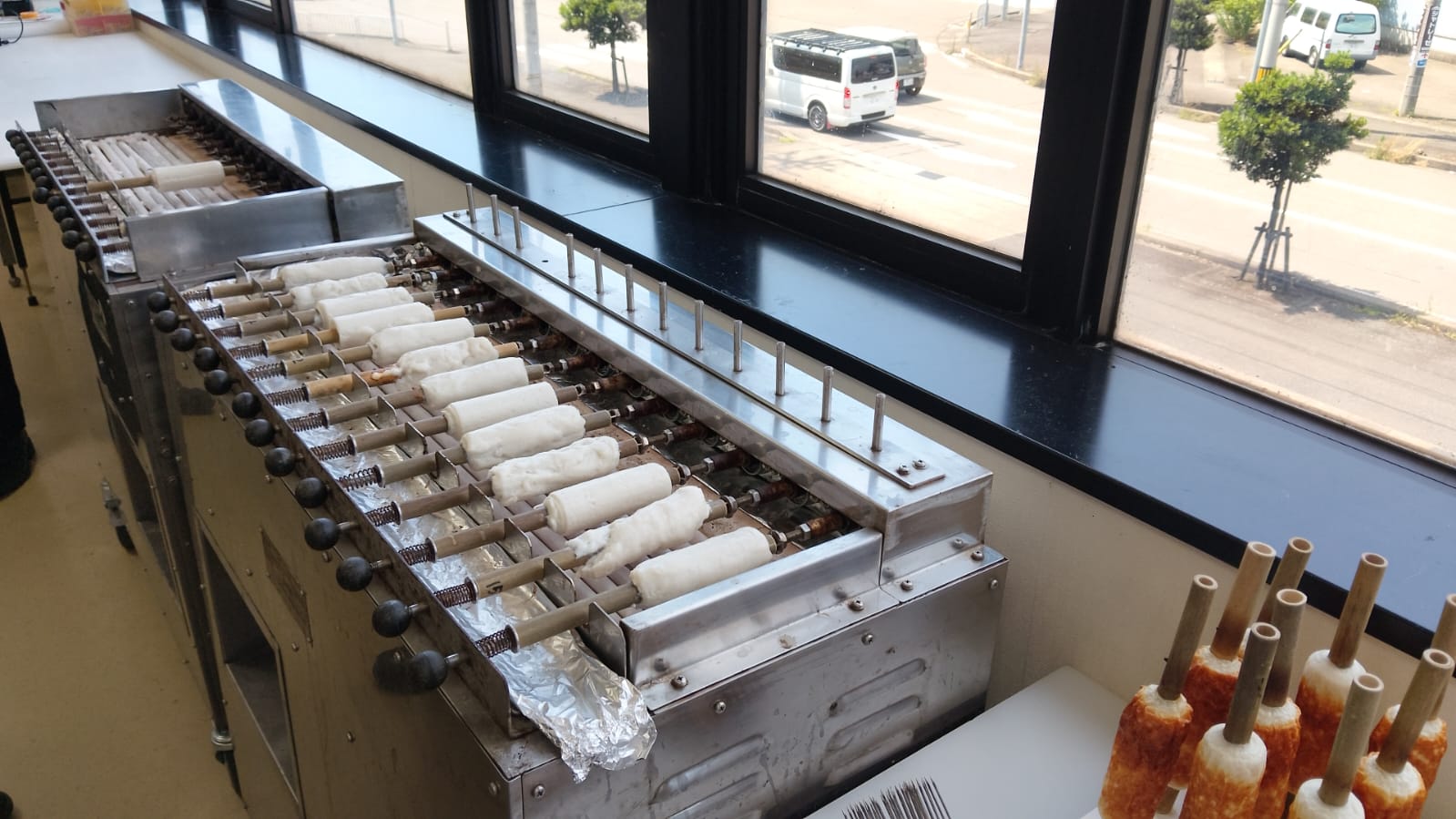
Hand-rolling and grilling our own Gamanoho at Yasuda Kamaboko Workshop

Beyond the presentation sessions, the conference also offered a technical tour and excursion, with 5 tour options: Tour 1 (EIGHT RIBBON & Ichijodani Asakura Ruins), Tour 2 (Kubota Brewery & Ichijodani Asakura Ruins), Tour 3 (Milk Kobo Okuechizen & Echizen Daibutsu), Tour 4 (Echizen Soba Village & Echizen Chiyozuru Museum), and Tour 5 (Yasuda Kamaboko Workshop & Fukui City Museum of History). I picked Tour 5, held on July 16, so after attending a few presentation sessions, I joined this tour.
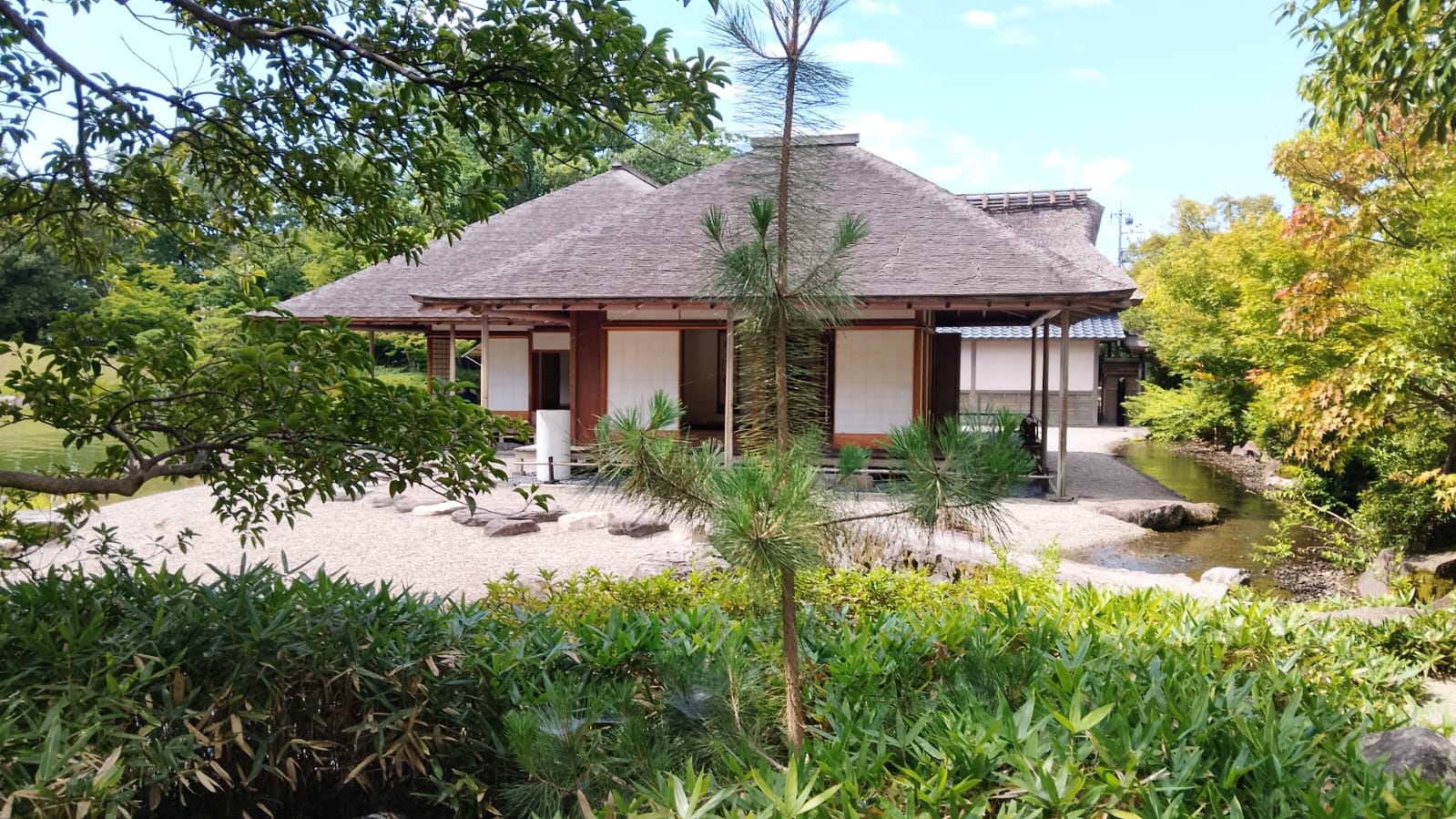
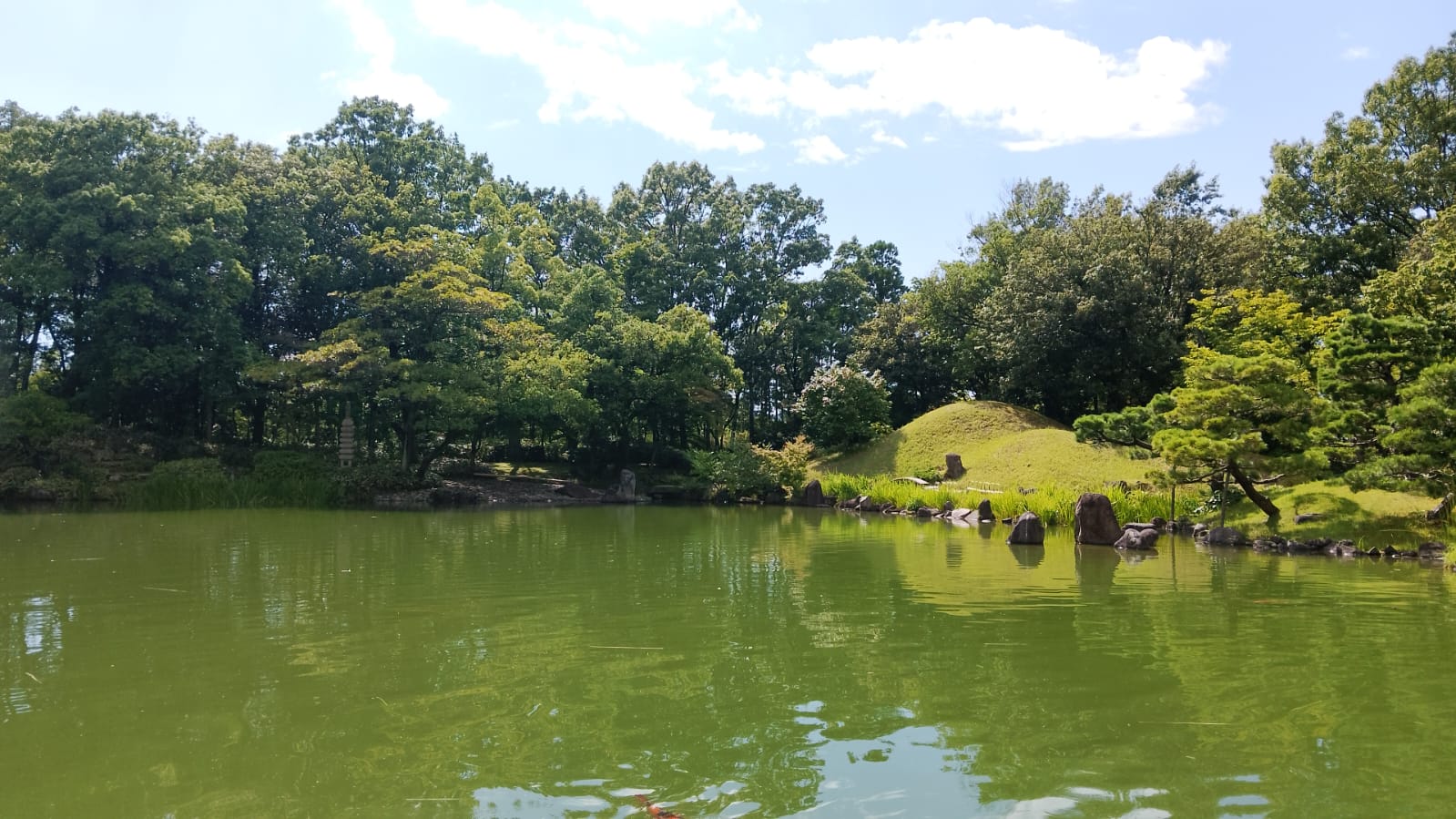
Yokokan Garden, once a retreat for the lords of the Fukui Domain

At the Yasuda Kamaboko Workshop, I got to make my own “Gamanoho,” a traditional grilled fish cake wrapped around a bamboo stick, using techniques passed down for generations, then enjoyed it fresh right after making it. The tour continued to Yokokan Garden, a beautifully restored Edo-period garden that once served as a retreat for the lords of the Fukui Domain, before ending at the Fukui City Museum of History, where I learned a lot about the history and culture of Japan, particularly around the Fukui region.
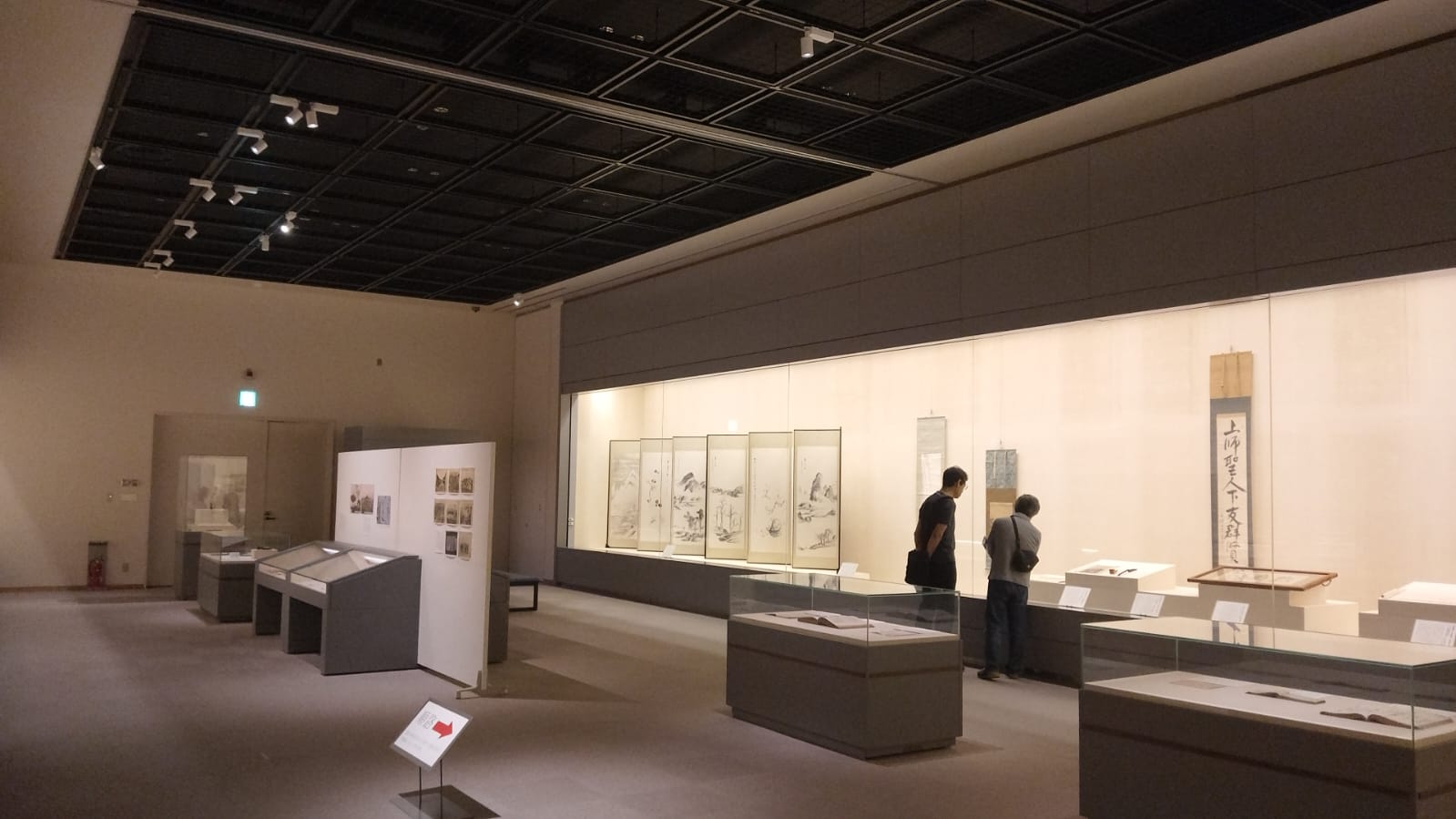
Inside the Fukui City Museum of History

Four days, dozens of sessions, one nerve-wracking presentation, and more grilled skewers than I can count (hahaha). Beyond the technical takeaways, attending several presentations also made me realize something fundamental that I sometimes forget: research involving humans directly carries a deeper layer of consideration than just building an accurate model. There’s an ethical weight to it, because the people involved are human, not just numbers on paper.

IIAI AAI 2026 didn’t just give me new research ideas to think about and deepen my understanding of my field, it also helped me build connections with fellow researchers. See you at the next conference!
Ogaki Mini Maker Faire 2022に参加してきました

初めまして。B4の白谷です。

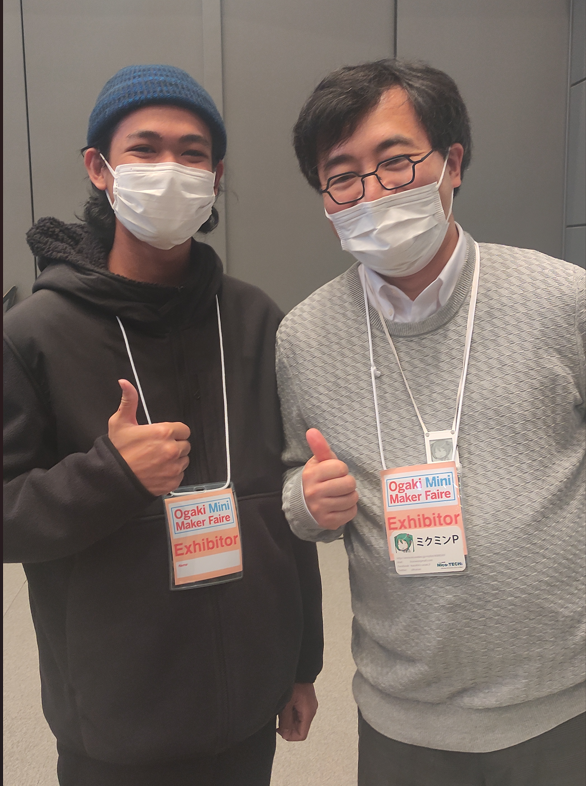
12月3日と4日に岐阜県大垣市のソフトピアジャパンセンターで開催されたOgaki Mini Maker Faireに秋田先生が出展され、その手伝いも兼ねて見学してきました。今回はD2のSabirinさん、M2のDanuさん、B4の徳田くんと合わせて4人での参加でした。

先生がワークショップなどで席を外される時にはブースの番をしていましたが、それ以外の多くの時間で他のブースを回ることができました。そこで印象に残ったものをいくつか紹介しようと思います。

1.アンビエントコンピューティングなおうち(ミクミンPさん)

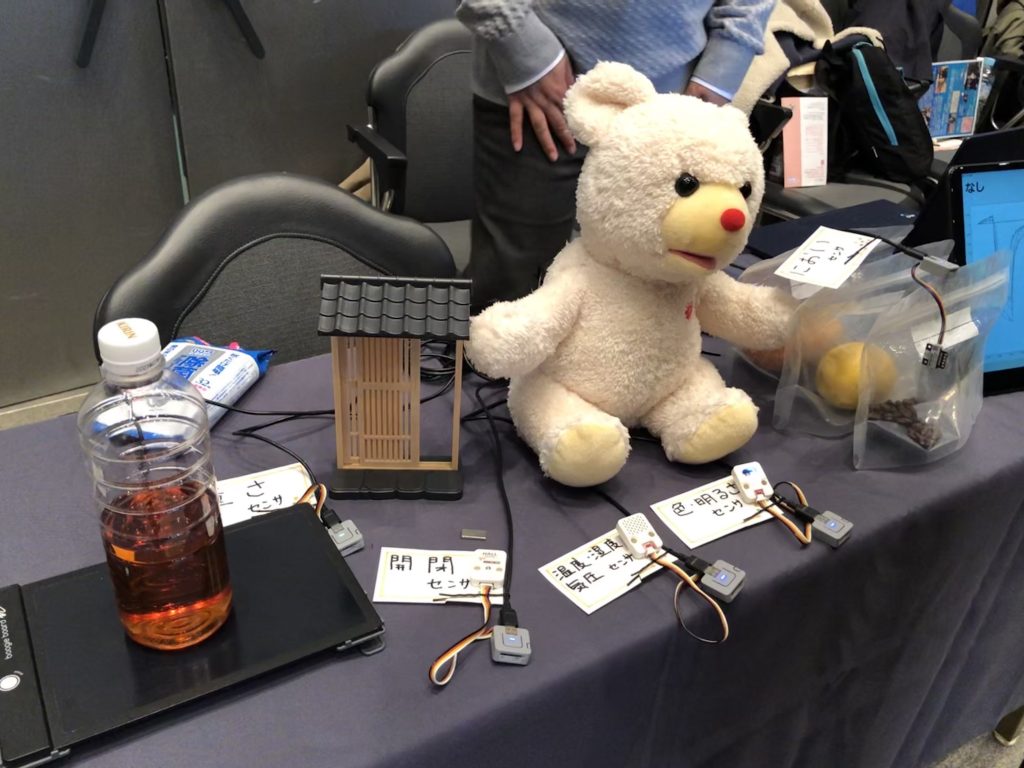
M5AtomやUnitを中心に、100以上のセンサを実際にお家に設置している方の展示でした。温湿度からベッドの荷重まであらゆるデータを計測し解析することで、住人ですら気づかなかったような生活の傾向が見えてくるということで、かなり進んだIoTの世界を垣間見ることができました。


2.デジタル時計225(ゆるふわfintech/ゆるふわでんきさん)

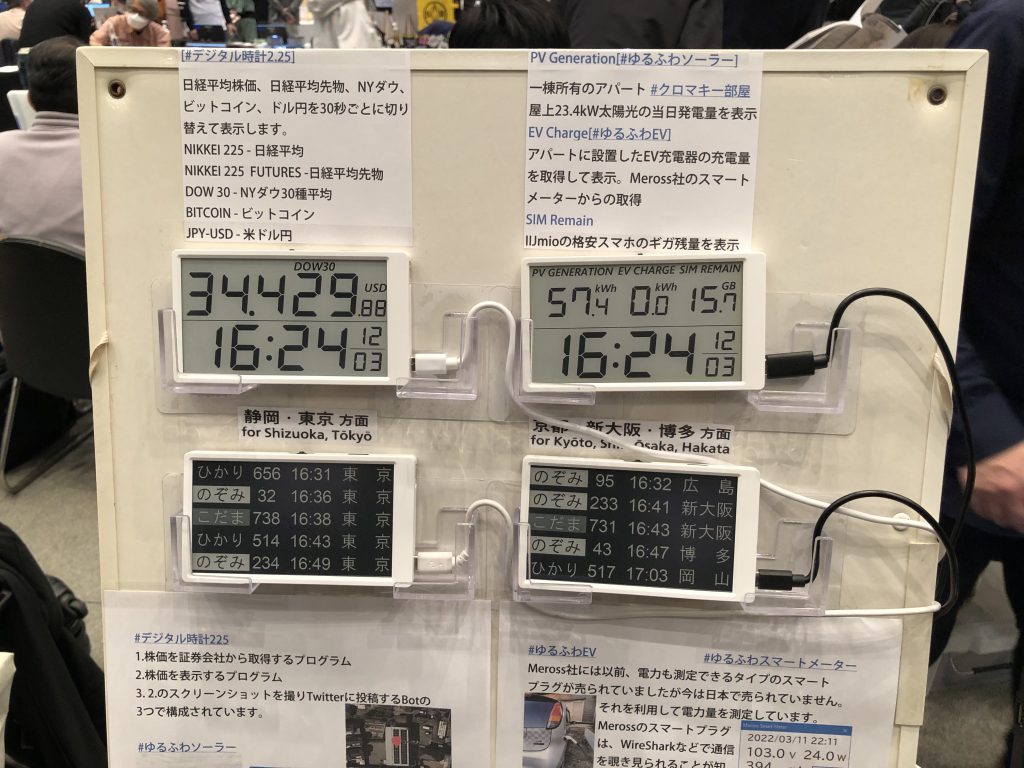
日経平均や為替相場を証券会社のWebページからスクレイピングしてM5Paperに表示するというもので、他にもM5Paperを用いて太陽光発電の発電量モニターを作ったり新幹線の発車標の再現をされていました。私も一時期M5Paperを使用していたので、バッテリー持ちやWi-Fi通信についてのお話もでき興味深かったです。

3.超難度倒立振子ロボ(DMC商店さん)

M5Stick Cとサーボのみを用いた倒立振子を展示されていました。以前は同種のものを大学の授業などで作ろうとしても基板を作るところから始まり時間がかかりすぎていたものを、M5Stick Cのように小型かつ高性能なマイコンが登場したことで、プログラミングだけで簡単に(と言いつつ実際の制御は複雑なようですが)実現できるようになったとおっしゃられていました。マイコンが情報系以外の教育分野で使われる例を見ることができ貴重な経験になりました。

最後になりましたが、今回このような機会を与えてくださった秋田先生、一緒に会場を回ってくれた皆さん、本当にありがとうございました。

My First Time Visiting Technology Exhibition in Japan: Ogaki Mini Maker Faire 2022

Hello everyone, I’m Sabirin (D2), a Doctoral Student in Interface Device Lab at Kanazawa University.

In this article, I want to share my wonderful experience when visiting Ogaki Mini Maker Faire 2022.

One day, after a research seminar, Prof. Akita said he would participate as an exhibitor at a technology exhibition named Ogaki Mini Maker Faire 2022 in Japan. He invited students who wanted to attend the event.

At that time, I was interested and asked Prof. Akita if I possible to attend that event or not. Finally, I was able to attend that event. Other students also interested and join with me in that event, namely Mr. Danu (M1), Mr. Shiraya (B4), and Mr. Tokuda (B4).

This event was held for two days on Saturday and Sunday, 3-4 December 2022, at Softopia Japan Center in Ogaki City, Gifu Prefecture. It takes approximately two and a half hours from Kanazawa by train. Prof. Akita gave us (International Students) a translator device with the name Pocketalk. That device makes us easier to communicate with Japanese exhibitors.

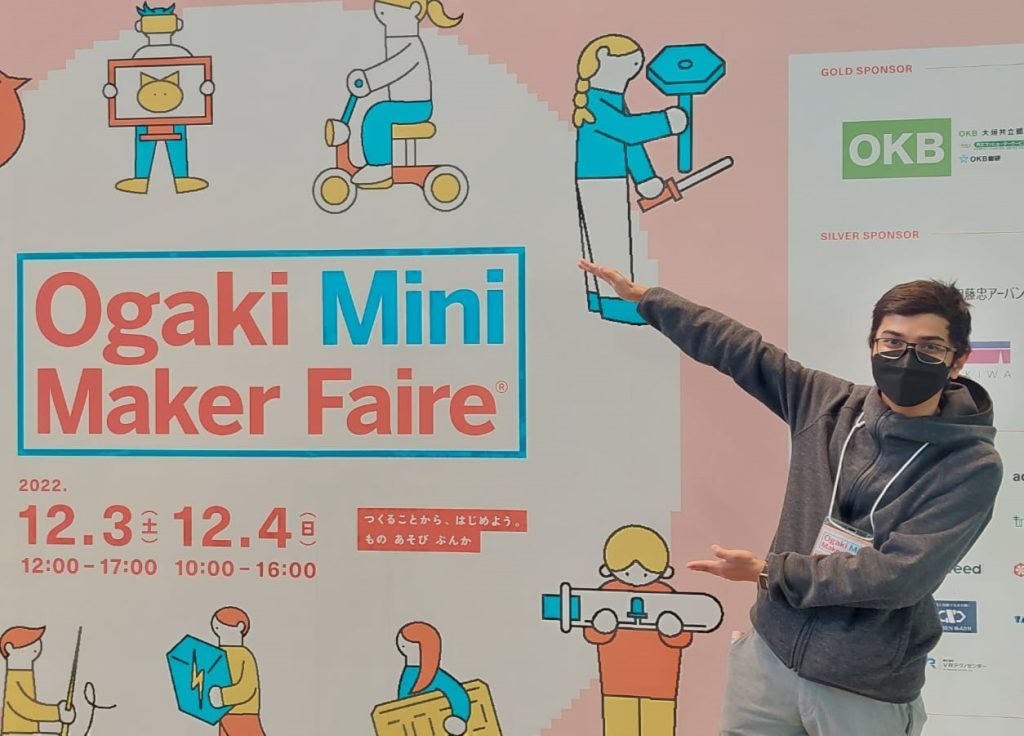
I took a photo at the event entrance.

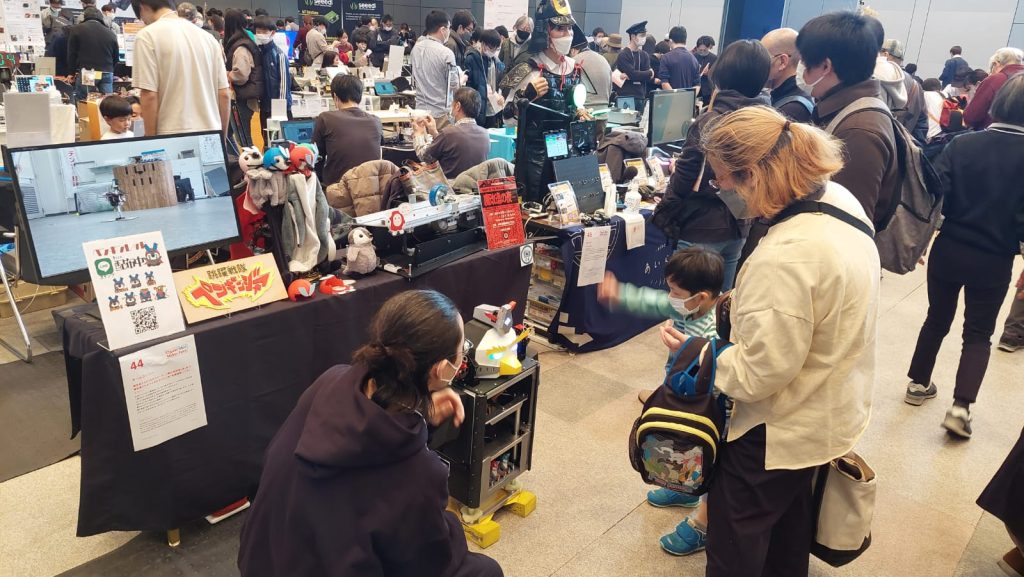
During the event, I had the opportunity to visit all the exhibition stands. The exhibitors showed their work neatly, and all were friendly to me as foreigner. Even though communication was a bit difficult because there was a language barrier between me, they explained as hard as they could until they did some additional action to practice their work directly to me. Because of that, I can understand how amazing their work is.

One of the exhibitors shows their work “Penguin Robot” to visitors.

I was curious why they made this work, and almost all the answers said that this is our hobby. Here I learned that if a hobby is pursued with a big heart, it can produce amazing and useful work. And also some of their works are beyond of my mind.

There were many good works displayed at the event, but in this article, I present three of the most memorable works:

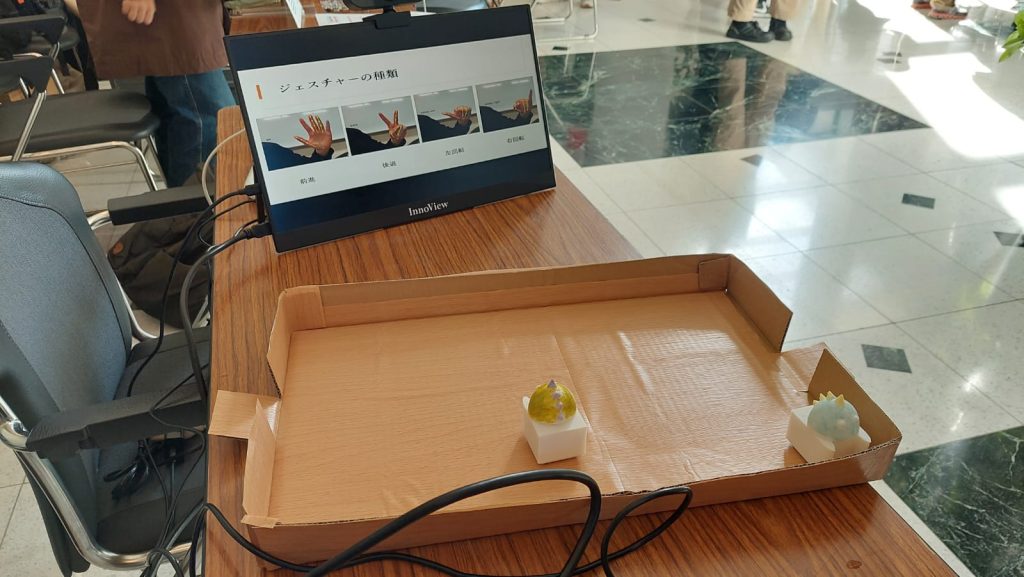
1. Hand Gesture to Control Robot by Tsuda College Monozukuri
Hand Gestures control the mini robot.

This student community from Tsuda University demonstrated their work related to computer vision. They made a small robot that can be controlled using hand gestures. Hand symbols are shown on the camera, and the robot moves based on the gesture. Commands given via wireless communication. I think this is good work and can be applied to elementary school children’s education in recognizing hand gestures such as numbers, how to say stop, say hi, say bye-bye, and so on.

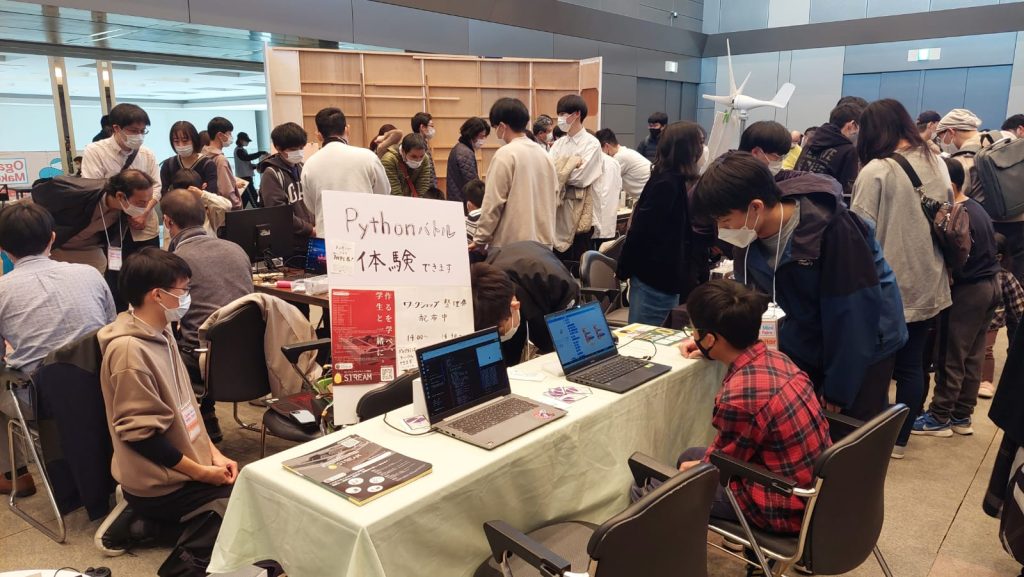
2. Learn Python programming with fun by STREAM Laboratory
The Exhibitors from STREAM Laboratory teach the kid how to make a game using Python.

This is a good movement for this community. They provide python programming learning services with the platform they built called STREAM LAB. The learning method is fun, students build interesting games based on the programming they make using the drag-and-drop feature. Besides students, adults who have an interest in the world of programming can join this class. Oh yes, what’s also interesting is that they teach programming for free. In my opinion, this is a good strategy for humanitarian movements to pursue as many new developers as possible in the future.

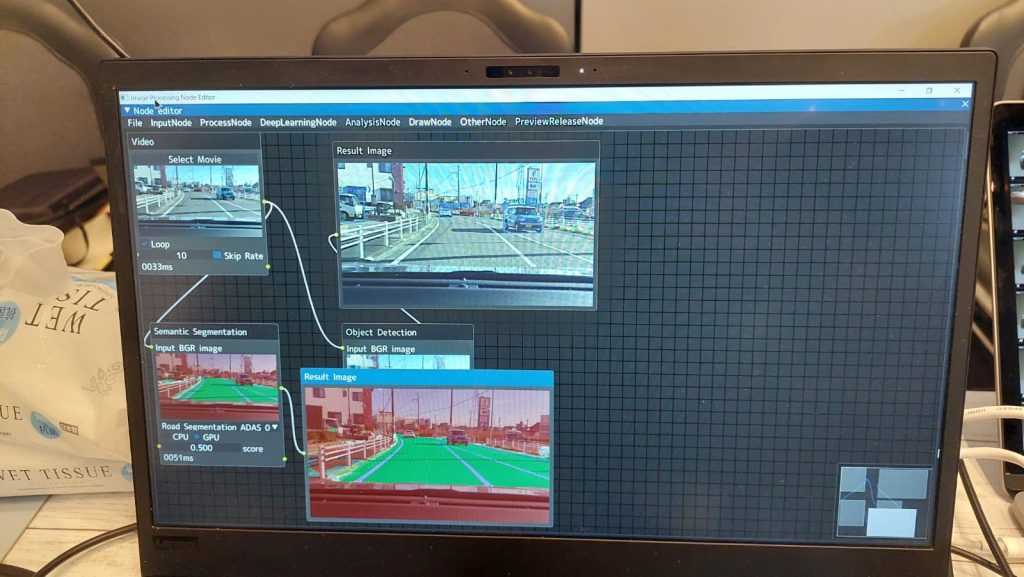
3. Entertaining AI by AI Zookeeper
AI Zookeeper shows Object Detection Project using Image Processing Node Editor.

This stand displays several works related to the Artificial Intelligence. They built an object detection application to recognize the hand symbols in the Naruto anime and convert them into meaningful kanji. This is very exciting, they use applications whose libraries are only used for certain purposes related to image processing. The name of the application is Image processing Node Editor. They say the application is open source so that they can use it as widely as possible. They also modified the vacuum cleaner that move according to the AI program using raspberry as the data processing.

I get many insights and inspiration during this journey. I am very grateful to Prof. Akita, who has given me the opportunity to be able to participate in that event, and also to Mr. Shiraya, Mr. Tokuda, and Mr. Danu, who accompanied and provided me with various conveniences during the trip.

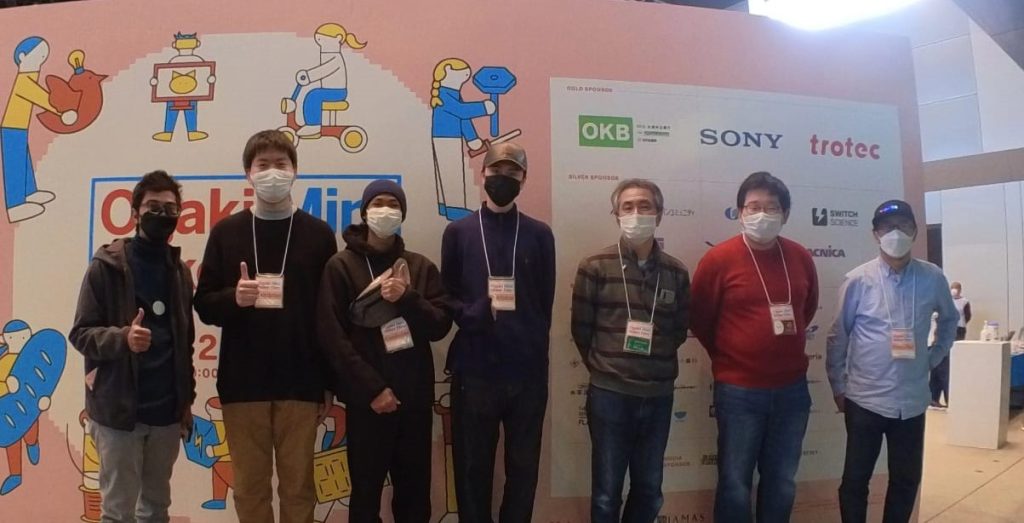
Here’s a photo of our team at the Ogaki Mini Maker Faire 2022

From left to right: Sabirin (D2), Mr. Shiraya (B4), Mr. Danu (M2), Mr. Tokuda (B4), Prof. Akita, Mr. Saki, Mr. Suzuto.

Lastly, thank you for reading this article. I hope you get new insight and inspiration as much as possible from here. See you.

Written by Sabirin on Friday, December 16, 2022, in Kanazawa, Japan.

AMAZING OGAKI MINI MAKER FAIRE 2022

Hello everyone, I’m Danu (M2) , Master Student in Interface Device Lab at Kanazawa University.

In this post I want to share My experience when I attended a technology exhibition event that took place in the city of Ogaki

I took part in this activity when Prof. Akita informed him that he would be participating in an event as an exhibitor at a technology exhibition called Ogaki Mini Maker Faire 2022 Japan and needed help preparing things for this activity. At first, I was doubtful because I couldn’t speak Japanese whether it was possible to take part in the activity. However, Prof. Akita allowed me as an international student to participate in order to gain experience and new things in these activities.

Of course, I’m not alone in this event. My 3 Lab mates Named Mr. Sabirin (D2), Mr. Shiraya(B4), and Mr. Tokuda (B4) helped run this event smoothly.

As the name implies, this event was held at Softopia Japan Center in Ogaki City, Gifu Prefecture. This event lasts for 2 days, namely Saturday and Sunday, 3-4 December 2022.

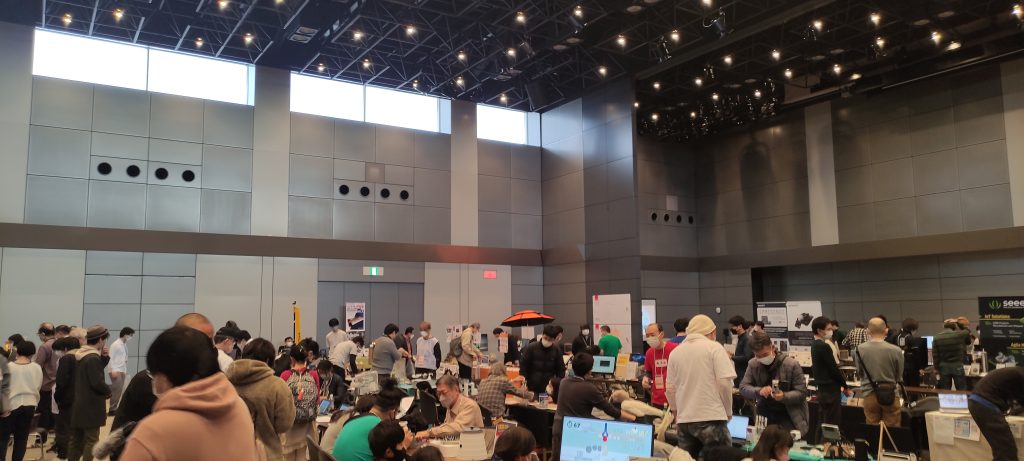
Ogaki Mini Maker Faire 2022

So many technologies at this event maybe I will share technologies or projects that are very interesting to me.

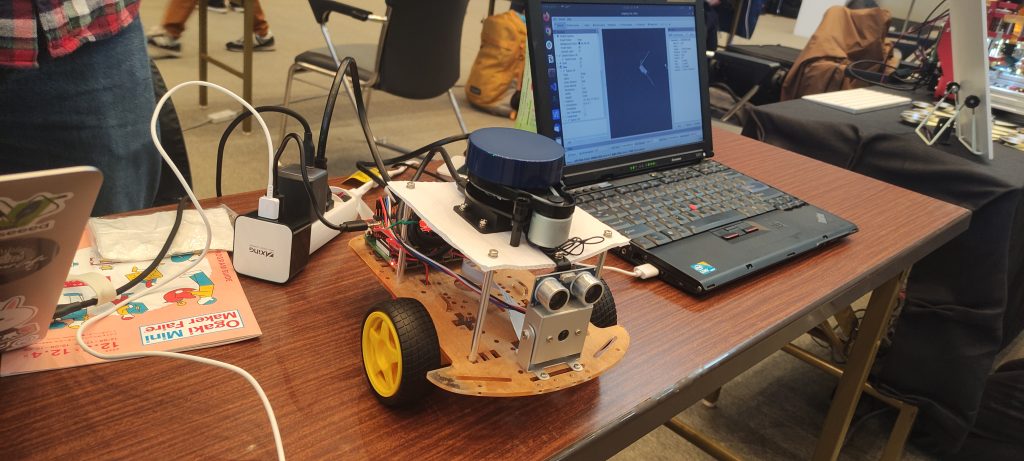
1.Ros Rober by K_Miura

Mobile Robot Using Lidar and Ultrasonic Sensor

This project is a robot in the form of a 2-wheeled car where this robot can recognize or describe the circumstances around it, for example obstacles or walls. This robot uses Raspberry Pi as a microcontroller, lidar and ultrasonic sensors to detect whether there are obstacles around it and detects the distance between the robot and the object. Not only does it calculate the distance, but the shape of the surrounding conditions will be displayed using the ROS (Robot Operation System) application.

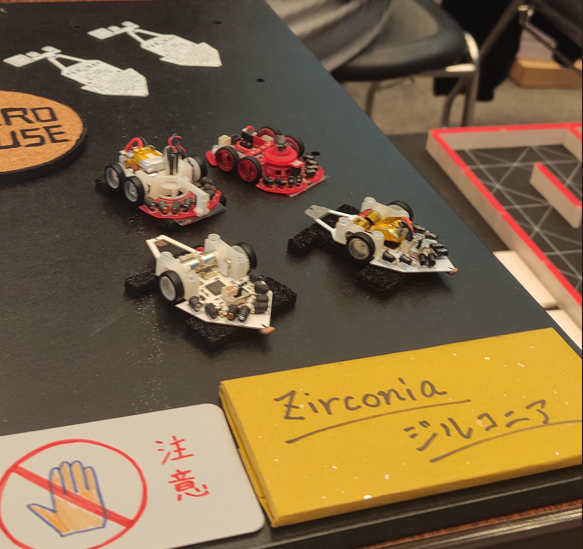
2. MicroMouse Robot by まついのまうす製作所

Micromouse Robot
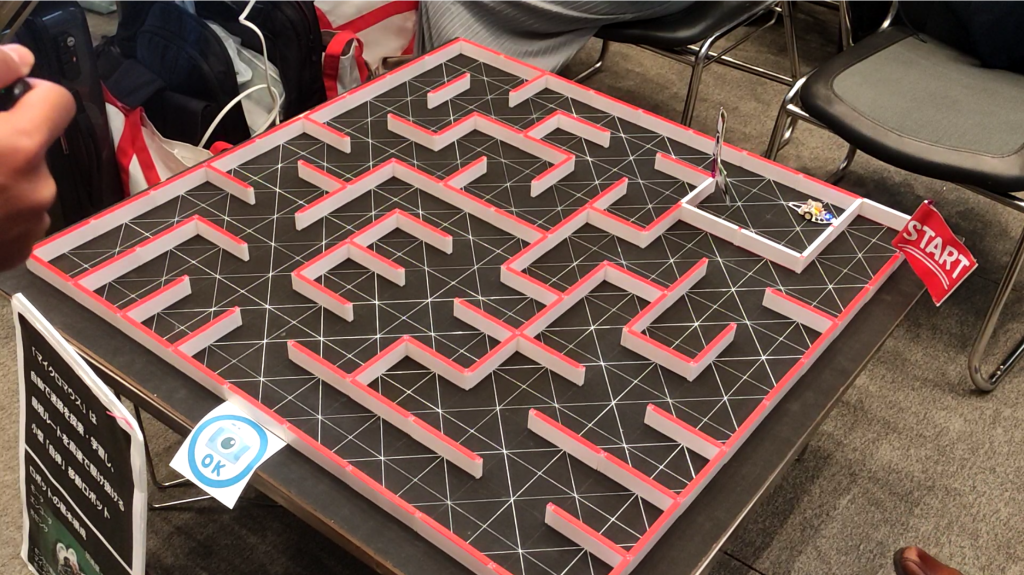
Track or Maze for Micromouse Robot

Micromouse is an autonomous small mobile robot where this robot can search and analyze which path to take to reach the finish line. This robot is often used for competitions. Equipped with a microcomputer and sensors, this robot will not hit a wall and can be the fastest way to reach the finish line.

There are many other projects that are no less interesting, but I can’t share all of them. There was an unexpected moment for me when I visited one of the exhibitors named Ksasao (Brownie). I remember this name is a creator who made a very detailed tutorial about M5stickV, and I happened to use M5stickV when I was taking My Bachelor Degree. I am very grateful to him for being kind enough to share his knowledge.

Me (Danu ) and Kazuhiro Sasao ( @ksasao/ Brownie )

Lastly, thank you for reading this post, I hope you get new insights and can be useful in the future.

Written by Danu on Saturday December 17 2022, in Kanazawa, Japan.

EC2023に参加しました

こんにちは!M2の坂本隼です。

EC2023( Entertainment Computing 2023)に参加しましたので、参加レポートを書いていきます。URLはこちら -> ec2023.entcomp.org/

開催期間が8/30~9/2で、東京工科大学八王子キャンパスにて行われました。広大な敷地の中に建物が並んでおり、移動が大変そうだなと傍から見て感じていました。では早速ですが、レポートを記します。

自分は3日目にデモ・口頭発表がありました。デモではマイコンの動作不良から動かすことができず、コンセプトの説明がメインとなりました。反省として今後ないように解決策を考えていきます。一方で実際の物を見てもらうことによる意見を多く得ることができました。特に自分にはない多角的な視点での発想や意見(例えば格ゲーのコントローラなど)を多く頂けたので、今後の参考にしていけたらと思います。

他のデモ・口頭発表で心に残った作品を2つ紹介します。

「 IoTプロトタイピングを円滑にするハードウェアと連携したFigma拡張の提案」(
id.nii.ac.jp/1001/00227380/ )Figmaに拡張機能としてM5stickCに接続されたセンサを連結させることで、IoTのプロトタイピングを円滑に行うという研究です。デモを見に行ったところ、想定していたデモが1つ動かなくなったためにかわりのデモをこのシステムを使ってその場10分で作ってしまったという話を伺い、強くこころに残りました。

口頭発表では、特選セッションにも選ばれていた「
3Dプリンタを用いた封蝋表現手法の研究 」(
id.nii.ac.jp/1001/00227385/ )です。現代ではあまり使用されていない娯楽の1つのような扱いとなっている封蝋をだれでも使用しやすくしたものである。フィラメントを射出し、ノズル横にある型をフィラメントに押し付けることで封蝋を表現している。3Dプリンタで封蝋という発想、そして手軽さを感じた研究でした。

他にもデモ・口頭発表を聞く、行うだけでなく、実行委員による推しデモの発表があったことから見られなかったデモの体験内容だけでなくどこがよかったかという選定された理由も併せて聞くことができ、視点や考え方の参考となりました。

簡単ではありますが、以上でレポートを終了いたします。今後は修論、そしてインタラクションに向けて頑張っていきます。(坂本)

INTERACTION 2025に参加しました(中田)

こんにちは、B4の中田です。

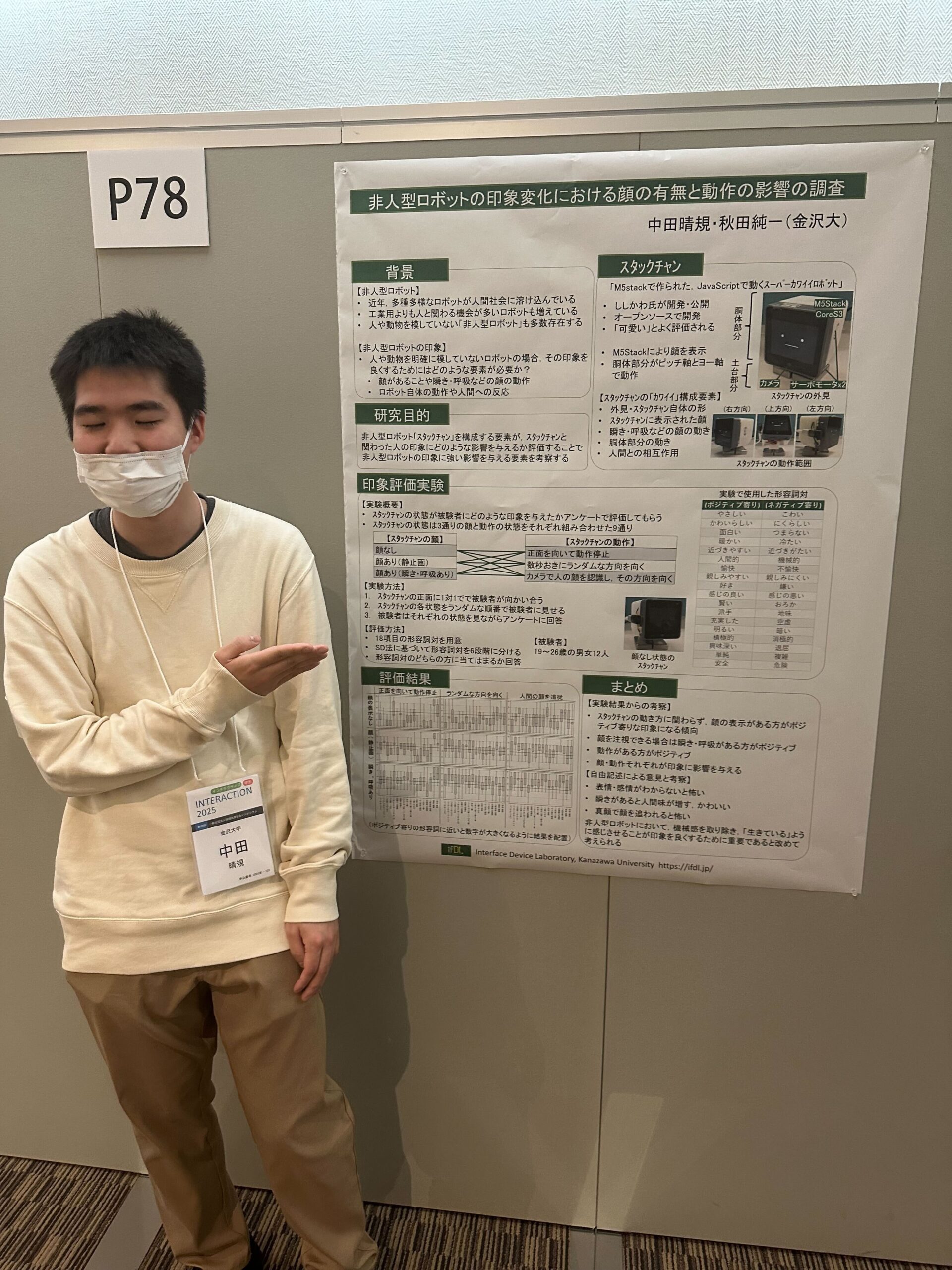
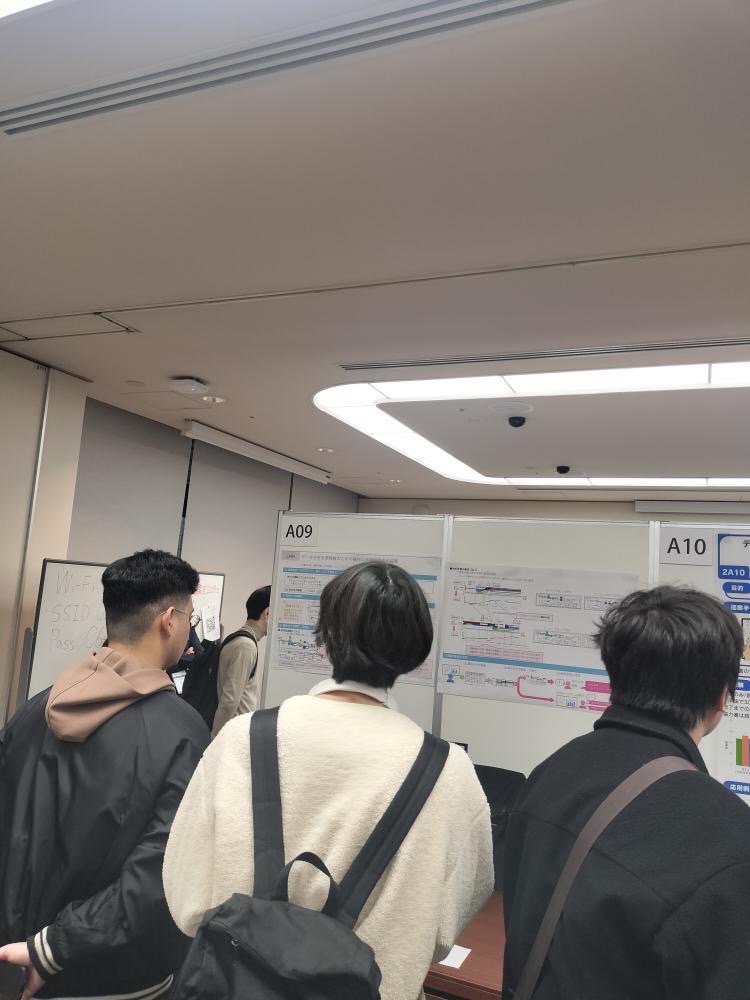
3/2(月)~3/4(火)にかけて、学術総合センター内 一橋記念講堂で行われたINTERACTION 2025でポスター発表を行いました。ついでに色々な発表も見てきたので、気になった研究をダイジェストで紹介していきます。

ポスター発表

今回、卒研の成果について発表を行いました。

最初の方はあまり興味を持ってくれる人はいなかったのですが、そのうちスタックチャンを知ってる人が何人か足を止めてくれました(初めて足を止めてくれた人はほぼ日の方でした。名札見たら金色で「SPONSOR」って書いてあった…)。発表について、様々な感想や意見を頂きました。大変貴重な経験でした。

それはそれとして、スタックチャンの研究をしてる人が私以外に2人いました。意外といるもんなんですね…。

登壇発表

続いては、登壇発表から気になった発表をいくつか紹介していきます。

【UltrasonicWhisper+: 超音波によるヒアラブルデバイスへの可聴音生成攻撃手法の提案】

いわゆる、外部から音を取り込むタイプのイヤホンに超音波を聞かせると、イヤホン側の処理で実際には存在しない可聴音が生成されるという事象に関する研究。だいぶ衝撃的でした。特に、実際とは違う歩行者信号の音とかを生成されると事故の原因にもなりますし、だいぶ危険度が高いんじゃないかと思います。実際に会場で生成された音を聞きましたが、ほぼ聞き分けできなかったです。

【スマートフォン用ウェブページとアプリにおけるタップ成功率推定ツールTappyの実用化】

スマホを誤タップしたことを察してリカバリ手段を提示する研究。誤タップをやらかした時の顔や手の動きなどでそれを察知し、リカバリを提示するというもの。支払いの画面とかで誤タップしたときに確認画面が出てくるだけでも十分に便利じゃないかと思いました。ちなみに、ユーザーが誤タップだと気づいていない場合は効果が無いです。動作のマイナスをゼロに戻すための補助。

【視線共有機能を備えた3者ビデオ会議における消極的発話者の思考外化支援手法(招待)】

ビデオ会議でよく黙ってしまっている人の意見を他者に伝える手法の提案。ポジティブな意見はそれに注目する時間が長い(既存研究)ことから、長く注目されている意見(付箋)ほど色が濃くなるようにするというシステムを使った実験。実際に長く注目されている意見に決定されることが多かった…が、逆に言うと長く注目されると逆にそれが良い意見であると錯覚させられるのでは?というのが感想。むしろ意見の誘導に使えてしまうんじゃないかと思ったり。

インタラクティブ発表

続いて、インタラクティブ発表(デモ・ポスター)で良かったものをいくつか紹介していきます。楽しすぎて全然写真を撮っていなかったので、文字だけでの紹介です…。

【現実空間とCG空間を往来するミニカーコンテンツの開発】

トミカをスキャンして、スキャンしたトミカで簡易的なレースゲームができるというコンテンツ。トミカの場合、形がある程度単純なので、前後左右+上方向からの5枚の写真だけでモデルを作ることができていました。バンダイがガンプラをスキャンして仮想空間上に再現する試みを行っていますが、形が単純なトミカであればかなり良い感じにできそうでした。透過はグリーンバックで行うことが多いですが、この発表では白と黒の2通りを用意して撮影しているとのこと。理由としては、緑色のミニカーもあるからというもの。成程となりました。

【デジタルツインを活用した小型ロボットとテクスチャを組み合わせた情報提示手法の探索】

toioを使った組み換えロボットを使った研究。toioを現実空間で動かすとUnity上でも動き、逆にUnity上のシミュレーションから現実のtoioに動きを再現させることも可能。位置や動きを細かく認識できるtoioならではの研究だと感じました。また、組み換え部分は板バネを使っているということでした。私も組み換えロボットを作っているので参考になります。

【シリンジ操作を実現する7自由度ワイヤ駆動型力覚提示装置の試作】

ワイヤで動作する3軸の移動+3軸の回転+シリンジの押し込みで注射器(シリンジ)のシミュレーションを行う装置。現実でシリンジを動かすとシミュレーション上でその通りに動き、逆にシミュレーション上でものを取ったりすると装置の方に反映されます。ワイヤがどれぐらい引っ張られたかの回転角で6自由度を計測しているそうです。今回のやば技術枠。

【Sketch2Joints: スケッチベースロボットアームのデザイン支援インターフェースの研究開発】

キャンバス上で、回転軸とそれを繋ぐ線を描くとその動きをシミュレーションでき、さらにロボットアームとして3Dモデリングできるというもの。軸を繋ぐ線に関しては曲線でも問題なくできていました。すごい。3Dモデリングに関しては軸のみだったので、モーターとかも併せてモデリングしてくれるとすごく便利になりそうでした。

【Ties Bind:噂した誰かとの繋がりや親近感を感じさせるインタラクティブアート】

「誰かが自分のことを噂していたらくしゃみする」というのを物理的で強制的に再現したもの。Twitter上で自分が言及されると装置が作動して、鼻に胡椒を送り込み、強制的にくしゃみさせるという仕組みです。デモでは装置に顔を当てる感じでしたが、プロトタイプではマスク型にしていたとのこと。メイカーイベントに出したらめっちゃ受けそう。

【火縄銃への理解を深めるためのMRインタフェース】

MRで火縄銃の構造・撃ち方・歴史を総合的に学ぶシステム。実際に引き金を引いたら火縄銃がどのように動作するかがよくわかって面白かったです。今回のシミュレーションは引き金を引いたときに動作する部分だけだったので、実際に着火してから弾丸を撃つまでのところも同様に再現してほしい所です。今後に期待。

【思い出を体験する VR 日記】

文章と位置情報を記録しておくと、その場所の景色をVR空間で表示する、次世代の絵日記。を実現するために、GoogleパノラマビューをGANで当時のような状況にGANで加工して表示するといったもの。ただし、GANで加工した場合は細部の情報量が減ってしまう(パノラマビューでははっきりと映っていた自販機が自販機のようなぼやけたものになってしまう)など、超解像を適用してもかいけつできなかったようなので、そのあたりが今後の改善点と言えるかもしれません。空だけでも天候や時間帯を変えるとうまいこといくかも?

まとめ

今回は発表を抜粋して紹介しましたが、会場では他にもたくさんの発表がありました。様々な分野で様々な切り口からの発表があり、成果発表の場としてだけではなく、特に卒研配属前のB3より下の学生にも見てほしいと強く感じました。このブログを見た人でINTERACTIONに参加したことが無いよって人はぜひ参加してみてください。

インタラクション2025に参加してきました。(小田波)

こんにちは!先導学類の小田波優矢です。

3/2-4にかけて、東京一橋記念講堂で行われたインタラクション2025にデモ発表という形で参加してきました。今回は、自分の発表の振り返りとほかの方の発表で印象に残ったものを紹介したいと思います。

【自身の発表】

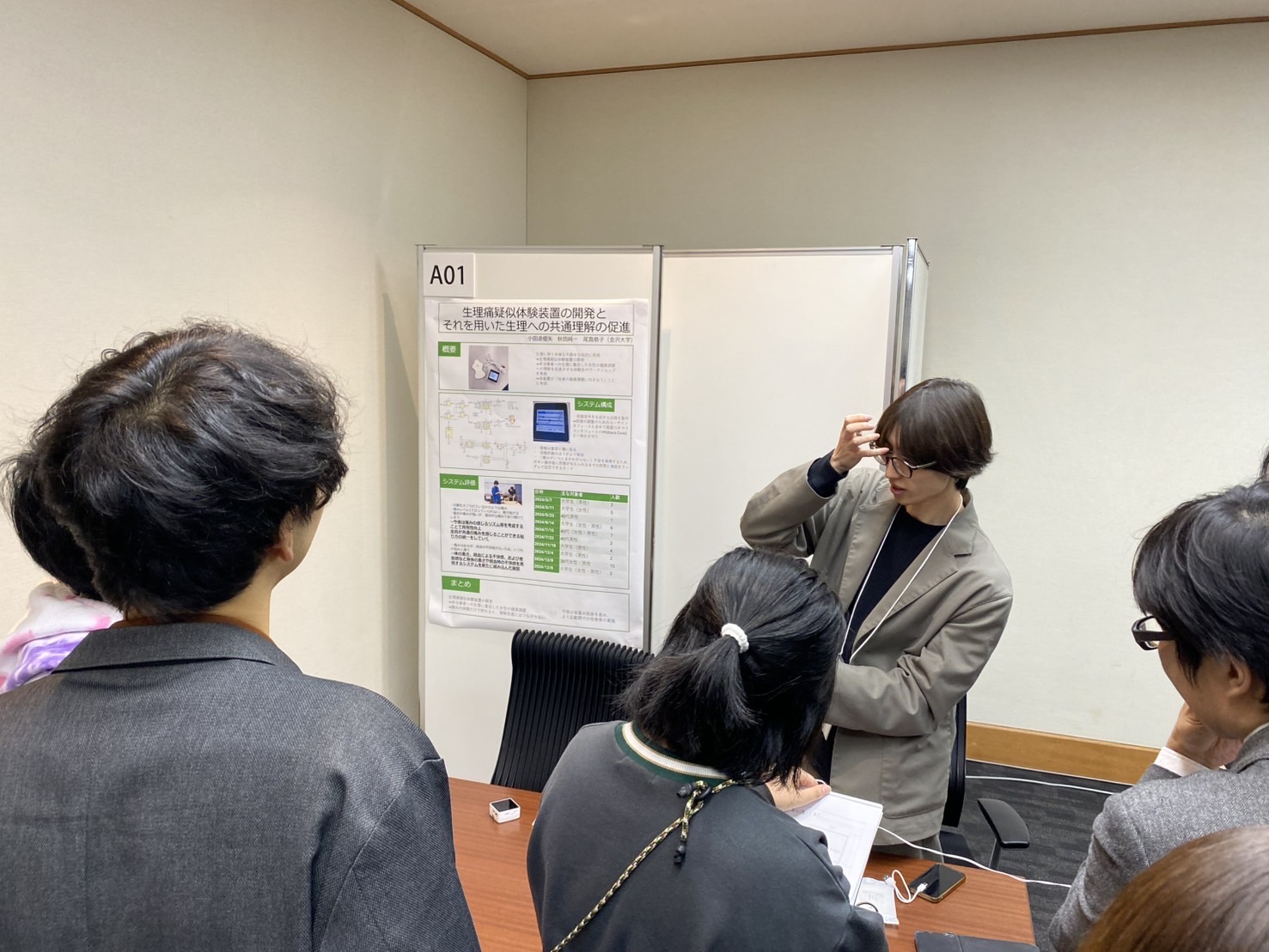
まずはわたくしの発表の振り返りと紹介をさせてください。私は秋田教授と共同で制作をした、生理痛疑似体験装置を用いて、「生理痛疑似体験装置の開発とそれを用いた生理への共通理解の促進」について発表してきました。生理痛の体験!ということで、みなさん興味をもって下さり、発表時にはたくさんの人がいらっしゃいました!そこで、いらっしゃった方との印象に残ったやりとりや感想をピックアップして紹介したいと思います。

・「いつもこんなに痛い体験をしているの…???」「まあまあ。もっと痛いときもあるし、痛みだけじゃないよ。」

男性と女性の二人組でいらっしゃった方々のやりとりです。男性の方が体験して、痛みレベル20でギブアップ…。腰を曲げてしまう、立っていられない。という感想をいただきました。その後、女性が体験。はじめは急に来る痛みからびっくりしていますが、痛み自体は我慢できている様子。このふるまいに、男性が発したのが「いつもこんなに痛い体験をしているの…???」という言葉でした。女性からすると、痛みを我慢したりすることに普段から慣れているそう。また、痛みだけでもないという会話も個人的に印象に残っています。

自分がこのやりとりが印象に残っている理由は、まさに今回自分が論文として出した、共通理解への促進ができたこと。痛みを体験して終わりなのではなく、生理に関心をもって、共通理解のために会話しようとしていることを目の当たりして、自分がやりたかったことがこの装置によってできているなとうれしく思いました。

・「先行研究との違いは何ですか?」

この装置自体は先行研究があります。本研究が、装置面と取り組み面において、どう先行研究と差別化されているのかを何度も聞かれました。その時、私は装置面の差別化を説明してしまいました。今回は装置のリアリティの追及が目的ではなく、あくまでこの装置は手段として、生理へのっ共通理解を促進できるような取り組みを同時に行っていることが先行研究とは違うところだ!というところをもう少し説明できればよかったなと反省…

もしまたこういう機会があれば、次は装置はもちろん、その後の展望まで堂々と説明できるようにしたいです。

【ほかの方の印象に残った発表】

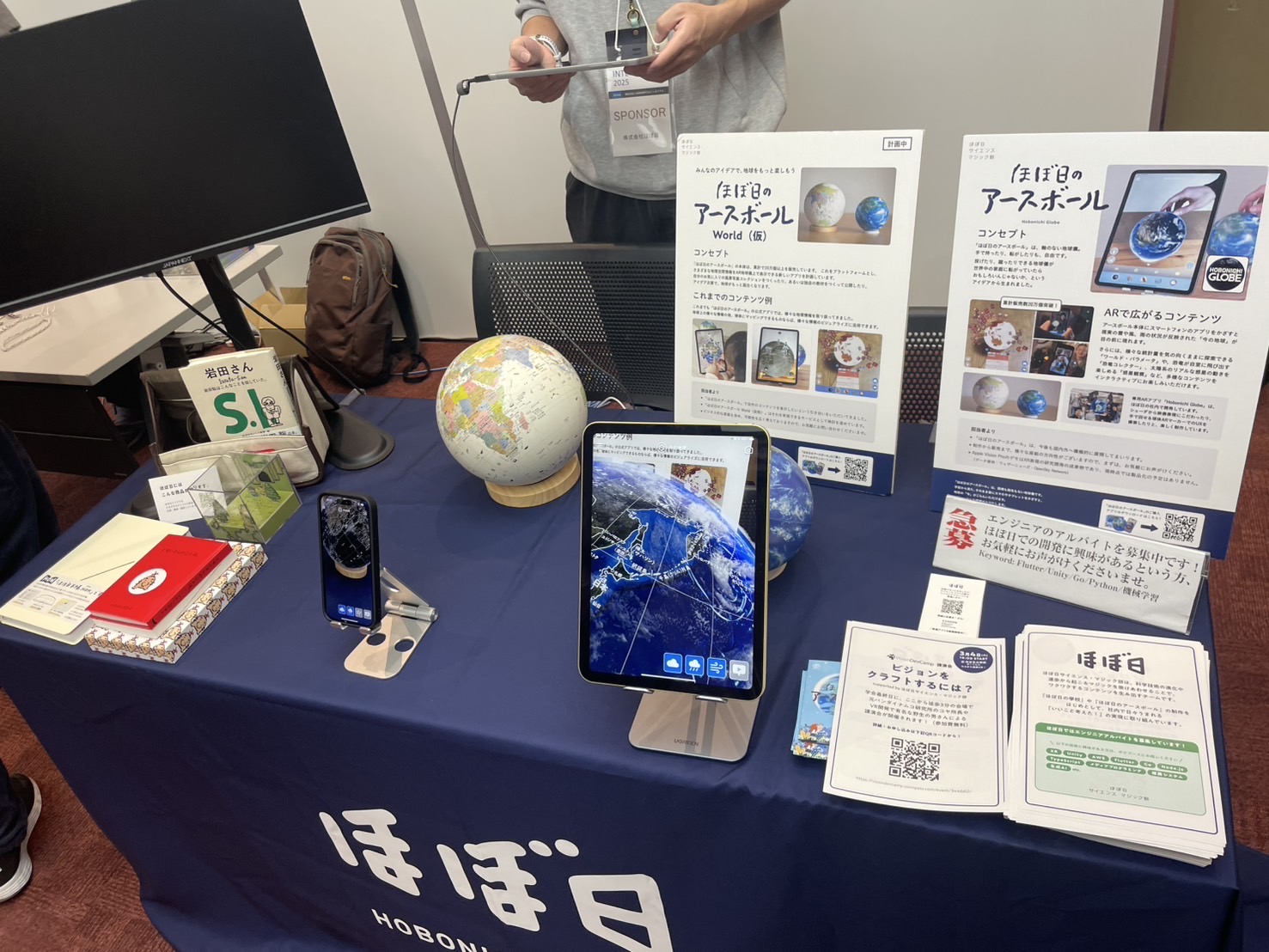
  • ほぼ日さんのアースボール

大学のデモ発表ではないのですが、この発表はとても印象に残っています。その理由は、開発という面で素晴らしいのはもちろん、その後の展望まで見据えていたからです、発表内容は、一見ただの地球儀ですが、それをカメラをスキャンすると、様々な内容で地球や各国が紹介されるというものでした。天気や各国のデータ、恐竜がいたという情報まで!様々な情報が書かれていて、これは社会で大きな影響を与えられるのでは…?!と印象に残っています。

  • 子供に向けた平易な演奏体験を提供するインタラクティブな音・映像インスタレーションの制作

この発表が印象に残った理由は、体験の時間に対してのインパクトや愛着感が強かったことです。内容は、自分でタブレットに絵を描くと、それがモニターの画面上にキャラクターとなって登場…!!そのキャラクターをモニター越しに触れると、音が鳴る!という発表内容でした。自分で絵を描く楽しさと、自分のキャラクターにふれると音が出る!という二つのインパクトから、とても印象に残っています。また、絵を描くということも、音が出るというところもそれほど時間がかかっていないことから、気軽に愛着をもって体験できる発表でした。とても楽しかった…!!

インタラクション学会は様々な方が参加されていました。多様な方が多様な研究をどう社会につながるのかを発表していたのが、かっこいいなと印象に残っています。自分自身、学会というものが初めてだったのですが、学会というものに対してのイメージが変わりました。自分の好きなことを研究するのはもちろん、それがどう社会に影響しているというところまで追及するという姿勢は大学を卒業しても、持ち続けたいです。

改めて、このような貴重な機会をくださった、秋田教授に感謝いたします、ありがとうございます!

INTERACTION 2025に参加しました(尾瀬)

こんにちは、修士2年の尾瀬です。(今年度卒業生です。)

今回は2025年3月2日(日)~ 3月4日(火)に開催された シンポジウム、INTERACTION 2025にポスター発表者として参加しましたので、その報告を行いたいと思います。

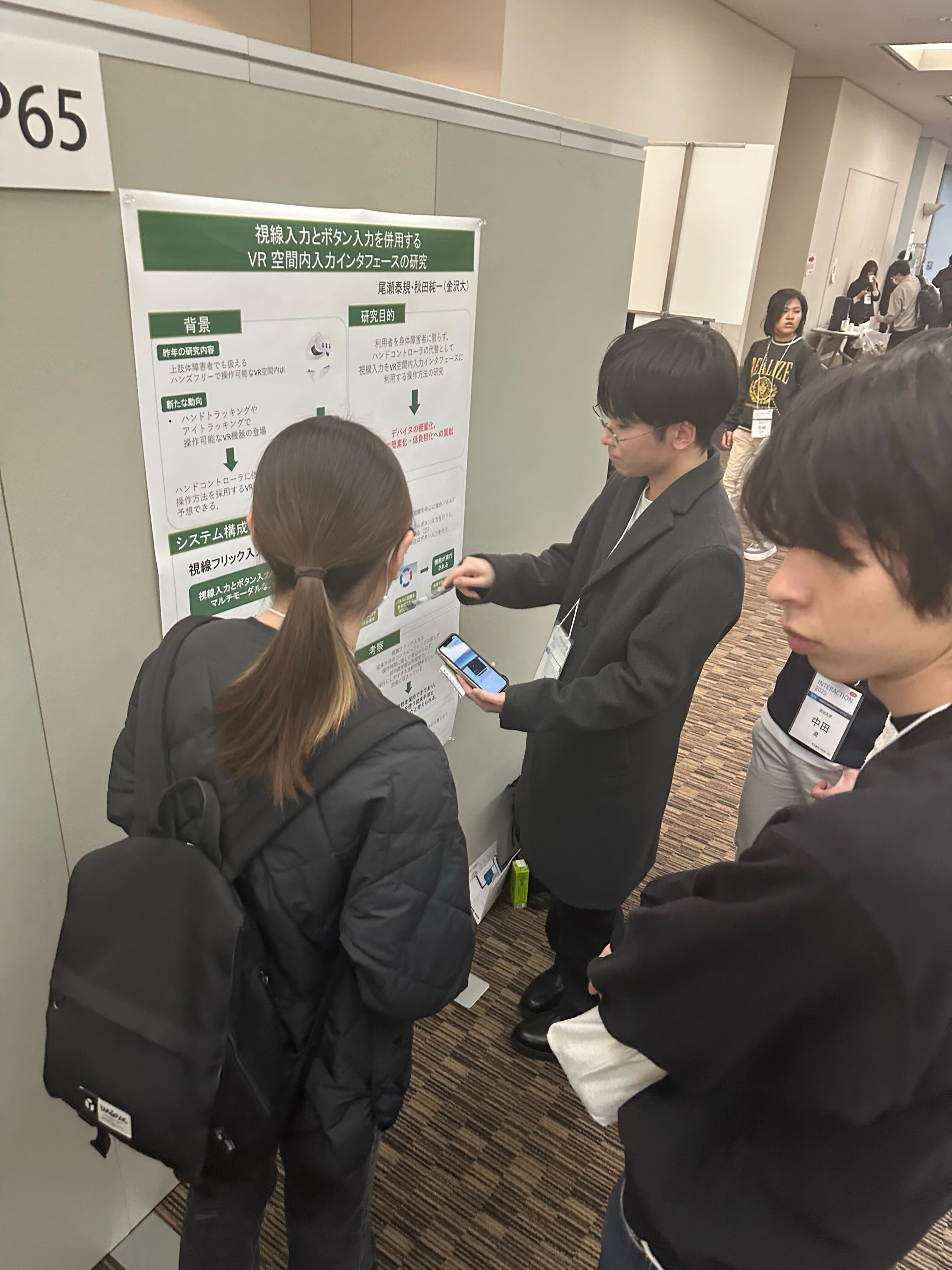
私のポスター発表は1日目に行われました。発表中、さまざまな聴講者の方から意見や指摘をいただき、意義のある交流ができたと感じています。特に、私の研究の関連分野(VR技術・視線入力など)に詳しい方や類似の研究発表をされている方々とは、研究内容の課題や発展性について議論することができる、とても貴重な機会でした。(写真は私がデモ動画を使って説明している様子です。)

2,3日目はデモ展示の体験や口頭発表・講演の聴講を行いました。
その中でも、いくつか印象に残った研究発表を取り上げて紹介したいと思います。

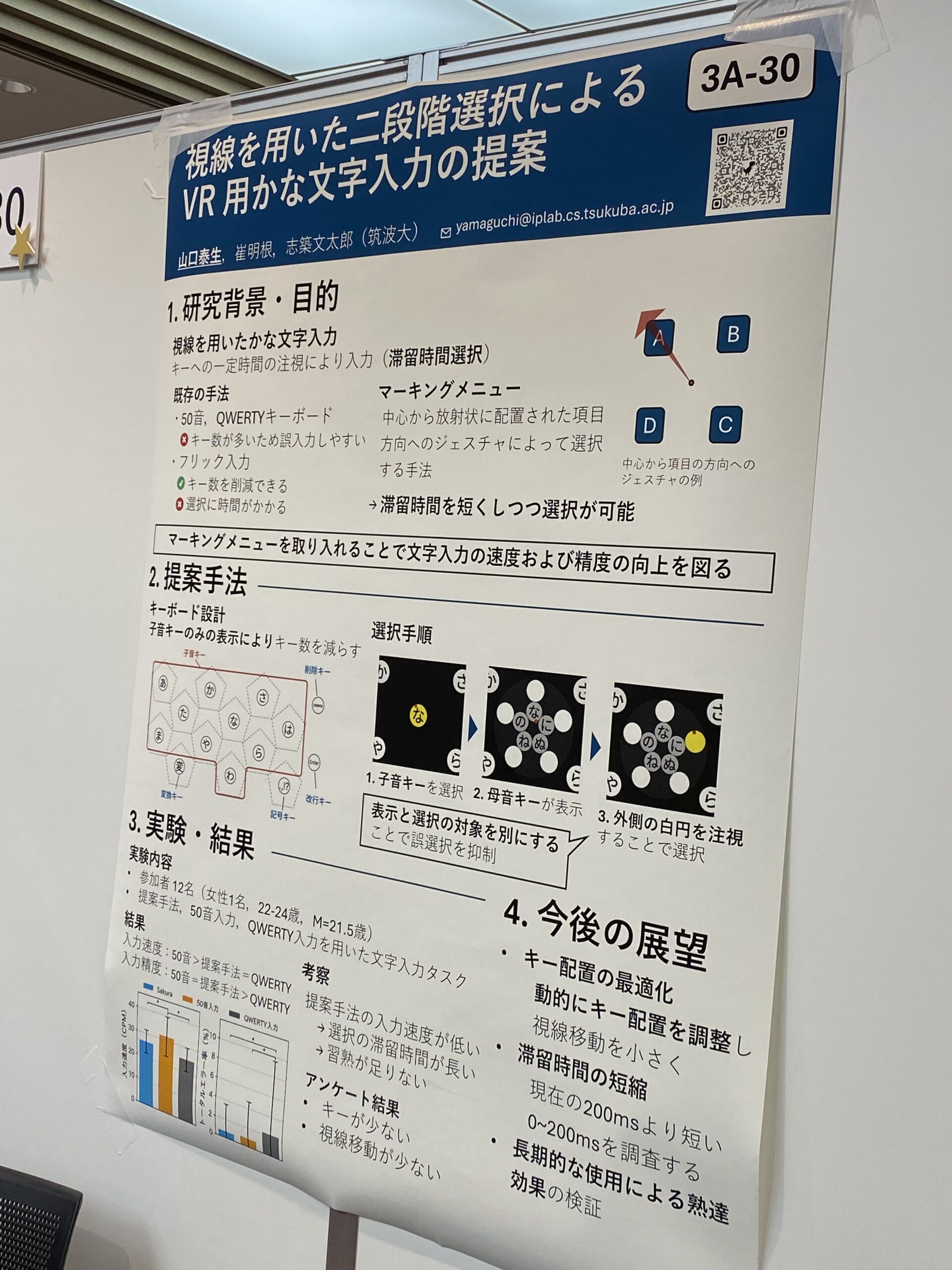
1つ目は視線を用いたかな文字入力の研究です。
こちらの研究では、提案手法により、文字入力の速度および制度の向上を図っています。

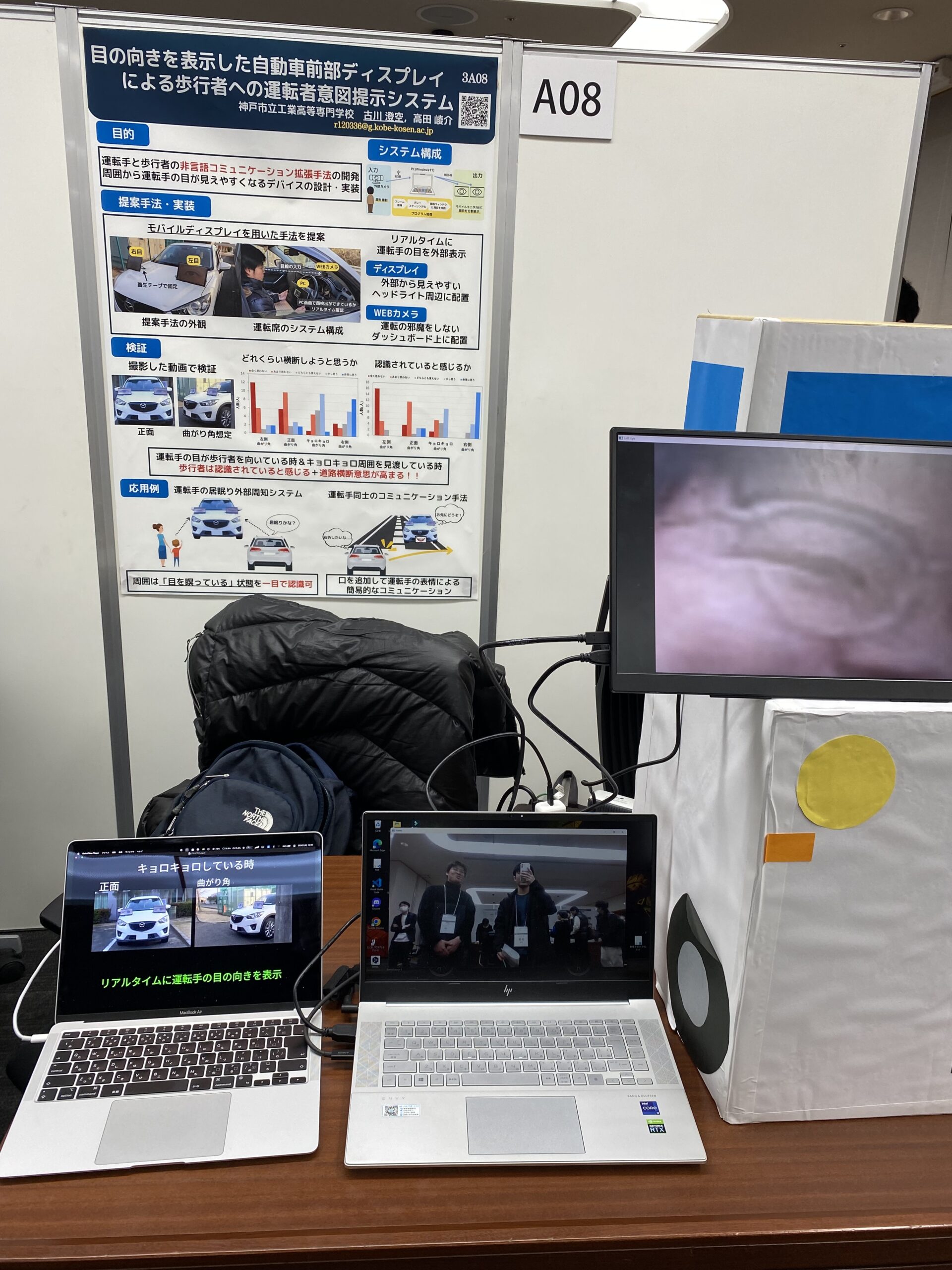
2つ目は自動車の前部にディスプレイを設置し、運転手の目の向きを表示することで歩行者に運転手の意図を可視化させる研究です。一般的に普及させる上では課題が多いものの、とても意欲的な発想で感心を受けたため、ここで取り上げさせていただきました。

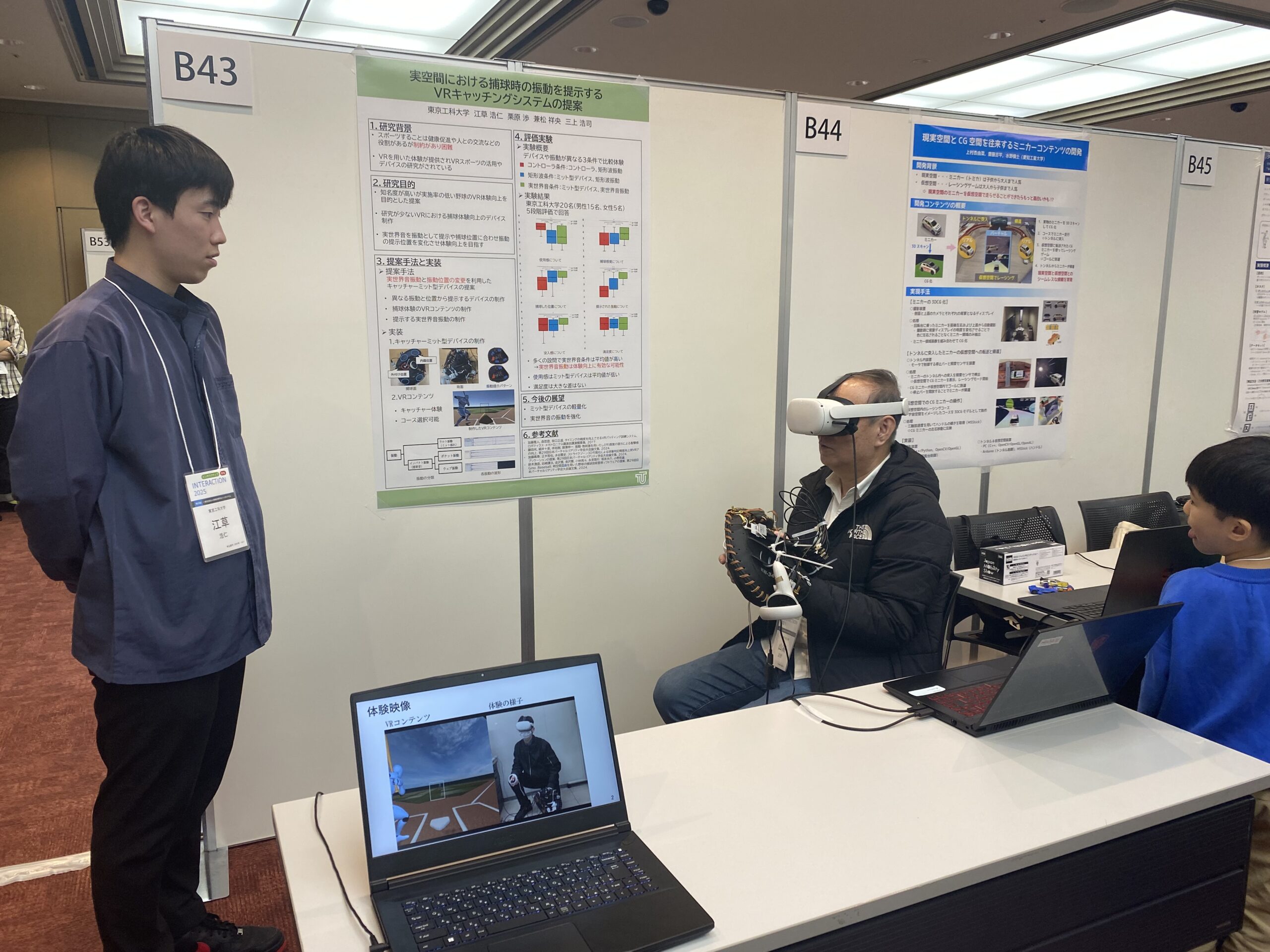
3つ目はVRスポーツの活用に焦点を置いた、野球のキャッチャーミット型デバイスの研究です。
音を振動に変換させる「実世界音振動」と、振動の提示位置を工夫することで体験のリアリティを向上させることを可能にしています。

以上で報告を終わります。私は今年度で卒業のため、研究活動も終了となりますが、今回の発表内容が来年度以降の類似研究の一助となれば幸いです。また、研究活動を通した交流は非常に学びが多く、今後も機会があればこういった活動に携わってみたいと感じられました。最後になりますが、大学院の2年間で得られた多くの学びや反省を今後に役立てられるよう励みたいと思います。

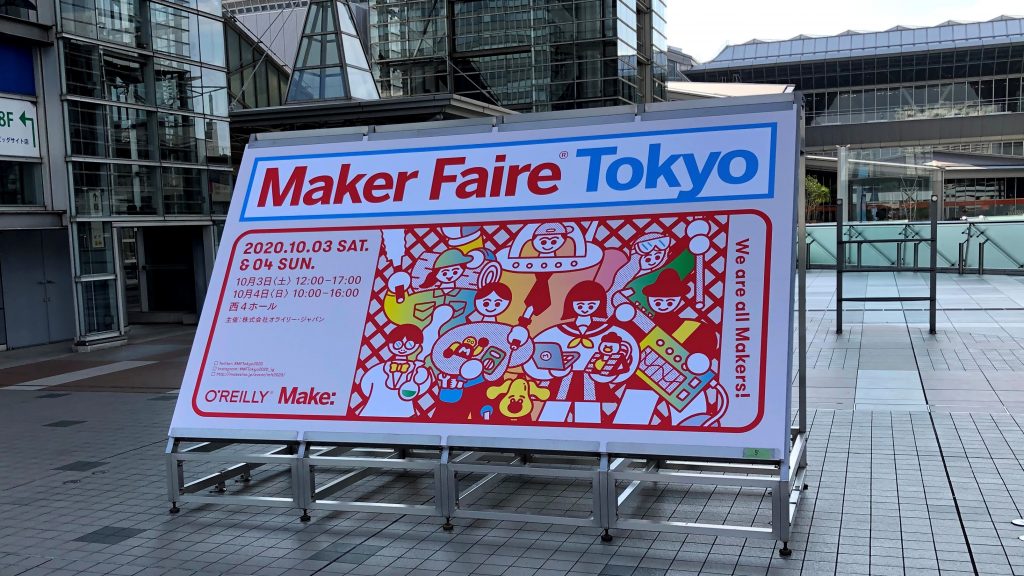
10/3-4 Maker Faire Tokyo 2020に行ってきました

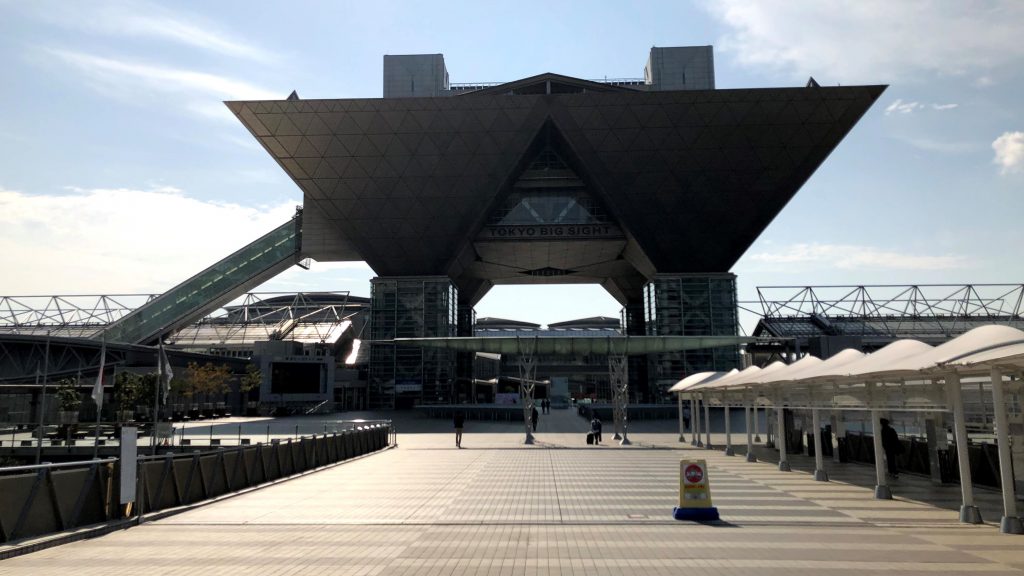
こんにちは。初投稿、M1の大河です。10/3(土)~10/4(日)の2日間で東京ビックサイトで開催されたMaker Faire Tokyo 2020に行ってきました。
makezine.jp/event/mft2020/

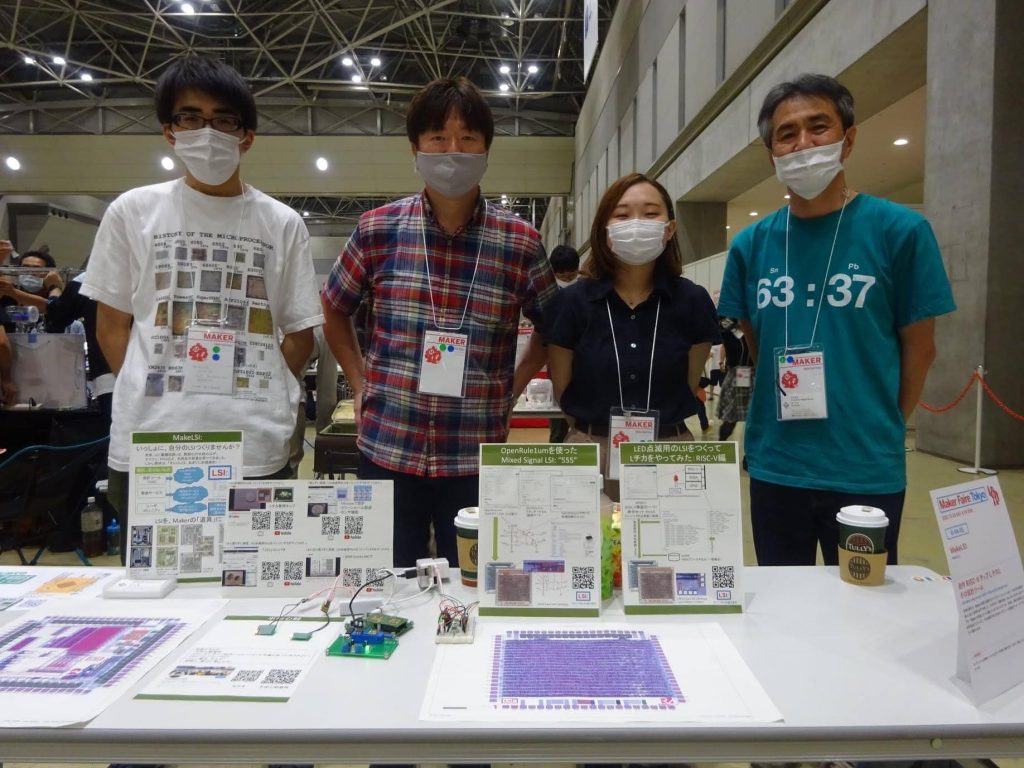
 Maker Faire自体は去年のGWごろの5/4-5に、京都では初開催となったMaker Faire Kyoto 2019が初めてでした。今回はVisitor(参加者)としてではなく、Maker(出展者)として、秋田先生のMakeLSI:の出展のお手伝いをさせていただきました。
makezine.jp/event/makers-mft2020/m0189/

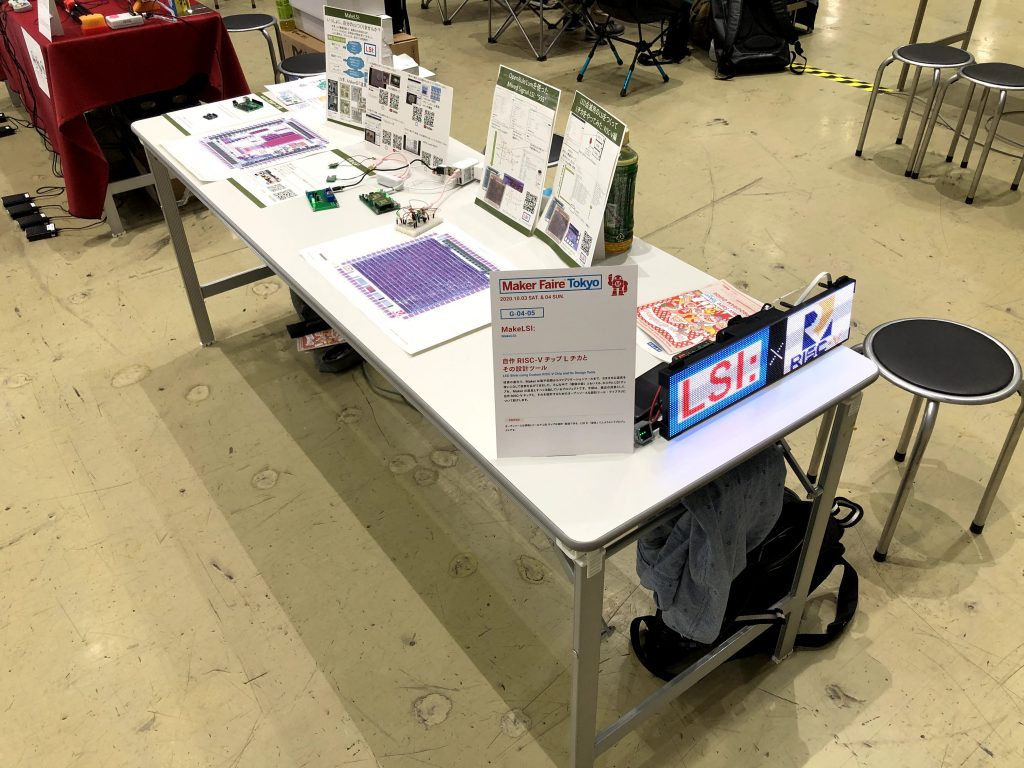
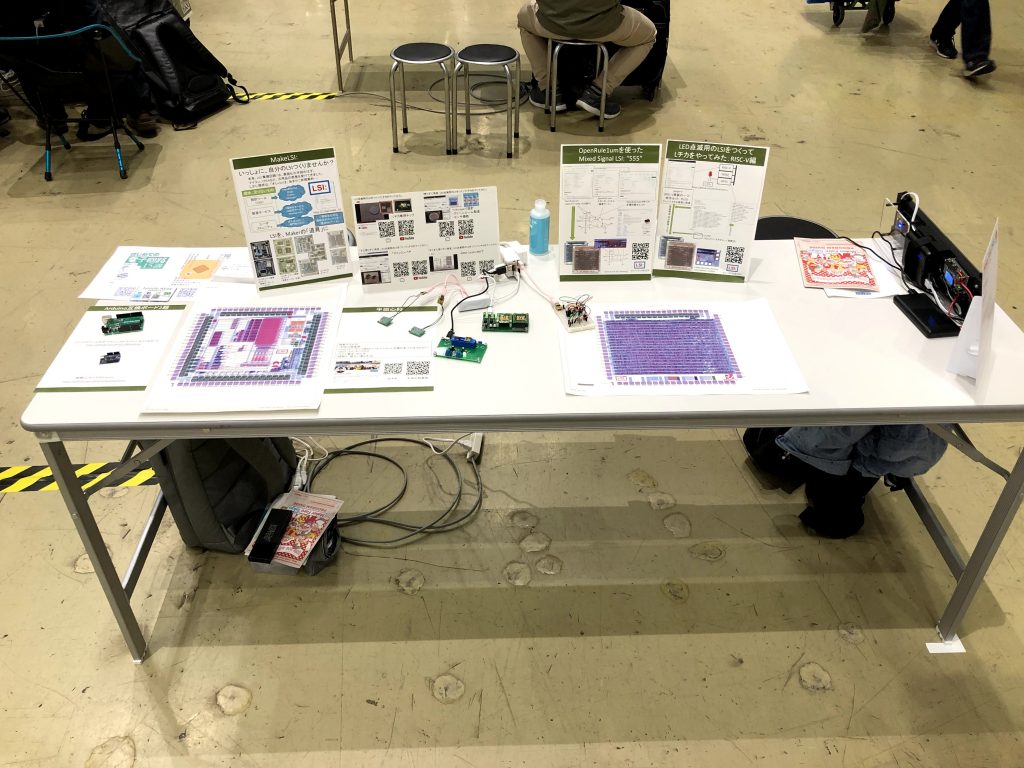
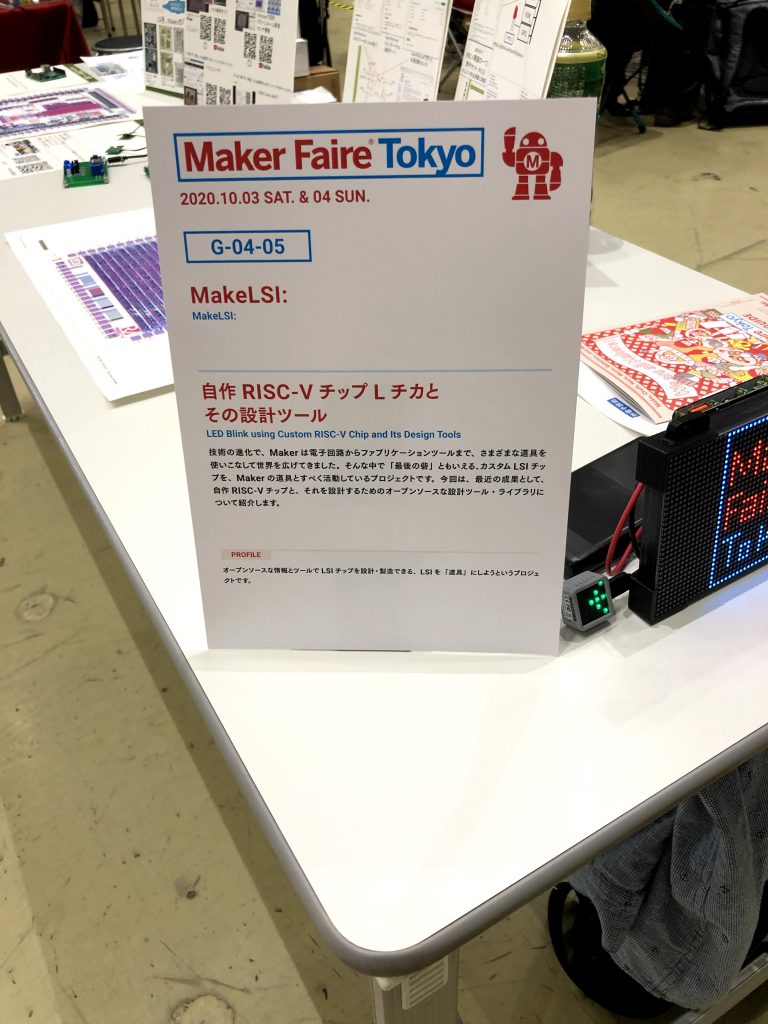
 最近はやりのオープンソースなコンピュータアーキテクチャであるRISC-V(リスク ファイブ)を使って、「”Lチカ”をするLSIを実際に作った」という内容です。
 LSIを作ろうとすると、とりあえず莫大なお金がかかります。まず設計するためのソフトウェアを用意しますが、一般の商用ツールを使おうとするとライセンス料が1億円くらいかかります(フル機能揃えた場合)。製造自体も1000万円~くらいです。そんなにお金がかかっていたら、個人的なものを作ろうとしても実質的に不可能です。できたとしても、ミスがあって動作させることができなかったら全部パーです。そのため、失敗しないように設計ツールは十分検証できるよう機能を充実させ、回路の大規模化、微細化、複雑化に対応するためそこまで値段が高くなります。
 これらをもっと一般化するために、設計ツールはフリーのものやOSS(Open Source Software)を使い、製造に関しては大学という教育機関であることもあり、格安でLSIを試作できる工場で生産します。また、産総研でミニマルファブという多品種少量かつ低コストのLSI製造の仕組みを作るというプロジェクトもあり、一応巻き込ませていただいています。このような誰でも実際にLSIが作れるような設計・製造の環境をつくるという活動をMakeLSI:は行っています。

 今回のイベントでは新型コロナウイルスが流行している中、感染の拡大は落ち着いていたものの、オンサイトでの開催(会場での開催)が出来るのか主催者側も非常に難しい決断だったと思います。オンサイトおよびオンラインで開催するという形で準備が進められて、もしオンサイトで出来なくなってもオンラインで開催自体はされるという形でした。結局無事にオンサイトの開催もでき、オンラインの方もYouTubeでライブ放送があったり、Twitterでハッシュタグをつけて作品投稿ができたり、どちらも非常に盛り上がっていました。個人的にはビックサイトも、東京のMaker Faireも初めてで、今回行けて本当に良かったです。

1日目は12:00開始で、開場のアナウンスがあって、スタッフやMakerの皆さんの拍手が会場に響いて、このときなんか一体感というかゾワッとした気がします笑

 会場入り口付近を見てみるとたくさん人が並んでいる… 徐々にMakeLSI:のブースにも集まり始めて、思ったりよりも多く、ほぼ常に2, 3人居るというような感じでした。早速、上に書いたような説明をしてみて、結構皆さん興味をもって、説明したいこと全部を言えるくらい最後まで聞いてくださった方が多かったです。「LSIを個人的に作る」という考え方は一般に浸透していないので、初めて聞く方は驚かれます。また、マイコンといったようなレベルからではなく、その構成部品であるLSIから作るというような、半導体関連の展示はやっぱり珍しいようです。そして何より、説明していて驚いたのが、RISC-Vの知名度。僕が説明していた中で話はそこから始めるようにし、まず「RISC-Vはご存じですか?」と聞くと、9割くらいの方が知っていました。会社で半導体関連をやっているという専門の方もいらっしゃいましたし、中学生、大学生も多かったです。
 世間はこんな状況で、こんなに話したことは最近無かったので、2日目が終わるころには若干声がかれていました。

 ここからは、参加してみた個人的な感想です。僕も電子工作してたりして一応Makerなので、 MakeLSI:のブースには、この前のNT金沢2020にも出した「モバブで動くポータブル電光掲示板」を置いて、MakeLSI:とMaker Faire Tokyoのロゴ、MakeLSI:とRISC-Vのロゴを5秒ごとに切り替えて表示するというのを作って、呼び込みとして使っていました。あと、最近買ったHicarix BadgeやATOM Matrixも。光物は目立つので、展示内容と関係ないですが少しくらいは活躍したかなと思います。電光掲示板の方は文字も流せるので、2日目は自動的に切り替えて文字も流せるように、1日目が終わってホテルに戻った後プログラミング。2日目に会場に着いた後に、作ったプログラムを書き込んだのですが、なぜか再起動ループを繰り返す。前に似た現象にあっていて解決法は分かっていたのですが、それをやるための環境を持ってきたPCに作っていなかったので、そこから始めました。しかし、お昼を過ぎても直せず、1時半過ぎたあたりでもう諦めました。結局、原因は思っていたものと違って、Arduino IDEのバージョンを上げるとすぐに解決し、ちょっとプログラムが間違っていたのでそれを直したらできました。こんな感じで2日目は動かせなかったので非常に悔しいです… ここから学んだことは、「展示するもので作りたいものがあったら始まる前に徹夜してでも作っておく!」 今回はお手伝いで自分の作品の展示じゃなかったので始まってからも取り組めましたが、悲しかったです。また、Twitterで普段見かける方も多く見るので、名刺とか歩き回っている時にもなにか自己紹介できるものをやっぱり作りたいですね。

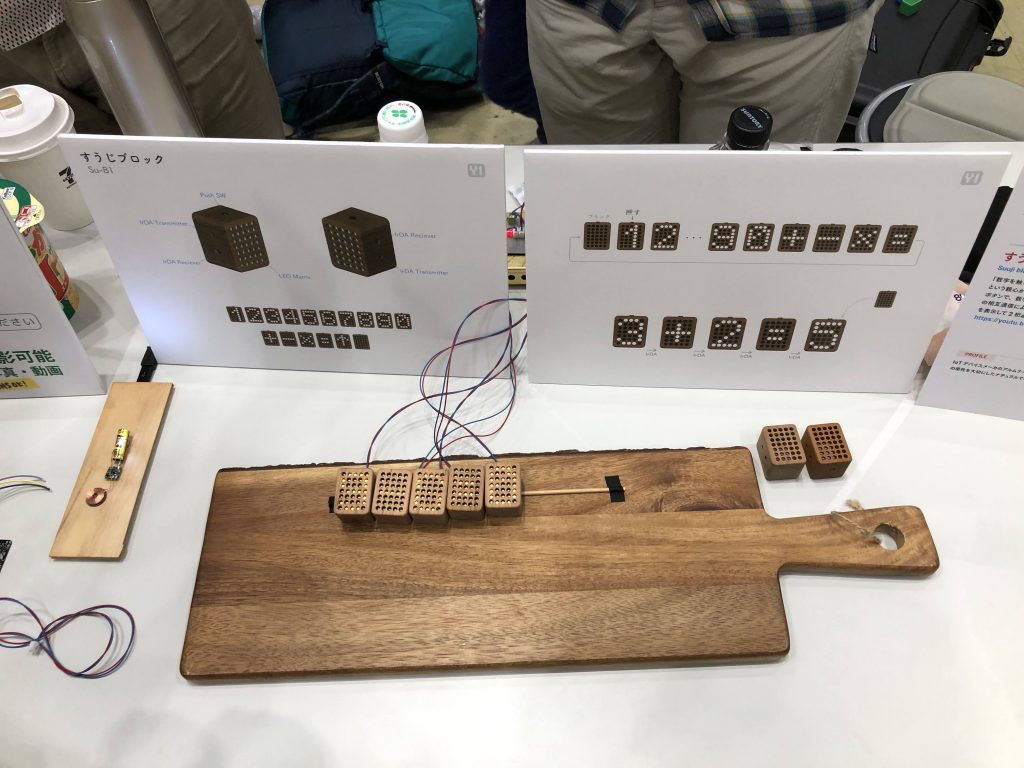
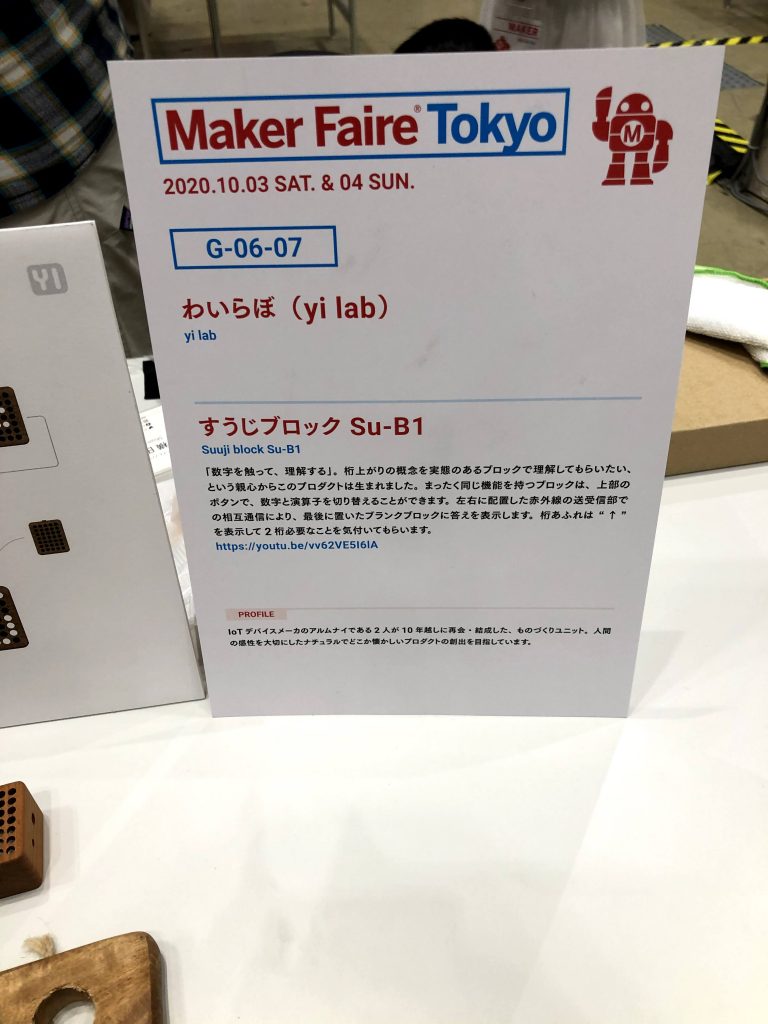
 もちろん説明するだけじゃなくて、会場も回って2日間で5周くらいしたのですが、その中で一番興味を持ったのが、「わいらぼ(yi lab)」さんの「すうじブロック Su-B1」です。
makezine.jp/event/makers-mft2020/m0060
/

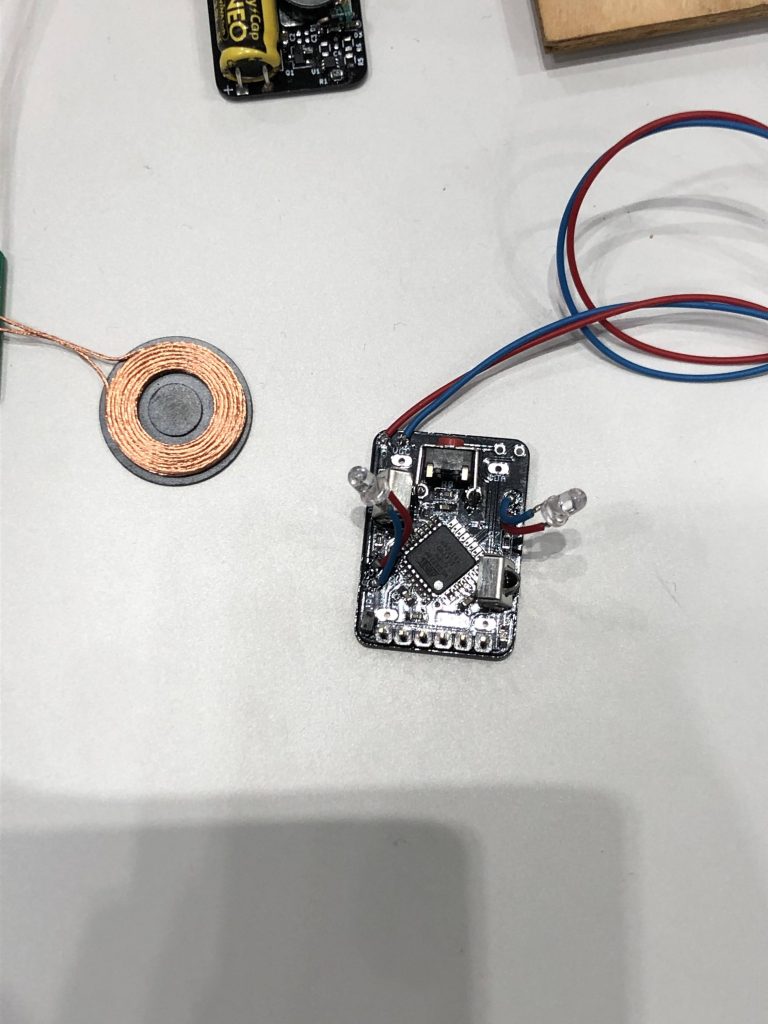
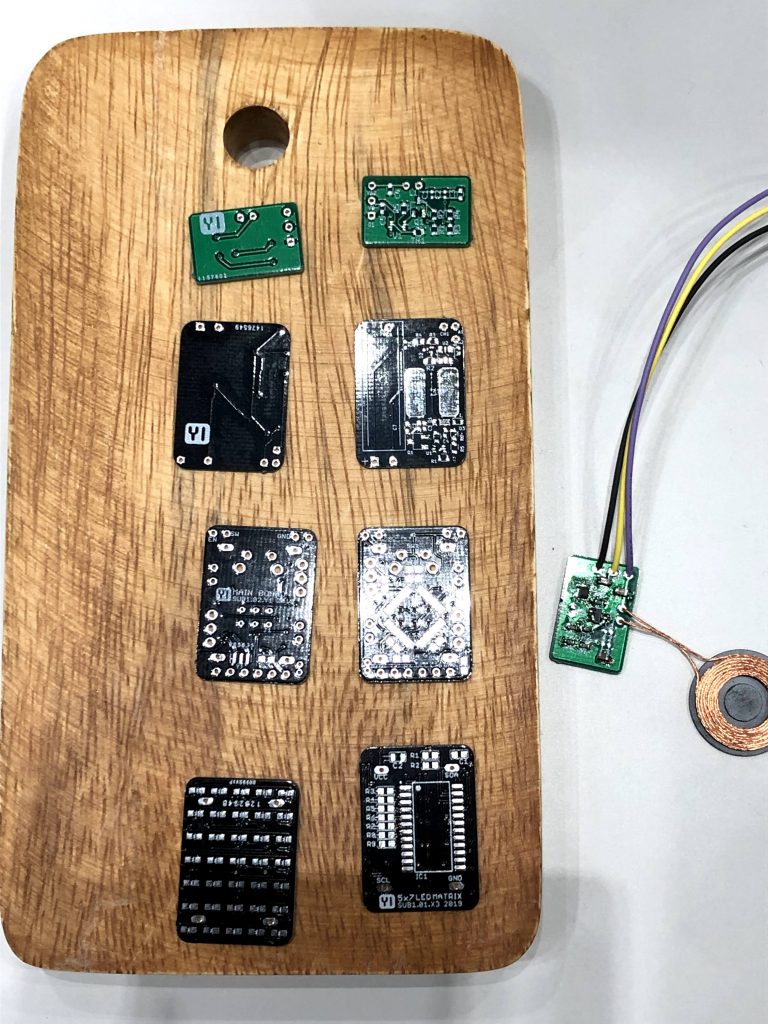
 上側側面のボタンを押すと数字や演算子の表示が順に切り替わっていき、ブロックを横一列に並べると赤外線通信で「=」の部分のデバイスが実際に計算をして、そのさらに右のブロックへ計算の結果を表示するということでした。教育というキーワードが入っていたので、「作りたいから単に作るのではなくて、最初からこういうアイデアからを作ろうとしたんでしょうか?」と聞いたら「そうです!」とのことでした。アイデアからそれを本当に作る方はすごいです。ブロックから配線が2本出ているのは電源だということですが、将来的に無線給電式にするそうです。その展示もありました。中身を出して、基板とかも展示されているのも良かったです。

 そのほか書きたいことがいろいろありますが、結構すでに長くなっているので、以下箇条書きで書きます。
・ブースに訪れた人数カウンター作っていたら面白いかも?
・最近、研究室で組み立てたCNC加工機のメーカであるAvalon Techさんも展示されていてお土産もいただきました。(イベントまでもう少し時間があったら基板を作って、LEDパネルがもう1つあるのでそれを作って、プログラム書いて、ブースにも置けたのですが… イベントに出発する前日までいじっていました笑)
・去年はVisitorとして、今年はMaker(お手伝い)として、来年はMakerとして!? 作品を見て回るのも楽しいですが、自分で作ったものを展示して自慢するのもなかなか楽しいです。
・Seeedガチャが500円で有りましたが、1日限定100個。アタリは何かしらのセンサとか開発ボードとか、ラズパイも当たる。ハズレはケース。1日目は1時間もしないうちに売り切れていたからか、2日目は毎時0分に20個ずつとして、整理券も渡されていました。でも整理券をもらっても、時間の前に並んでおかないと先着順で無くなってしまう。行きたかった気持ちが少しありましたが、2日目はほとんどデバックしてたり、説明してたりしたのでタイミングを失いました笑。
・開場の時間と閉場の時間にも会場での拍手がありましたが、この感じが何とも良かったです。ちょっと鳥肌立ちました。
・Maker Faireはやっぱり、目的があって行くというより、「初めて知るもの見るものをまとめて見れる場所」、もっと言えば「見ることになる場所」という感じです。言葉にしにくいですが、自分で見たからこそ意味があって、行った結果どう思うかが面白さにもつながるんじゃないかと思います。
・Makerで展示されている方は一貫したテーマで作っていて、それを続けられていることがすごい。僕は何か作るとき、作りたいものというより、部品があってそれを使って作りたいものというように考えるので、ずっと何年も続けられている方を見ると本当にすごいなと思います。
・一緒にお手伝いしてた方や今回のイベント知り合った方から「熱弁してた」みたいに言われたので、嬉しいようでちょっと恥ずかしい気持ちもありました笑
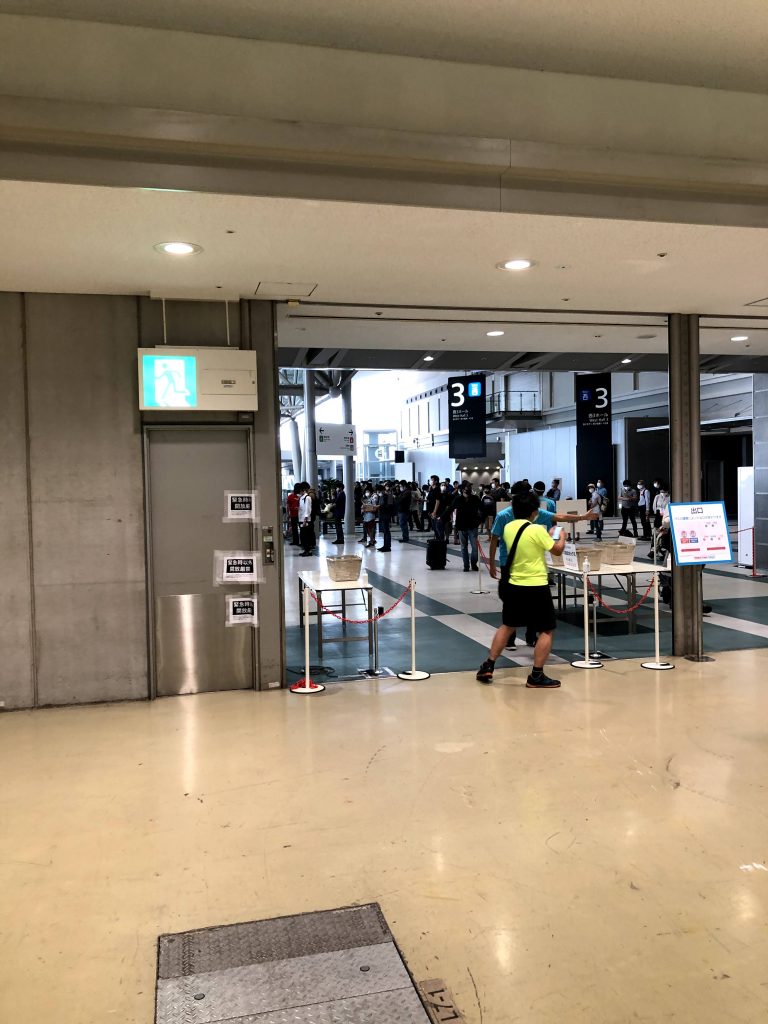
・感染症対策はしっかりありました。入場口でのアルコール消毒、検温、検温した人の管理(シールが名札に貼られた)、展示物も手で触れれるようなものをできるだけ少なく、それでもインタラクティブにしたい作品は、これはTwitterで書いている方がいたのですが、フットコントローラーを置くなどされているMakerも多くいらっしゃいました。
・秋田先生から以前お会いしたときにいただいたTシャツを着ていたのですが、これを気に入った方がいらっしゃって、今も売ってあるのでそれの紹介をすることにもなりました^^;

 以上、MakeLSI:のブースは秋田先生、お手伝いで、佐藤さんとB4の粟津さんと僕の4人で対応しました。お疲れさまでした!

SEMICON JAPANに出展しています!(ポスター・リーフレット公開)

こんにちは、M2の大河です。
12/15(水)から17(金)にかけてビックサイトにて開催されているSEMICON JAPANに、「金沢大学 インタフェースデバイス研究室」としてアカデミア出展しています。

主に2つのテーマで展示しており、会場にポスターを貼っていますが、そのポスターをここにも公開致します。ぜひ、ご覧ください!
イベントが終わり次第、またブログを書こうと思います。

また、一時的にA4サイズ、3つ折りのリーフレットを公開します!
2021/12/18: リーフレットは非公開にしました。もしご覧になりたい方は、大河までご連絡ください。